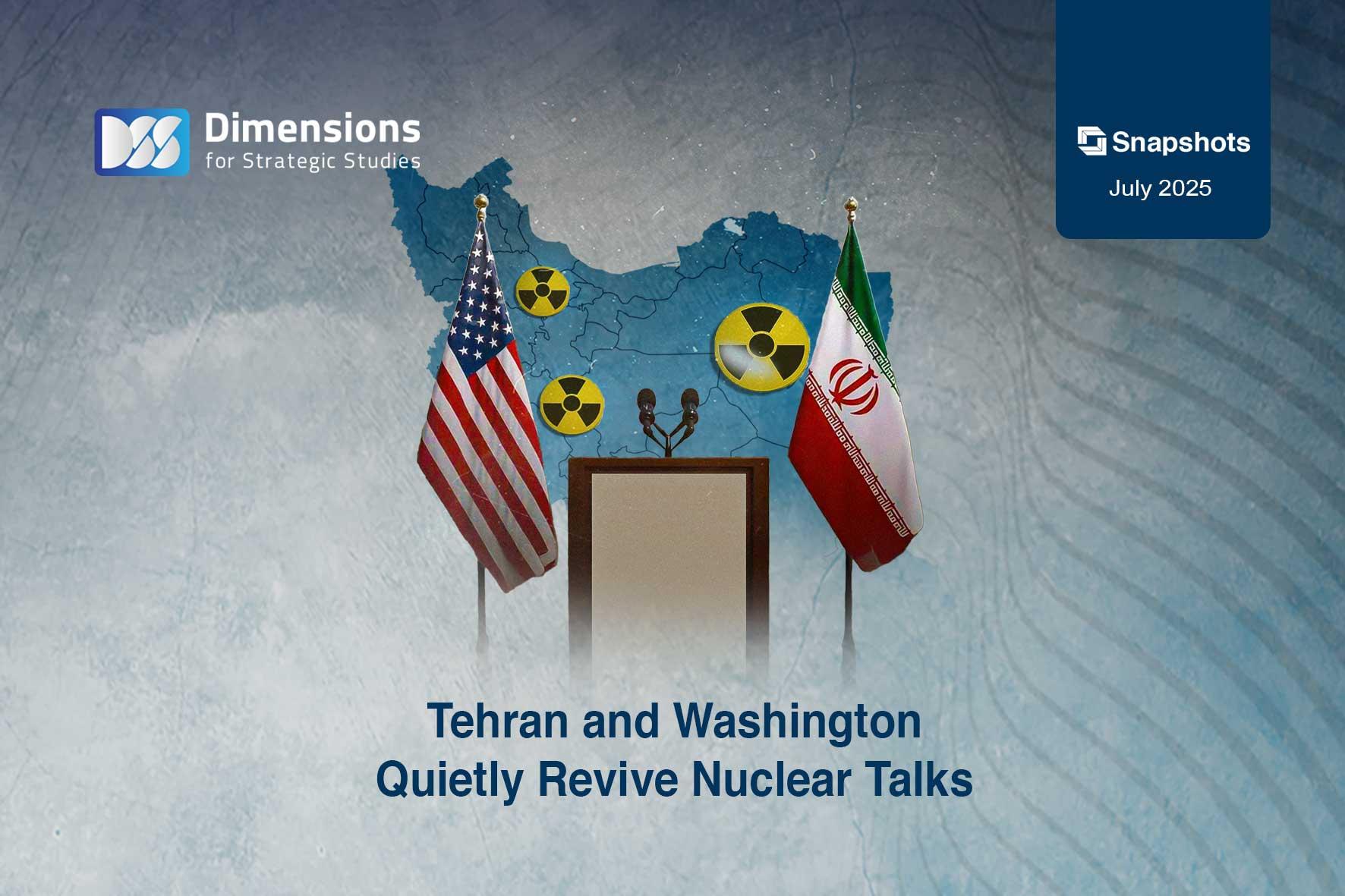
The standoff regarding the Joint Comprehensive Plan of Action has reached a temperature not seen since the agreement first began to unravel. Iran has officially signaled that its patience regarding the restoration of the nuclear accord is exhausted, issuing a firm ultimatum to the United States. If Washington fails to take concrete, verifiable steps to honor the original terms within a matter of weeks, Tehran intends to accelerate its nuclear activities. This is not mere posturing. It is a calculated escalation designed to force a diplomatic reckoning that the White House has spent months attempting to delay.
The Mechanics of the Brink
For decades, the negotiation process between Iran and Western powers has functioned like a high-stakes poker match played in a dark room. Each side holds cards that they refuse to fully reveal. The current Iranian position is grounded in the frustration that while they complied with the rigorous monitoring protocols of the International Atomic Energy Agency, the economic relief promised in exchange never fully materialized. The sanctions regime imposed by the United States remains firmly in place, choking the Iranian economy and preventing the country from accessing global financial markets.
Tehran claims that Washington is using the slow pace of negotiations as a tactic to maintain maximum pressure while simultaneously trying to broaden the scope of discussions to include non-nuclear issues, such as regional missile development. From the perspective of Iranian leadership, this is a violation of the spirit, if not the letter, of the 2015 agreement. They view the nuclear deal as a standalone document. By refusing to expand the agenda to cover ballistic missiles or regional proxies, Iran is attempting to draw a hard line that dictates exactly what is, and is not, on the table.
The Anatomy of Escalation
What does escalation actually look like? It begins with the technical thresholds. Iran has already begun enriching uranium to levels far higher than those permitted under the 2015 agreement. If they move toward sixty percent or higher enrichment, the time required to reach weapons-grade material shrinks significantly. This is the nightmare scenario for non-proliferation experts. It creates a reality where the breakout time becomes so short that diplomatic intervention becomes practically impossible.
Yet, there is a secondary element to this strategy that often gets overlooked. Iran is signaling to its domestic constituency that it will not be bullied. The political landscape in Tehran is fraught with factions that never supported the original deal. These hardliners argue that the West is inherently untrustworthy and that Iran should have been building its own technological independence all along. By taking a hardline stance against Washington now, the current administration is effectively neutralizing internal opposition. They are proving that they are not capitulating to external pressure, but rather responding to a failure of Western commitment.
Washington and the Diplomacy Trap
The Biden administration finds itself in a precarious position. When taking office, the stated goal was to return to the nuclear accord, yet the political cost of lifting sanctions without securing additional concessions has proven too high. There is immense pressure from Congress and regional allies, specifically Israel and Saudi Arabia, to ensure that any return to the deal does not simply empower Tehran to destabilize the region further.
This creates a deadlock. The United States cannot afford to look weak by lifting sanctions for nothing, but Iran has concluded that it cannot afford to wait indefinitely for an economic lifeline that may never arrive. The diplomatic machinery, built on months of indirect talks, is grinding to a halt. When communication channels are clogged with suspicion, the likelihood of a miscalculation increases. A single incident in the Persian Gulf or a cyberattack on a sensitive facility could turn a diplomatic stalemate into a direct confrontation before anyone has time to reconsider their positions.
Why the Status Quo is Unstable
Economic stagnation is a powerful driver of foreign policy. The Iranian currency has lost significant value, inflation is rampant, and the average citizen feels the weight of international isolation. The government needs to demonstrate that it has a path to prosperity, or at least a path to survival, that does not involve total subservience to Western demands. The rhetoric of escalation is, in part, a tool to manage this internal malaise.
However, relying on the threat of nuclear expansion is a dangerous game. It invites harsh responses, including renewed efforts at sabotage or even covert kinetic strikes. The intelligence community is likely tracking every centrifuge currently spinning in underground facilities like Natanz. They are evaluating whether the latest Iranian announcements are a genuine shift in intent or simply a loud bargaining tactic meant to extract better terms in the final minutes of the clock.
The irony is that both sides seem to want the same result in theory: a contained Iranian nuclear program and a return to some semblance of regional stability. But the path to that outcome is blocked by a lack of trust that borders on the pathological. Trust is not a prerequisite for international agreements, but the current absence of it makes the technical implementation of any verification regime nearly impossible. Without a baseline of transparency, any promise made by Washington to lift sanctions will be met with skepticism in Tehran, and any promise by Iran to limit its enrichment will be viewed as a temporary mask for clandestine work in Washington.
The clock is ticking because the political windows in both capitals are narrowing. Elections and changing priorities often dictate the lifespan of a diplomatic effort. If the deal is not revitalized in the coming weeks, it may become an artifact of history, replaced by a much more volatile reality where the threat of conflict is no longer a rhetorical device but a baseline assumption for the entire region. The window for a negotiated settlement is not just closing; it is being dismantled piece by piece.


