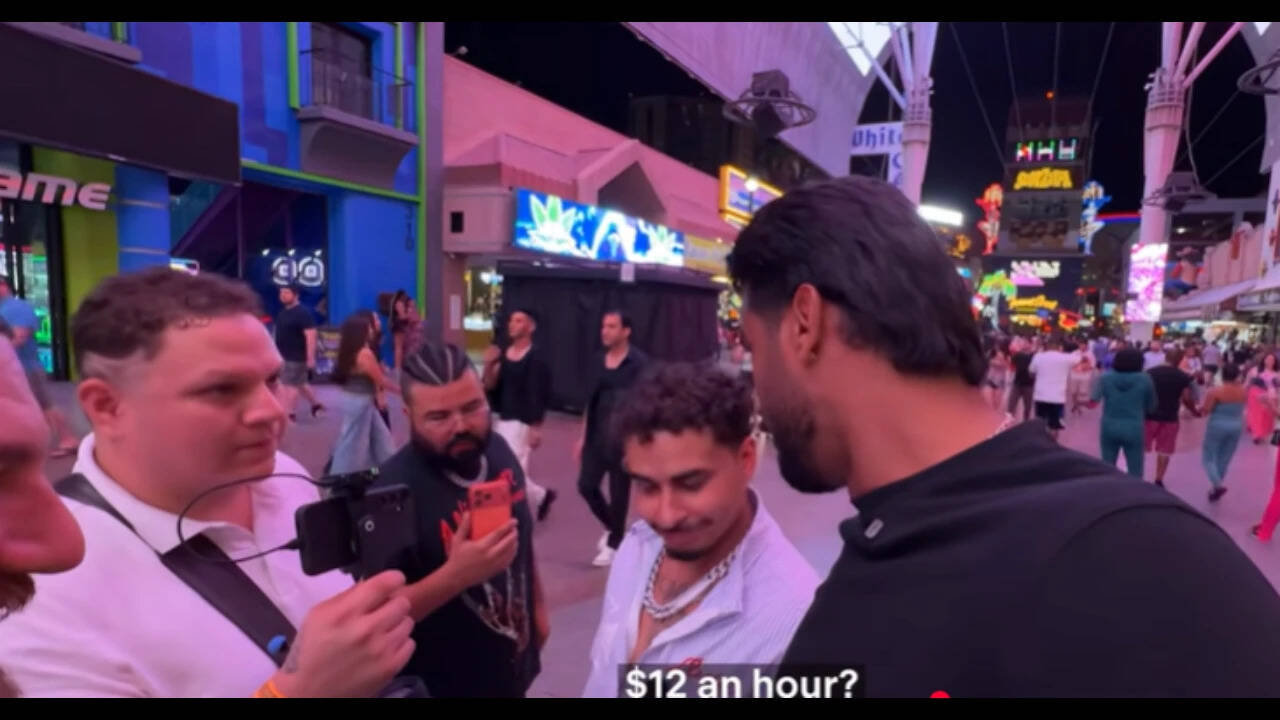
Travel vlogging looks glamorous from the outside. You pack a bag, point a camera at yourself, and fly across the globe. But reality hits hard when you walk down a street in Las Vegas and strangers decide your worth based on your race and appearance. A recent incident involving an Indian content creator getting targeted with racist remarks on the Vegas strip quickly blew up online, sparking intense debates about modern tourism, digital visibility, and casual bigotry.
The story started when the vlogger was exploring a public area and captured unwanted attention from local individuals. Instead of a normal greeting or a standard tourist interaction, the encounter turned hostile. The harassers hurled pointed insults his way and suggested he take a job at a convenience store chain, leaning heavily on tired ethnic stereotypes. Rather than shrinking away or editing it out, the creator fired back immediately. His counter-insult—telling them that they looked far too financially strapped to be talking trash—flipped the power dynamic on its head. Learn more on a related issue: this related article.
Video clips of the confrontation spread across social media platforms like wildfire. Viewers rushed to pick sides, analyze the dialogue, and debate whether his snappy comeback was justified or a step too far.
The Reality Of Casual Racism In Global Tourism Hotspots
Las Vegas attracts millions of visitors every year. It markets itself as a playground of endless entertainment and diverse crowds. Yet, frequent travelers know that tourist hubs often double as breeding grounds for localized harassment. Minority travelers face microaggressions or outright hostility more often than travel brochures care to admit. Additional reporting by The Guardian explores comparable perspectives on this issue.
When a creator is filming in public, they become an easy target. The camera acts as a beacon. Bigots see a visible outsider recording content and feel emboldened to assert dominance. They rely on old prejudices, assuming the traveler won't fight back or create a scene.
In this specific case, the choice of insult wasn't accidental. Pointing toward a major convenience store franchise is a classic xenophobic trope directed at South Asian immigrants and travelers in Western countries. It reduces a complex human being to a walking stereotype.
How The Creator Turned The Tables
Most creators train themselves to ignore trolls. Walking away is usually the safest bet, especially when physical safety is an unknown variable in a crowded street. But this vlogger chose confrontation.
His reaction exposes an interesting shift in how younger generations handle public disrespect. Instead of taking the high road or playing the victim, he hit back at their financial presentation. In a city built entirely around high-roller flexing, wealth display, and status symbols, calling someone "poor" cuts deep.
Social media users dissected the exchange frame by frame. Some argued that sinking to their level cheapened his message. Others praised him for refusing to take the abuse lying down.
Why This Incident Resonated So Widely Online
The internet loves a good clapback, but this video tapped into a deeper nerve. South Asian creators are building massive audiences globally, yet representation in Western digital spaces still carries baggage. When incidents like this happen on camera, they strip away the polished illusion of modern multiculturalism.
People are tired of polite silence. For years, the standard advice for targets of public racism was to stay calm, keep walking, and let karma handle it. Younger creators are throwing that playbook out the window. They realize that bullies rely on social compliance. Break that compliance, and the bullies panic.
The comment sections across TikTok, YouTube Shorts, and X became battlegrounds. Debates ranged from urban safety protocols to the psychology behind snap comebacks under stress.
What Travelers And Creators Can Learn From This
Incidents like this serve as an unpredictable reminder of the risks of digital mobility. If you put yourself out there with a camera, you trade a degree of personal anonymity.
Preparation matters. Knowing local laws about public recording, identifying escape routes, and assessing crowd safety are practical steps every creator should take. Relying on witty comebacks might make for a viral clip, but physical safety always trumps internet points.
Bigotry thrives in plain sight when bystanders do nothing and victims stay quiet. While everyone handles confrontation differently, the conversation sparked by this Vegas encounter proves that casual racism in public spaces is no longer sweeping quietly under the rug. People are watching, recording, and talking back.