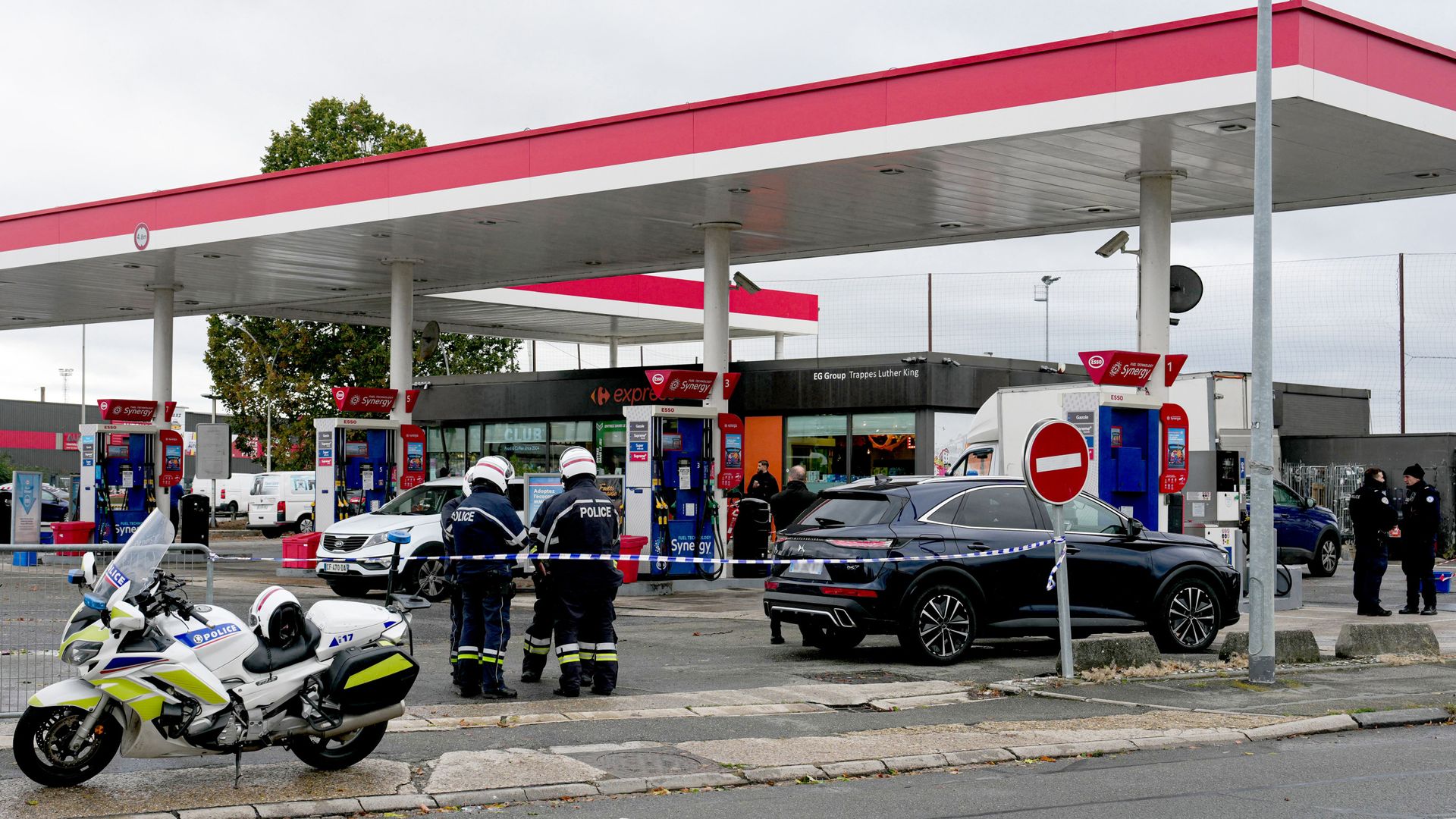
A fatal shooting happens in a Paris suburb. Within hours, the label drops. Terror probe.
It happens so reliably it feels scripted. A street turns violent. Someone dies. Investigators, pundits, and politicians sprint toward ideological framing before the brass has even been swept off the asphalt.
That reflex is lazy. Worse, it is analytically sloppy. When a fatal shooting in a banlieue triggers an immediate counter-terrorism reflex, public debate narrows to two exhausted camps: hardliners demanding sweeping ideological crackdowns and critics warning against overreach. Both sides argue past the operational reality on the ground.
I have spent years dissecting urban security failures, policing models, and public-safety policy across Western capitals. I have watched governments pour billions into symbolic security theater while ignoring the mundane mechanics that actually produce bodies on suburban streets. Slapping "terror" onto every violent tragedy does not sharpen intelligence. It blurs it.
The real question is not whether a shooting meets a legal threshold on day one. The real question is why our analytical reflexes keep confusing ideological intent with structural decay, street-level lethality, and institutional blind spots.
The Label Trap That Warps Every Investigation
When a fatal shooting erupts in a Paris suburb, the word "terror" acts like a magnet. Every detail gets pulled toward ideology. Investigators check radicalization watchlists first. Media coverage frames the neighborhood through a security-threat lens. Politicians reach for familiar speeches about sovereignty and civilizational resolve.
Sometimes ideology really is there. Pretending radicalization never intersects with street violence would be naive.
The mistake is treating ideology as the default explanation rather than one variable among several. In criminal analysis and threat assessment, legal classification serves a specific procedural purpose—granting specialized prosecutors jurisdiction, powers, and coordination channels. Public commentary treats that procedural step as a verdict on human motive.
That confusion creates two distortions at once. First, if a suspect turns out to be driven by personal grievance, turf conflict, impulse, or untreated instability rather than a structured ideological plot, the public feels whiplash—as if the absence of a manifesto somehow makes a fatal shooting less serious. Second, if a suspect does have extremist links mixed into a chaotic, opportunistic, or criminal life, forcing the event into a neat "terror vs. ordinary crime" binary misses how modern violence actually forms.
Real-world threats rarely arrive in clean boxes. Street networks, illicit markets, petty feuds, digital radicalization, and easy access to firearms overlap in messy ways. A rigid label makes analysts look decisive while leaving them blind to the connective tissue.
Why People Ask the Wrong Questions After a Shooting
Whenever a fatal shooting hits the news, the same predictable questions dominate search feeds and broadcast panels. Most of them start from a shaky premise.
"Was It Terrorism or Just Street Violence?"
This binary sounds sharp on television. In practice, it asks a false question.
"Terrorism" refers to the use or threat of violence to intimidate a population or coerce a government toward political, religious, or ideological aims. "Street violence" describes the setting and social ecology where force occurs. A shooting can happen on a suburban block for reasons tied to criminal disputes, retaliation, mental health crises, ideological obsession, or a toxic blend of all four.
Demanding a clean split forces analysts to erase complexity. If a young man with extremist sympathies shoots someone over a personal dispute or an illicit transaction, calling it pure street crime ignores a warning sign. Calling it pure terrorism invents a coherent plot that may not exist. Precision beats slogans every time.
"Are Paris Suburbs Inherently Lawless Zones?"
No. Calling peripheral municipalities around Paris automatic "lawless zones" is lazy shorthand that collapses dozens of distinct communities into a single caricature.
Many suburbs ringing the capital have working-class neighborhoods with tight-knit civic life, active local associations, and residents who want the exact same thing as anyone else: safe streets, good schools, and reliable transit. Concentrated poverty, housing segregation, strained municipal budgets, and narcotics distribution do exist in specific pockets, and they raise risk. Still, treating an entire ring of suburbs as a permanent war zone confuses concentrated vulnerability with total collapse.
Broad-brush panic is comforting for people far from the scene because it turns a complex urban problem into a simple geography lesson. It also alienates the local residents and municipal officials whose cooperation is indispensable to real prevention.
"Why Didn't Intelligence Agencies Stop It Sooner?"
This question assumes intelligence agencies operate like omniscient cameras watching every corner of every street. They do not—and in a free society, they should not.
Counter-terrorism and security services work with finite human and technical bandwidth. They prioritize networks, plots, travel, communications, and high-probability threats. A sudden, localized shooting—especially one sparked by a fast-moving dispute or a loosely connected individual—often leaves almost no pre-incident footprint for national agencies to intercept.
Blaming intelligence for every tragedy that falls outside its natural remit guarantees permanent disappointment. Worse, it tempts lawmakers to expand surveillance drag-nets that drown analysts in noise without catching the next fast-moving actor.
The Mechanics Behind Suburban Gun Violence
To understand why fatal shootings keep happening in urban peripheries, look past cable-news drama and trace the actual mechanisms at work.
- Illicit firearm availability. Even in countries with strict gun laws, trafficked weapons circulate through black markets linked to narcotics and organized crime. Once a firearm enters a local network, disputes that once ended in fists or knives escalate to fatal outcomes in seconds.
- Hyper-local retaliation loops. In tight social environments, insults, slights, and turf rivalries travel fast. When trust in institutions is thin—or when participants operate outside the law—retaliation becomes a twisted form of reputation management.
- Institutional friction. Policing, housing, social services, youth outreach, justice, and municipal administration often run on separate tracks. When a troubled or volatile person slips between agencies, nobody owns the whole picture until a crisis hits.
- Media amplification. High-profile shootings trigger wall-to-wall coverage that rewards instant speculation over slow verification. The rush to assign meaning outpaces the hard work of reconstructing timelines, ballistics, motives, and social ties.
Imagine a scenario where a local shooting occurs late at night near a housing estate. Within two hours, unverified claims circulate online about motive and affiliation. By morning, national officials weigh in on security doctrine while local detectives are still interviewing witnesses and pulling CCTV. The public narrative hardens long before the evidentiary record is complete.
That gap between speed and accuracy is where misconceptions thrive.
What Serious Security Analysts Look At Instead
In security studies and criminology, scholars like David Garland, Sebastian Roché, and Peter Neumann—alongside practitioners in urban policing and threat assessment—have repeatedly pointed out that effective responses depend on separating symbol from substance. When authorities lean too heavily on dramatic classifications, they often neglect unglamorous execution.
Serious analysts look at four unflashy indicators after a fatal shooting:
| Analytical Lens | Lazy Reaction | Rigorous Assessment |
|---|---|---|
| Motive & Intent | Assume ideology from the headline label | Test ideology, criminal conflict, personal grievance, and instability independently |
| Weaponry & Supply | Treat the gun as a secondary detail | Trace caliber, trafficking route, and local network access |
| Community Context | Paint the whole suburb as ungovernable | Map specific micro-locations, service gaps, and local civic capacity |
| Response Tempo | Chase instant political narratives | Protect investigative integrity while giving clear, factual updates |
None of this makes for a snappy thirty-second soundbite. All of it determines whether a community actually becomes safer.
Where My Contrarian Stance Can Go Wrong
Being contrarian has its own trap. If you push back hard against over-using the "terror" label, you can accidentally underplay genuine extremist threats or dismiss real fear among residents living near a crime scene.
That would be just as wrong. Ideology matters deeply when it motivates violence, recruits vulnerable young people, or turns local grievances into broader political hostility. Families who hear gunfire outside their windows do not care about academic definitions; they care whether their block is secure and whether the people responsible will be held accountable.
A sharp perspective does not minimize danger. It calibrates it. You take every credible threat seriously without letting fear or political convenience turn every tragedy into a caricature.
Practical Moves That Actually Reduce Risk
If policymakers, local leaders, and news consumers want fewer fatal shootings and clearer public understanding, symbolism is the cheapest currency and the worst investment. Action requires discipline across three fronts.
- Keep prosecutorial labels separate from public explanations. Let specialized investigators use the legal tools they need when criteria are met, while explaining clearly to the public what is proven versus what is still under investigation.
- Target illicit guns and local friction points relentlessly. Pair focused criminal investigation with community-credible intervention in neighborhoods experiencing repeated disputes or narcotics pressure.
- Build real coordination across agencies. Connect police intelligence with municipal services, mental health support, and youth programs before a volatile individual crosses from crisis into lethal violence.
For ordinary readers, the fix is simpler and just as overdue: resist the first twelve hours of certainty. Wait for verified facts. Question anyone who claims to know the whole story before the investigation has even finished its first pass.
Stop letting headlines do your thinking for you.