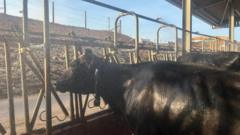
Commercial milk yield declines non-linearly when ambient thermal loads exceed specific physiological thresholds, destroying herd profitability through suppressed dry matter intake and metabolic inefficiency. Modern dairy infrastructure manages this operational risk by deploying forced convection and wetting networks. These interventions do not merely comfort animals; they manipulate thermodynamic gradients to bypass the evolutionary limitations of bovine thermoregulation. Evaluating this mechanical ecosystem requires moving past rudimentary observation to analyze the precise physics of heat exchange, fluid dynamics, and capital allocation.
The Thermodynamic Bottleneck
Bovine physiology presents a fundamental engineering challenge for heat dissipation. Dairy cows are large endotherms with high internal metabolic heat production driven by rumen fermentation. Their surface-area-to-mass ratio is unfavorable for passive heat loss, and their skin possesses a low density of functional sweat glands. Consequently, sensible heat transfer via conduction, convection, and radiation fails when ambient temperatures climb into the thermoneutral zone upper limits, typically above 20 to 25 degrees Celsius depending on relative humidity.
When sensible pathways saturate, the animal relies on latent heat transfer through respiration and minor cutaneous evaporation. As humidity rises alongside temperature, the vapor pressure deficit narrows, stalling evaporative cooling. Core body temperature increases, triggering a cascade of biological failures: reduced rumination, altered blood flow distribution, compromised immune response, and depressed reproductive efficiency. Mitigation systems must therefore artificially manufacture the environmental gradient required to force heat away from the animal tissue.
The Dual Mechanism Matrix
Effective cooling infrastructure decouples temperature reduction into two distinct operational phases: saturation and forced convection. These phases form a sequential loop that exploits latent heat vaporization kinetics.
Phase One: The Wetting Cycle
Water application must penetrate the insulating hair coat to reach the epidermal layer. Low-pressure sprinklers or soaking systems deliver high-volume, large-droplet water pulses intermittently. Fine mists or foggers are counterproductive in high-humidity environments because they evaporate suspended in the air rather than on the skin, raising humidity without cooling the hide.
The fluid dynamics of soaking require calculated timing cycles. Typically, systems operate on a short burst of water followed by a prolonged drying window. This ensures water absorption into the hide without oversaturating flooring surfaces, which introduces secondary risks such as hoof morbidity and slipping hazards.
Phase Two: Convective Stripping
Wetted skin alone accelerates heat storage if the boundary layer of stagnant, moisture-saturated air surrounding the animal is not continuously disrupted. High-velocity air movement strips this boundary layer away, replacing it with fresh air that promotes rapid phase change.
Axial circulation fans or high-volume low-speed units installed over feeding alleys and holding pens generate airspeeds between two and three meters per second at cow level. This forced convection establishes the necessary vapor pressure gradient, turning the cow skin into an active evaporative radiator.
Operational Failures and Architectural Constraints
Installing hardware without structural integration creates systemic bottlenecks. Poorly designed facilities suffer from distinct failure modes that degrade return on investment.
- Airflow Stagnation Zones: Placing circulation fans at incorrect distances relative to their diameter creates dead air pockets where humidity accumulates, exacerbating heat stress rather than relieving it. Spacing rules dictate that inline fans must not exceed eight times their diameter apart.
- Hydraulic Pressure Inconsistencies: Fluctuating water pressure results in uneven droplet sizing. Undersized droplets drift or evaporate prematurely, while oversized droplets waste water and saturate bedding.
- Resource Competition: Inadequate feed-lane or holding-pen space during cooling cycles forces crowding. Close proximity increases localized ambient temperature and behavioral aggression, suppressing the dry matter intake the system aims to protect.
The Economic Optimization Function
Investing in industrial-grade cooling systems requires balancing capital expenditure and operational costs against milk yield elasticity. The cost function incorporates electrical draw for continuous fan operation, water consumption and wastewater management, and equipment maintenance.
$$\text{Net Benefit} = (\Delta \text{Milk Revenue}) - (\text{Energy Cost} + \text{Water Cost} + \text{Capital Amortization})$$
During peak thermal stress periods, unmitigated herds routinely drop milk production by ten to thirty percent, alongside sharp drops in conception rates that impact future lactation cycles. Mechanical cooling preserves dry matter intake by stabilizing core body temperature, keeping the biological engine operating at peak efficiency.
Deploy sensor-driven automation tied to the Temperature-Humidity Index. Program wet-and-dry cycles to activate dynamically before respiration rates spike, ensuring the thermodynamic equilibrium of the herd remains uninterrupted throughout daily climatic fluctuations.