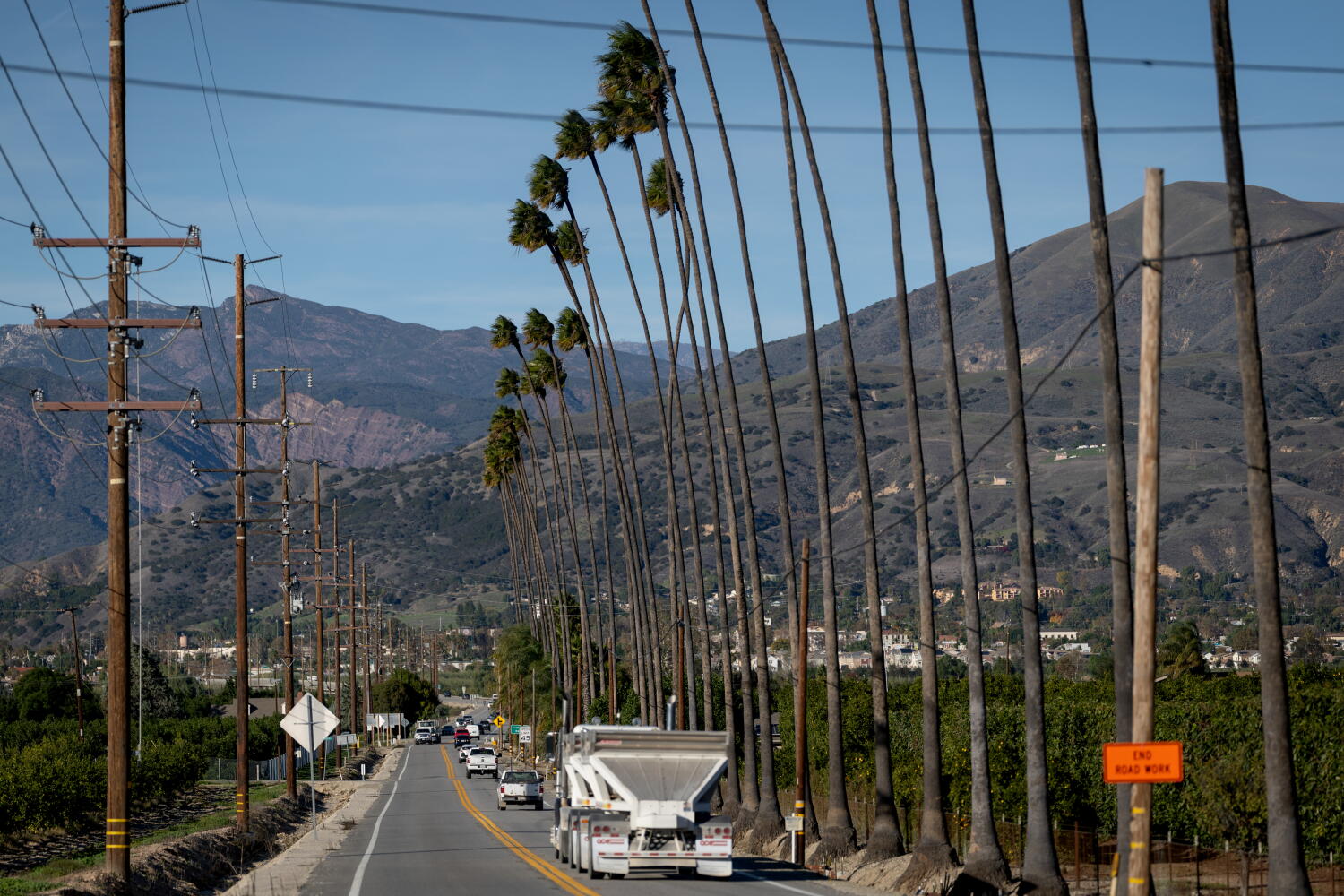
Southern California’s critical autumn fire regime operates as a compounding thermodynamic trap rather than a series of isolated weather events. Elevated autumn temperatures alter the atmospheric moisture gradient, priming coastal and inland chaparral ecosystems long before offshore wind events materialize. When high-pressure systems build over the Great Basin and force air down the coastal mountain ranges, the resulting Santa Ana winds do not simply push existing flames; they rapidly strip residual moisture from live and dead vegetation, transforming the wildland-urban interface into a high-velocity combustion corridor.
The Three-Stage Fuel Conditioning Mechanism
Standard weather reporting treats heatwaves and wind events as separate hazards. In operational fire behavior modeling, these phenomena act sequentially across three distinct physical phases that dictate fire intensity and rate of spread.
1. Thermal Desiccation and Vapor Pressure Deficit
Autumn warming in Southern California extends the summer drying curve into October, November, and December. The primary driver of this pre-conditioning is Vapor Pressure Deficit (VPD)—the mathematical difference between the amount of moisture in the air and the maximum amount of moisture the air can hold when saturated.
Because warm air holds exponentially more water vapor than cool air, a rise in autumn ambient temperatures causes VPD to spike even when absolute atmospheric moisture remains unchanged. The atmosphere acts as an aggressive moisture sink, pulling water directly out of plant stomata and dead surface litter. Over weeks of above-average autumn heat, large-diameter fuels (100-hour and 1,000-hour fuels, such as heavy brush and timber) lose their deep cellular moisture reserves.
2. Adiabatic Compression and Offshore Wind Acceleration
Santa Ana winds form when cold, dense air settles over the high-elevation deserts of the Great Basin (Nevada and Utah), creating a steep surface pressure gradient directed toward the lower-pressure coastal basin of Southern California. As this air mass is forced westward over the Transverse and Peninsular Ranges, it funnels through narrow topographic canyons—such as the Cajon Pass, Santa Clara River Valley, and Banning Pass—accelerating via the Venturi effect.
As the air descends from high elevations toward sea level, increasing atmospheric pressure compresses it. Under the laws of thermodynamics, this adiabatic compression warms the air mass at a dry adiabatic lapse rate of approximately 5.5°F per 1,000 feet of descent (10°C per 1,000 meters). Because no moisture is added during this rapid descent, relative humidity plummets, frequently dropping below 10 percent.
3. Live Fuel Moisture Collapse
Chaparral species native to Southern California—such as chamise, manzanita, and coastal sage scrub—are adapted to survive seasonal drought, maintaining live fuel moisture (LFM) levels between 60% and 80% during late summer. When elevated autumn VPD overlaps with adiabatic Santa Ana winds, LFM drops below the critical threshold of 60%. At this point, living shrubs cease to act as heat sinks that absorb thermal energy; instead, their volatile oils and resins vaporize rapidly upon heating, turning living vegetation into an active, explosive fuel source.
Why Autumn Fire Regimes Outpace Suppression Capacity
Wildfire suppression relies on containment lines—physical breaks in fuel continuity constructed by hand crews, bulldozers, and aerial retardant drops. The interaction between hotter autumns and offshore winds systematically neutralizes all three suppression pillars.
- Spotting Distance Exceeds Containment Width: Under extreme Santa Ana gusts exceeding 50 to 70 miles per hour, burning embers are lofted into the convective column and carried miles ahead of the main fire front. A standard 30-foot bulldozer line or highway corridor cannot stop spot fires igniting one to two miles downwind.
- Diurnal Recovery Failure: Historically, firefighting operations relied on nighttime cooling and rising coastal humidity to slow fire spread, allowing crews to anchor containment lines overnight. Hotter autumn nights eliminate this thermal inversion, keeping VPD elevated and allowing fires to burn at peak intensity through the nocturnal cycle.
- Aerial Operations Grounding: Fixed-wing air tankers and heavy helicopters cannot safely navigate the severe mechanical turbulence and wind shear generated inside coastal canyons during peak Santa Ana events, removing aerial water and retardant support during the critical initial attack window.
Limitations of Current Risk Forecasting Models
While meteorological agencies accurately forecast pressure gradients and wind speeds days in advance, translating atmospheric data into localized fire behavior remains constrained by microclimatic and biological variables.
First, fuel moisture sampling relies on periodic manual harvesting at fixed monitoring sites, which cannot capture real-time desiccation across varied slope aspects and soil depths. A south-facing slope exposed to direct solar radiation reaches critical ignition thresholds days earlier than an adjacent north-facing canyon, creating localized pockets of extreme fire behavior that macro-level Red Flag Warnings fail to differentiate.
Second, human ignition vectors introduce stochastic variables that weather models cannot predict. Because natural lightning is rare during autumn offshore wind regimes in Southern California, over 95% of autumn ignitions stem from anthropogenic sources—electrical grid arcing, vehicle sparks, roadside debris, and equipment failures. A severe wind and heat event occurring without an ignition source produces zero fire perimeter, whereas a single spark in a high-VPD corridor triggers a multi-thousand-acre conflagration within hours.
Operational Imperatives for Grid and Land Management
Mitigating catastrophic loss under sustained autumn thermal and wind stress requires shifting from reactive suppression to preemptive fuel and ignition isolation. Utilities and municipal land managers must synchronize infrastructure de-energization protocols—Public Safety Power Shutoffs (PSPS)—directly with real-time VPD and 10-hour dead fuel moisture telemetry rather than relying solely on wind-speed thresholds. Simultaneously, defensible space enforcement in the wildland-urban interface must prioritize the removal of continuous horizontal and vertical fuel ladders within 100 feet of structures, eliminating the ember-receptive fuels that allow wind-driven spot fires to transition into urban conflagrations.