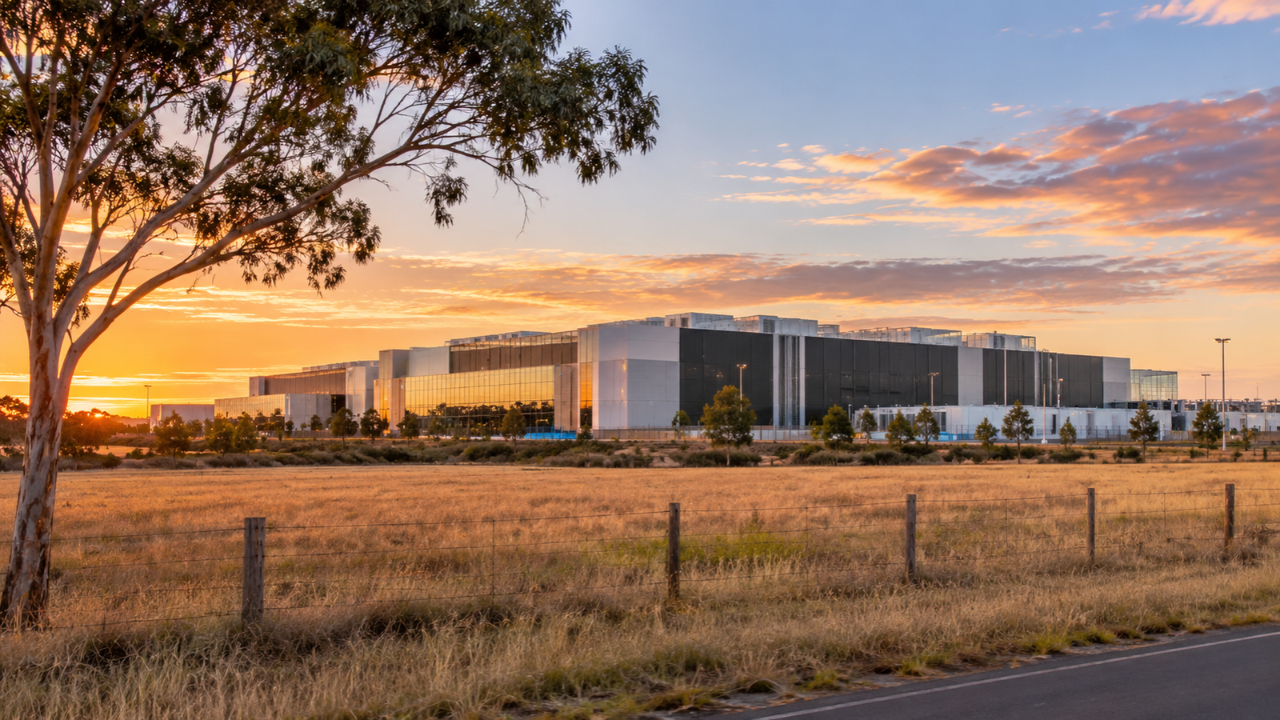
Five hundred and ninety-five objections. That is the magic number currently stalling an Australian data centre project linked to Anthropic. Read the standard industry coverage, and you will get the exact same breathless script: local residents are furious about power grid strain, water consumption, traffic congestion, and industrial noise.
It is a neat, tidy villain-versus-victim story. Big Tech wants to drop a concrete monolith into a quiet neighborhood, drain the local reservoir, spike electricity bills, and ruin the peace with the constant hum of cooling fans.
And it is almost completely missing the point.
If you spend your days inside hyperscale infrastructure planning, watching communities mobilize over traffic and generator noise feels like watching someone argue over the color of the curtains while the foundation is sinking. The 595 objectors—and the reporters amplifying their talking points without checking the engineering specs—are fighting a battle against 2014 data centre architecture. Meanwhile, the real economic and environmental traps of sovereign AI infrastructure are sliding right past the local council chambers completely unchallenged.
The Lazy Consensus of NIMBY Tech Reporting
Every local infrastructure dispute follows a predictable media template. Journalists tally up public submissions, quote a few residents worried about diesel trucks on residential streets, throw in a scary statistic about how many households a megawatt can power, and call it a day.
Here is the problem with that framing: it treats a modern AI training and inference facility like a coal-fired power plant or a sprawling Amazon fulfillment center.
I have sat in dozens of permitting hearings from Northern Virginia to Western Sydney. I have watched developers blow millions of dollars redesigning acoustic baffles and traffic roundabouts to appease vocal neighborhood coalitions, only to watch those exact same communities lose out on tens of millions in long-term grid upgrades because the project got pushed three towns over. When activists weaponize outdated assumptions about how high-density compute works, they do not stop the data centre. They just force it somewhere with worse fiber latency and weaker environmental oversight.
Let’s dismantle the four pillars of those 595 objections—power, water, traffic, and noise—and look at what is actually happening beneath the concrete slab.
Myth 1 The Traffic Nightmare That Never Happens
Start with the easiest target: traffic.
When locals hear "massive industrial facility," they picture semi-trailers idling at 5:00 AM, shift changes clogging two-lane roads, and delivery vans tearing up the asphalt. During the twelve to eighteen months of core and shell construction, yes, there are concrete mixers and flatbed trucks hauling steel. That is true for building a hospital, a high school, or a shopping mall.
Once an AI data centre goes live, it is practically a ghost town.
Unlike logistics hubs or manufacturing plants, hyperscale data centres have remarkably low headcount per square meter. A 50-megawatt facility might employ forty to sixty full-time staff across staggered shifts—security guards, critical facilities engineers, and a handful of network technicians swapping out failed optical transceivers or GPU blades. You could fit the entire operational workforce into a single suburban coffee shop.
If a local council blocks or delays a project over permanent traffic congestion, they are regulating a phantom. The parking lot of an active data centre is the loneliest piece of asphalt in commercial real estate.
Myth 2 The Water Guilt Trip
Water is where the emotional temperature spikes, especially in Australia, a continent defined by drought cycles and strict water-use scrutiny. Critics love to throw around figures showing that training a large language model consumes millions of liters of freshwater.
Those numbers come from older evaporative cooling towers—systems that spray water over heat exchangers and let it evaporate into the atmosphere to shed thermal load. In arid climates, open-loop evaporative cooling is an ecological liability. No argument there.
The nuance the lazy consensus misses is that high-density AI hardware—specifically modern GPU clusters running at 40 to 100 kilowatts per rack—cannot even be cooled efficiently with traditional air and evaporative setups anymore. Physics will not allow it. Air simply cannot carry away that much heat fast enough.
Modern AI facilities are moving rapidly toward closed-loop direct-to-chip liquid cooling and air-cooled chillers. In a closed-loop system, coolant circulates through cold plates bolted directly onto the processors, transfers heat to a secondary loop, and rejects it via dry coolers outside. Water consumption drops to near zero after the initial system fill. It recycles continuously, like the radiator in your car.
Now, let’s be honest about the trade-off—because pretending there is no downside is how engineers lose public trust. When you eliminate water consumption via dry cooling, you pay a penalty in electricity. Running massive fans and refrigerant compressors to dump heat into hot Australian summer air requires more electrical energy than letting water evaporate. It is a thermodynamic seesaw: push water usage down, and your Power Usage Effectiveness (PUE)—the ratio of total facility energy to IT equipment energy—nudges slightly upward.
Instead of demanding that developers prove zero water withdrawal via closed-loop specs, blanket opposition treats all data centres like open-air cooling towers from a decade ago. That ignorance lets developers get away with vague sustainability pledges instead of binding engineering mandates.
Myth 3 The Acoustic Boogeyman
Next up is noise. Residents hear horror stories about low-frequency hums vibrating through bedroom windows at midnight.
Where does data centre noise actually come from? Not from the servers themselves—they sit inside thick precast concrete walls with zero windows. The noise comes from two external sources: rooftop chillers and backup diesel generators.
Backup generators are loud, hitting 85 to 100 decibels at close range. What objectors rarely mention is that those generators run for roughly thirty minutes once a month for maintenance testing, plus whatever rare hours the regional power grid actually fails. The rest of the year, they sit silent.
The continuous sound comes from cooling fans. Even here, acoustic engineering has evolved light-years beyond slapping industrial fans onto a roof. Modern builds use variable-speed fans that throttle down during cooler nighttime hours, acoustic louver walls that trap low-frequency sound waves, and strategic site orientation that uses the building mass itself as a sound barrier against residential zones. If a newly built facility violates nighttime decibel limits in 2026, it is not because the technology is inherently noisy; it is because the developer cheaped out on acoustic attenuation during value engineering.
Myth 4 The Power Grid Parasite Fallacy
This is the big one. Power.
Australia’s National Electricity Market (NEM) is navigating one of the fastest, messiest energy transitions in the developed world—retiring aging coal generators while trying to wire up utility-scale solar, wind, and grid-scale batteries. Dropping a massive, continuous electrical load onto a constrained substation sounds like a recipe for blackouts and higher household power bills.
That fear is entirely rational on the surface. It is also backward.
The electrical grid does not suffer simply because large loads exist; it suffers from unpredictable volatility and underutilized transmission infrastructure. In Australia, midday solar generation frequently floods the grid to the point where wholesale electricity prices go negative, forcing grid operators to curtail renewable farms because there is nowhere for the electrons to go.
Large-scale data centre operators do not just plug into a wall socket and hope for the best. To secure grid connection approval from bodies like the Australian Energy Market Operator (AEMO), developers are routinely forced to fund multi-million-dollar substation upgrades, new high-voltage transmission lines, and synchronous condensers that stabilize grid frequency—infrastructure that stays in the public asset base and benefits every surrounding home and business.
Furthermore, hyperscale AI buyers like Anthropic and their cloud partners are the single largest corporate underwriters of new renewable energy projects globally. Wind and solar developers cannot get bank financing without long-term Power Purchase Agreements (PPAs) guaranteeing someone will buy their electricity for the next fifteen years. Data centres sign those contracts. Without massive, creditworthy anchor tenants buying power around the clock, dozens of regional wind and solar projects stall in financing limbo.
Does adding 50 or 100 megawatts of load create localized congestion if the transmission lines aren't ready? Yes. If a developer tries to connect to a weak distribution feeder without paying for upstream reinforcement, local voltage stability takes a hit. That is a valid technical objection. Screaming that AI is "stealing electricity from pensioners" is political theater that ignores how transmission upgrades are actually financed.
The Real Questions Nobody in Those 595 Objections Is Asking
If local councils, environmental groups, and investigative journalists actually want to hold AI infrastructure developers accountable, they need to drop the tired talking points about traffic and server hum. They are asking the wrong questions entirely.
Imagine a scenario where the community drops its blanket opposition and instead forces the developer to answer four brutal, high-stakes questions before a single permit is signed:
- Where is the grid-interactive flexibility? AI training workloads are not like high-frequency stock trading; they do not require 99.999% uptime every millisecond. If a training cluster pauses or throttles down by 30% for four hours during a heatwave peak in New South Wales or Victoria, the model still finishes training—it just takes an extra afternoon. Why are councils not mandating demand-response curtailment agreements that force data centres to shed load during grid emergencies, effectively turning the facility into a giant virtual battery for the neighborhood?
- What happens to the waste heat? A 50-megawatt data centre is essentially a massive, hyper-efficient electric heater. Every single watt of electricity entering those server racks turns into low-grade thermal energy. In Denmark, Sweden, and parts of the Netherlands, capturing that waste heat to warm municipal swimming pools, greenhouses, or district heating networks is becoming standard practice. In Australia, operators simply dump that heat into the sky. Why are regulators not demanding industrial co-location—pairing data centres with commercial greenhouses, aquaculture farms, or food processing plants that need constant, free warmth?
- What is the scope of local compute sovereignty? The competitor’s headline highlights Anthropic’s involvement. Having frontier AI infrastructure on Australian soil matters enormously for data sovereignty, latency, and national security. Yet communities bear the physical footprint of these buildings while the economic value of the trained models flows straight back to shareholders in San Francisco or Seattle. Where is the mandated allocation of compute credits for Australian universities, public health researchers, and local startups?
- What is the end-of-life bond for the diesel and lithium? Every data centre houses roomfuls of uninterruptible power supply (UPS) batteries and thousands of liters of stored diesel fuel. What binding financial guarantees are in place to remediate the site and recycle battery banks twenty years from now when hardware generations make the facility obsolete?
How Communities Actually Win Against Hyperscalers
If you are a resident living three blocks from a proposed data centre site, you have far more leverage than you think—provided you stop using arguments that engineers can dismantle in five minutes with a whitepaper.
Do not show up to a council meeting complaining about traffic. The developer’s traffic consultant will bury you in Department of Transport vehicle-trip generation tables before you finish your coffee.
Instead, force concrete engineering commitments into the development consent conditions:
- Mandate closed-loop cooling. Require an explicit cap on annual potable water consumption, forcing the operator to use air-cooled chillers or recycled industrial greywater.
- Demand real-time acoustic telemetry. Do not accept pre-construction noise modeling. Require continuous, publicly accessible decibel monitors at the property boundary with automatic financial penalties for nighttime breaches.
- Lock in grid-support obligations. Require on-site battery energy storage systems (BESS) that not only back up the servers, but actively participate in frequency control ancillary services (FCAS) to stabilize the local neighborhood grid.
- Insist on native ecological buffers. Trade barren gravel lots and chain-link fences for deep, vegetated acoustic berms using native flora that absorb sound, reduce urban heat island effects, and restore local biodiversity.
Stop Fighting Yesterday’s Infrastructure
The outrage cycle around AI data centres thrives on a simple illusion: that if local communities object loudly enough, the physical footprint of artificial intelligence will somehow vanish.
It will not. Every prompt typed into Claude, every medical imaging model trained in a Melbourne hospital, and every automated logistics route relies on physical silicon sitting inside concrete buildings consuming real electrons.
When 595 objectors focus their fire on phantom traffic jams and outdated water assumptions, they give developers an easy win. The company tweaks a driveway, adds a few trees, publishes a glossy brochure about renewable energy matching, and gets its permit anyway—while keeping total control over grid priority, waste heat, and local economic returns.
Communities do not need fewer data centres. They need smarter, tougher, technically literate demands that force Big Tech to build infrastructure that actually strengthens the neighborhood grid instead of merely sitting on top of it.