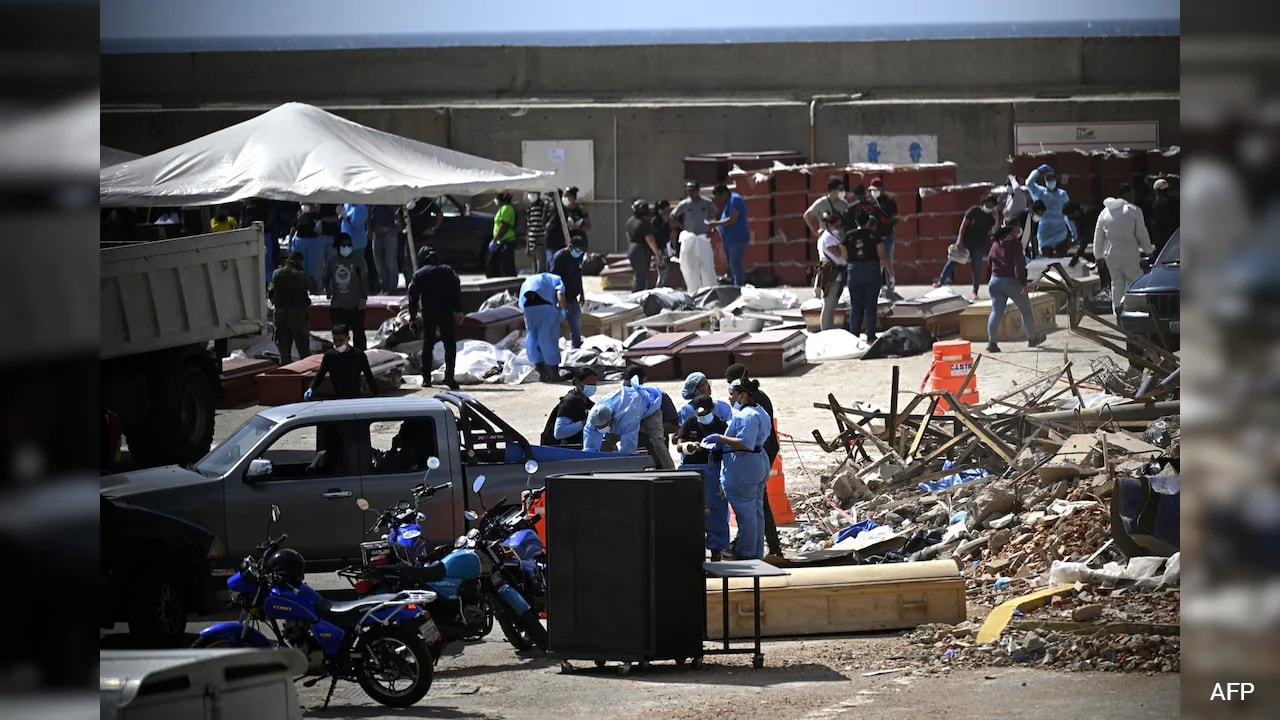
The survival interval of individuals trapped beneath structural debris following an earthquake is dictated by a decaying probability curve, commonly formalized in Urban Search and Rescue (USAR) operations as the Golden 72 Hours. This window is not an arbitrary threshold but a biological and operational limit defined by the interaction of human physiology, structural failure mechanics, and ambient environmental conditions. Statistical historical data from major seismic events demonstrates that the probability of extracting a live survivor drops below twenty percent after 72 hours, decaying exponentially toward zero by day seven.
Understanding this timeline requires analyzing the specific variables that govern the survival rate. For emergency management agencies, medical personnel, and structural engineers, calculating these limits relies on assessing three distinct, intersecting mechanisms: physical trauma severity, metabolic degradation, and microclimate toxicology.
The Structural Matrix Mechanics of Void Formation
The immediate survival of an individual depends on the structural collapse profile of the building. When a building fails, the distribution of load-bearing material determines whether a victim is instantly crushed or enclosed within a protective pocket, known technically as a void space.
The type of construction material creates a distinct structural matrix:
- Lean-To Collapse: Occurs when an exterior wall or internal floor fails on one side but remains supported on the opposite side. This creates a triangular void space with a relatively high probability of survival, provided the remaining support structure undergoes no secondary shifts.
- Vee Collapse: Formed when a floor layer is overloaded in the center, causing it to break and sink downward while the outer edges remain elevated. This leaves two isolated, acute-angled voids on either side of the failure point.
- Pancake Collapse: Typical of unreinforced masonry or poorly tied concrete slab construction. Floors drop vertically directly onto the layers below. This profile compresses the vertical space entirely, minimizing the formation of survivable voids and causing high rates of immediate trauma.
- Cantilever Collapse: Occurs when multiple outer walls fall outward, leaving internal floors suspended precariously from central structural columns. This creates highly unstable, unpredictable void spaces subject to sudden secondary collapse under the weight of rescue equipment.
The mechanical integrity of these voids limits structural survival. Unreinforced masonry blocks often crumble into highly dense debris that completely fills potential voids, leaving no air pockets. Modern reinforced concrete or steel frame structures are more rigid and tend to prop large sections of debris against each other, creating larger voids that protect trapped individuals from direct crush mechanisms.
Physiological Decay Pathways under Entrapment
If an individual survives the initial kinetic impact without fatal trauma, their survival timeline shifts to a biological resource depletion model. This decay functions via three interdependent physiological crises.
The Desiccation Bottleneck
The absolute limiting factor for human life in a void is water loss. The human body requires a baseline intake of roughly one to two liters of fluid daily to maintain renal function and clear metabolic wastes. Under entrapment conditions, the survival timeline without fluid intake rarely exceeds three to seven days.
The rate of dehydration increases according to a specific thermal function. If the ambient temperature within the rubble exceeds 30 degrees Celsius (86 degrees Fahrenheit), skin and respiratory evaporation rates rise sharply. This accelerates the onset of hypovolemic shock, a state where the heart can no longer pump a sufficient volume of blood due to severe fluid loss. Conversely, if ambient temperatures drop near or below freezing, the body burns glycogen stores rapidly to maintain core temperature, accelerating caloric exhaustion and bringing on hypothermia.
Crush Syndrome and Ischemic Systemic Failure
When a limb is compressed by heavy debris for more than four to six hours, the local tissue experiences prolonged ischemia, which is a severe restriction of arterial blood flow. This triggers a progressive cellular breakdown known as rhabdomyolysis. Inside the starved muscle tissue, cell membranes rupture, releasing massive concentrations of myoglobin, potassium, and phosphorus into the local tissue bed.
The lethal mechanism of crush syndrome occurs immediately upon extrication. When rescue workers lift the compressing debris, blood flow suddenly returns to the damaged limb. This flushes the accumulated toxins directly into the patient's central circulatory system, creating a profound chemical cascade:
- Hyperkalemia: High systemic potassium levels disrupt the heart's electrical conduction system, which can trigger sudden ventricular fibrillation or cardiac arrest.
- Myoglobin Induced Renal Failure: The large, complex structures of myoglobin molecules plug the filtering tubules of the kidneys. This causes acute tubular necrosis, cutting off urine production and leading to fatal uremic poisoning within 48 hours if dialysis is unavailable.
Toxicological Microclimates
The atmosphere within an enclosed structural void deteriorates through metabolic consumption and environmental contamination. In tightly sealed voids, the volume of available oxygen ($O_2$) is systematically consumed by the trapped individual’s respiration, while carbon dioxide ($CO_2$) concentrations rise. When atmospheric $CO_2$ exceeds five percent, it induces hypercapnia, causing respiratory depression, confusion, and ultimate unconsciousness.
This asphyxiation risk is compounded by concrete dust suspension and ambient gas line leaks. Inhaling high concentrations of particulate matter less than ten micrometers in diameter causes acute bronchospasm and severe alveolar inflammation. This restricts oxygen transfer across the lungs even if the ambient air contains normal oxygen levels.
The Rule of Threes in Survival Triage: Operates as a reliable physiological baseline for search planning. A human can survive roughly 3 minutes without oxygen, 3 days without water, and 3 weeks without food under optimal metabolic conditions. In structural collapses, the water constraint almost always dictates the absolute survival ceiling.
Operational Logistics and Triage Decision Logic
USAR teams use specialized acoustic detectors, thermal imaging cameras, and trained canine units to identify live targets within the first 72 hours. Because resources are finite, teams must deploy tactical triage logic to maximize lives saved.
[Phase 1: Surface Search] ──> Fast extraction of visible casualties.
                                    │
                                    ▼
[Phase 2: Technical Search] ─> Acoustic/Thermal array mapping of voids.
                                    │
                                    ▼
[Phase 3: Selective Digging] ─> Mechanical shoring of stable voids.
                                    │
                                    ▼
[Phase 4: Heavy Breaching] ──> Systematic lifting of non-survivable slabs.
The transition from Phase 3 to Phase 4 represents a difficult operational pivot. By day five or six, the probability of encountering living survivors drops significantly, while the risk to rescue personnel from secondary structural collapse or shifts increases.
At this juncture, emergency managers must transition their strategy from rescue to recovery. This shift involves moving away from meticulous, manual shoring operations to the use of heavy earth-moving equipment, like excavators and high-capacity cranes, to rapidly clear the site.
Strategic Framework for Urban Seismic Mitigation
To reduce the need for complex, post-collapse extrication, municipal planning agencies must shift their investments away from reactive rescue logistics and toward proactive structural engineering controls. This long-term strategy requires three distinct, mandatory policy actions:
- Mandatory Seismic Retrofitting: Municipalities located near active fault lines must enforce mandatory shear wall reinforcement and foundation anchoring on all pre-1980 unreinforced masonry structures. This intervention changes the expected collapse profile from an immediate pancake failure to a ductile, framework-yielding failure, which dramatically increases the formation of survivable void spaces.
- Decentralized Municipal Lifelines: Automated, seismic-activated shutoff valves must be installed across natural gas distribution systems. Cutting off fuel lines at the onset of a primary P-wave vibration prevents post-earthquake fires, protecting individuals trapped within structural voids from smoke inhalation and thermal trauma.
- Pre-positioned Heavy USAR Assets: Cache high-capacity hydraulic shoring equipment and heavy-lifting cranes within regional, reinforced transit hubs rather than central depots. This geographical distribution ensures that heavy extrication machinery can bypass compromised road networks and arrive at high-density collapse sites well within the critical Golden 72 Hours window.