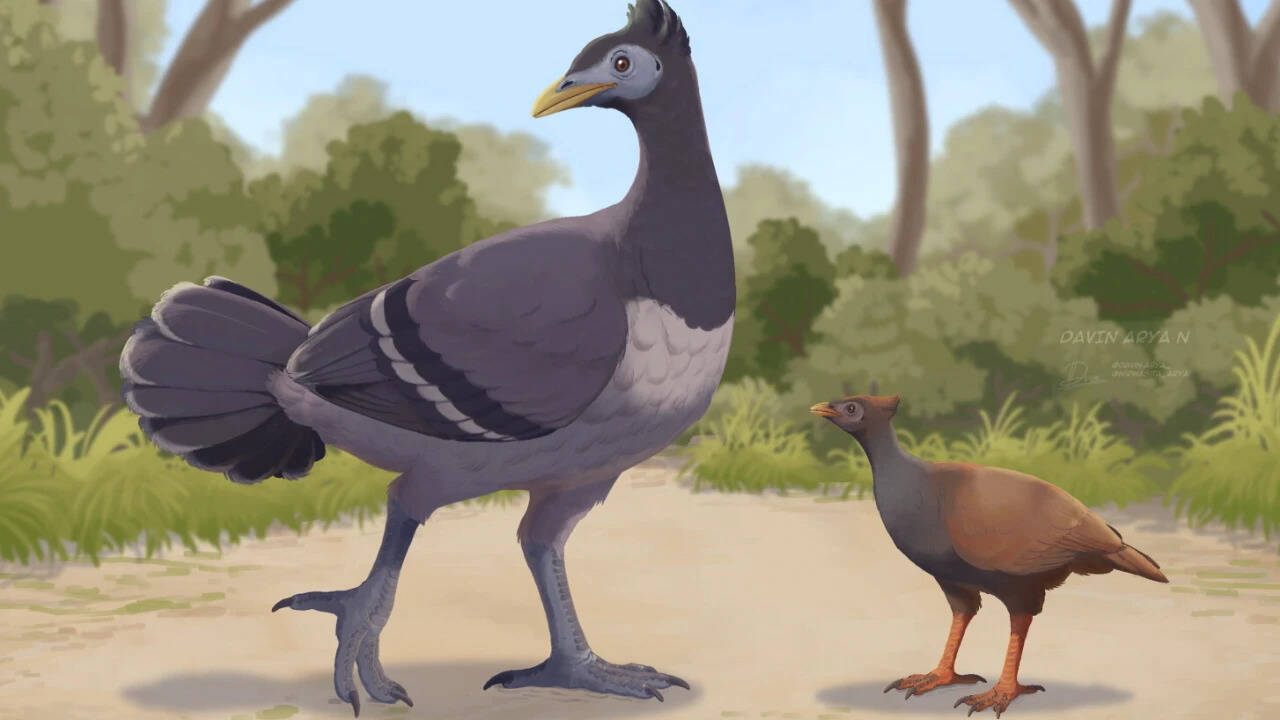
Seventeen years. That's how long a box of fossilized bones sat in storage before scientists finally realized they were looking at a brand-new species of giant bird.
Most people assume paleontology works like a Hollywood movie. Someone brushes dust off a massive skull in the desert, gasps, and holds a press conference the next afternoon. In reality, modern fossil identification is a slow, agonizing game of comparative anatomy, museum drawer digging, and taxonomic second-guessing. When researchers finally confirmed the identity of this newly recognized giant bird species 17 years after its initial discovery, it highlighted a massive blind spot in how we think about prehistoric life.
The 17-Year Gap Between Discovery and Identification
Fossils don't come with name tags. When field teams excavate a site, they often pull out thousands of fragmented specimens in a single season. The most complete skeletons get immediate attention, while isolated limb bones, vertebrae, or partial pelvises get cataloged, wrapped in plaster jackets, and shelved in museum collections for future study.
That delay isn't laziness. It's a bottleneck of expertise and reference material.
To declare a specimen a new species, you can't just say it looks big. You have to prove beyond a shadow of a doubt that it doesn't belong to any previously named bird from that same geological formation or time period. If you're dealing with a giant bird—especially from lineages like the flightless terror birds (Phorusrhacidae), giant waterfowl (Dromornithidae), or massive ratites—individual variation within a single species can be huge. Males and females often differed dramatically in size. Juveniles looked nothing like fully grown adults.
Without enough comparative skeletons on hand, rushing a species designation is the fastest way to ruin your reputation in paleontology. Scientists would rather wait a decade for a second specimen or better imaging technology than publish a "new" species that gets invalidated two years later.
What Makes Giant Bird Fossils So Hard to Classify
Mammal bones are heavy, dense, and survive millions of years underground remarkably well. Bird bones are the exact opposite.
Even in massive, flightless giants, avian skeletons retain many ancestral traits built for weight reduction. Their bones have thinner walls and hollow internal structures compared to mammals of the same body mass. When tectonic plates shift or sediment piles up over millions of years, giant bird bones crush, flatten, and splinter into jigsaw puzzles.
I've seen museum drawers full of avian fossils that look less like bones and more like crushed eggshells embedded in concrete. Reconstructing the exact curvature of a tarsometatarsus—the fused lower leg bone that acts as a fingerprint for bird taxonomy—takes months of meticulous preparation under a microscope.
The Trap of Incomplete Specimens
When the original discovery was made 17 years ago, researchers likely had enough material to know the animal was enormous, yet not quite enough diagnostic features to separate it from known relatives. A single broken femur tells you how heavy an animal was. It rarely tells you what genus it belonged to.
It usually takes one of three breakthroughs to break a 17-year stalemate:
- A secondary discovery. Another team finds a more complete skeleton with overlapping bones, suddenly giving the older, fragmentary fossil context.
- Micro-CT scanning. Modern X-ray computed tomography allows paleontologists to look inside rock matrices without destroying fragile bone, revealing hidden muscle attachment scars and nutrient foramina.
- Taxonomic revisions. Someone goes back through an entire museum collection to clean up messy 19th- and 20th-century classifications, realizing that three specimens lumped under one name actually represent two distinct species.
Why Prehistoric Giant Birds Keep Surprising Paleontologists
Every time a new giant bird species gets added to the fossil record, it forces biologists to rethink ancient ecosystems. Giant birds weren't evolutionary oddities clinging to survival. After the non-avian dinosaurs vanished 66 million years ago, birds stepped directly into vacant apex predator and megaherbivore niches across the globe.
In South America, terror birds dominated the food chain for tens of millions of years, using massive hooked beaks to hunt mid-sized mammals. In Australia, Dromornis species grew up to ten feet tall and weighed over half a ton, browsing on tough vegetation alongside giant marsupials. On islands like Madagascar and New Zealand, elephant birds and moas grew to staggering proportions simply because they had zero mammalian predators to worry about.
The catch is that giant birds were always rarer on the landscape than small songbirds or shorebirds. Just like modern ostriches or cassowaries, huge animals require massive territories and reproduce slowly. Fewer living individuals mean fewer carcasses entering the fossil record. Finding even a partial skeleton is statistically a minor miracle.
The Museum Drawer Effect in Modern Science
There's a running joke among vertebrate paleontologists that the best place to discover a new dinosaur or giant bird isn't the Gobi Desert or Patagonia—it's the basement of a natural history museum.
Roughly half of all newly named prehistoric species each year aren't fresh digs. They're legacy specimens that sat in collections for anywhere from ten to a hundred years waiting for someone with the right specialty to open the right cabinet. Funding agencies love paying for dramatic expeditions to remote badlands. They rarely hand out big grants to pay a graduate student to sit in a basement measuring 17-year-old ankle bones.
Honestly, this funding gap is the biggest reason major discoveries stay hidden in plain sight. Museum collections around the world are overflowing with unstudied material. Every budget cut to natural history museums directly slows down our understanding of Earth's biological history.
What You Should Look for When Reading Fossil News
When headlines announce a "new giant bird species identified after 17 years," most readers skim the weight estimate, look at an artist's illustration, and move on. If you actually want to understand what the discovery means, look past the sensational size comparisons and check three specific details in the underlying research.
First, check which bones were actually found. If the identification relies on a skull, pelvis, or lower leg bones, the classification is rock solid. If it's based on a single toe bone or rib fragment, expect heated debate among paleontologists over the next five years.
Second, look at the geological age and location. Knowing when and where the bird lived tells you whether it represents a brand-new evolutionary branch or simply proves that a known group survived millions of years longer than anyone thought.
Third, check whether the study includes histology or bone-ring analysis. By looking at microscopic growth rings inside the bone—similar to counting rings on a tree—scientists can prove whether the 17-year-old specimen was a fully grown adult or a massive teenager that hadn't even finished growing yet.
If you want to follow these discoveries as they happen rather than waiting for mainstream news summaries, bookmark open-access journals like PLOS ONE, PeerJ, and the Journal of Vertebrate Paleontology, or follow museum paleontology departments directly on social media where researchers regularly share behind-the-scenes photos of specimens coming out of decades-long storage.


