The fire is out. That is what the captain tells Sarah as she stands on the sidewalk, clutching a singed photo album and breathing through a wet kitchen towel. The sirens are fading into a rhythmic, haunting echo. The neighborhood smells of wet charcoal and melted plastic. Sarah looks at her home—still standing, mostly intact—and feels a surge of relief that feels like a physical weight lifting off her chest.
She thinks the danger is over. She is wrong.
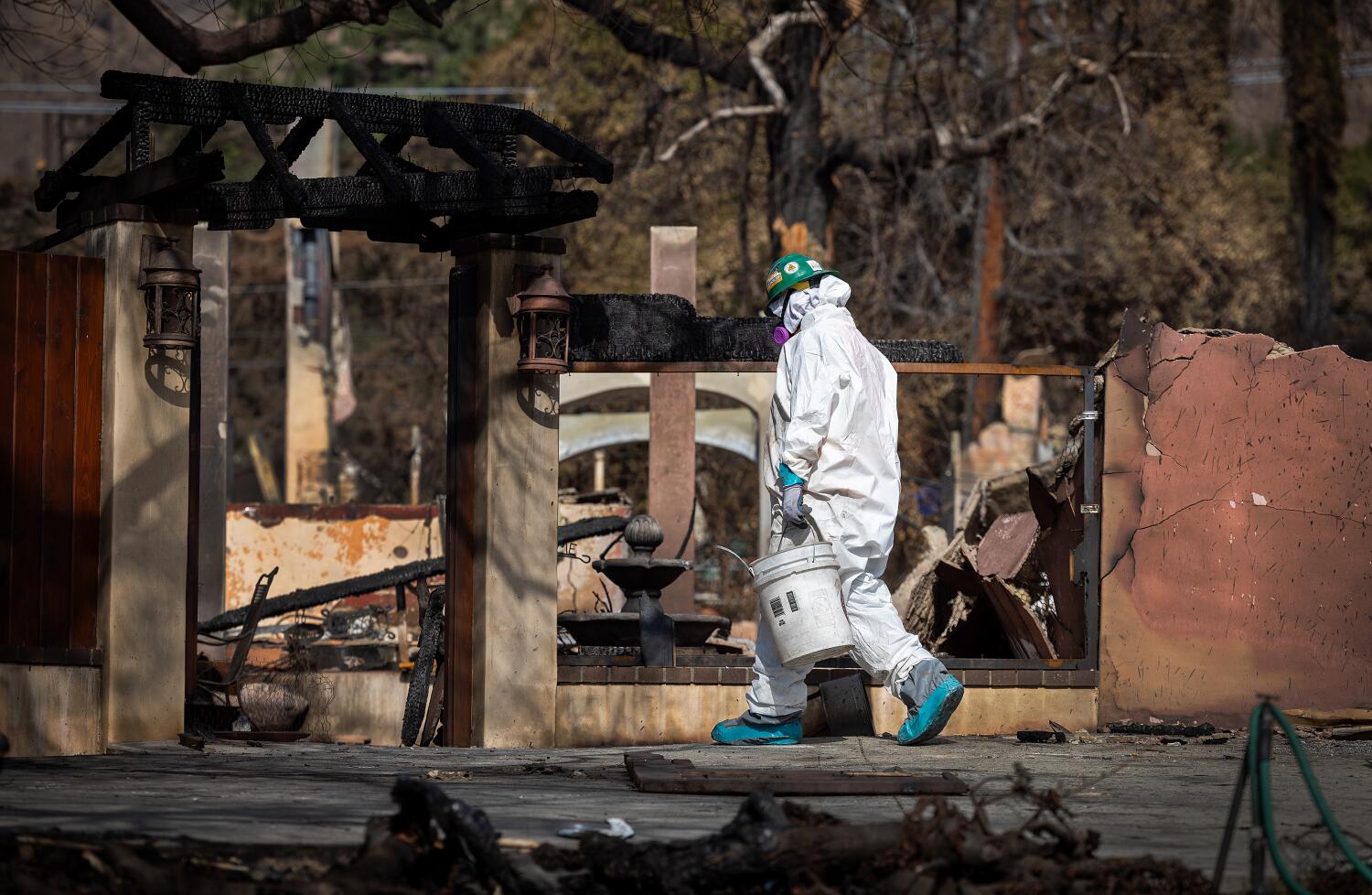
In the world of emergency response, we have become masters of the flame. We can track a wildfire’s heartbeat from space. We can drop thousands of gallons of suppressant with surgical precision. But once the embers die, we enter a bureaucratic and scientific wilderness. While the visible threat—the orange glow, the heat, the crumbling timber—is gone, a secondary disaster is just beginning to settle into the floorboards, the insulation, and the very lungs of the people trying to rebuild.
The Invisible Aftermath
When a house burns, it isn't just wood and paper turning to ash. Modern homes are repositories of complex chemistry. Your sofa is treated with flame retardants. Your plumbing is PVC. Your flooring is held together by synthetic glues, and your electronics are a periodic table of heavy metals. When these items combust, they don't just disappear. They transform.
They turn into a fine, microscopic dust laden with dioxins, furans, and lead. This is the "toxic ghost" of the fire. In the current landscape of disaster recovery, we treat this contamination with a fractured, almost frantic inconsistency. Depending on which side of a municipal border you live on, the protocol for cleaning your home could range from a professional hazardous material scrub to a guy with a shop-vac and a bucket of soapy water.
The problem isn't a lack of will. It’s a lack of a map.
A House Divided by Protocol
Consider a hypothetical scenario based on the current reality of post-fire cleanup. Two neighbors, Jim and Elias, live on the same street. A brush fire sweeps through, scorching both their backyards and sending thick plumes of black smoke through their open windows.
Jim’s insurance company follows a conservative, rigorous standard. They bring in industrial hygienists who test the soot for pH levels and heavy metals. They realize the smoke wasn't just "wood smoke"—it was "structure smoke." They strip the drywall. They replace the HVAC system. They treat the house like a laboratory spill.
Elias, however, has a different provider or perhaps lives under a different local jurisdiction. His inspector walks through, sniffs the air, and says, "Just get the carpets cleaned and wipe down the walls. You'll be fine."
Six months later, Jim is back in his home, safe. Elias is back in his home, too, but his young daughter has developed a persistent, hacking cough. He doesn't know that every time she sits on the rug to play, she is kicking up microscopic particulates of lead and arsenic that were never properly removed. This isn't just an inequality of service; it is a public health crisis masquerading as a logistical hiccup.
The Science of the Smear
We often assume that if we can't see the soot, it isn't there. But post-fire contamination behaves more like a virus than a spill. It migrates. It hides in the "interstitial spaces"—the gaps behind your baseboards, the interior of your light fixtures, the pores of your wooden furniture.
Standard cleaning often does nothing more than move the poison around. Imagine trying to clean a grease stain with a dry paper towel; you just end up with a larger, thinner grease stain. When we use improper cleaning methods on fire-damaged properties, we are often just "smearing" the toxicity into the environment, making it harder to detect but no less dangerous.
The current push in the industry is to end this "fractured approach." We need a unified standard that recognizes fire debris for what it is: hazardous waste. We wouldn't let a child play in a pile of industrial runoff, yet we allow families to move back into homes where the walls are sweating the chemical remnants of a melted television.
The Cost of Silence
Why has it taken so long to fix this? The answer is as old as any systemic failure: money and complexity.
Standardizing post-fire decontamination means higher costs for insurance companies and longer wait times for homeowners desperate to return to normalcy. It’s easier to pretend a "deep clean" is sufficient than to admit a home might need a full environmental remediation. But the long-term costs—the chronic respiratory issues, the neurological impacts of heavy metal exposure, the plummeting property values when hidden damage is eventually discovered—far outweigh the initial price of doing it right.
We are currently operating in a world where we prioritize the "look" of recovery over the "reality" of safety. We want the charred remains cleared away quickly so the neighborhood looks normal again. We want the "Out of Order" signs taken down. But "looking normal" is a dangerous metric when dealing with invisible carcinogens.
The Path Forward
The solution lies in a move toward a centralized, science-based protocol. This isn't about more red tape; it's about better tape.
- Mandatory Testing: Just as we test for mold or lead paint during a home sale, post-fire testing should be a non-negotiable standard for any structure exposed to significant smoke.
- Certification of Remediation: We need a clear, universal "Clean Bill of Health" for homes that have undergone decontamination, backed by third-party verification rather than a quick visual check by an adjuster.
- Public Literacy: Homeowners need to know that "smelling like a campfire" weeks after the event is not a cozy atmospheric quirk—it is a warning sign.
This is a story about the gap between what we see and what we know. Sarah, standing on that sidewalk, sees a house that survived. She sees a victory. But the victory is hollow if the air inside that house is a slow-acting poison.
We have spent decades learning how to fight the flames. We know how to run into the burning building. We know how to save the structure. Now, we have to learn how to save the people who live inside it long after the fire trucks have gone home. We have to stop treating fire recovery as a series of disconnected tasks and start treating it as a single, sacred obligation: the restoration of a safe sanctuary.
The embers are cold. The smoke has cleared. But the real work is just beginning in the silence of the aftermath.
Imagine Sarah walking back into her front door. She runs her hand along the banister. She takes a deep breath, relieved to be home. In a world with a unified standard, that breath is the start of a new chapter. In our current world, it might be the start of a tragedy she won't recognize for years.
The ghost is still in the room. It’s time we stopped inviting it to stay.