The tea in the paper cup was still hot when the ground began to shake.
In the rugged, sun-baked expanse of Balochistan, the railway is more than just infrastructure. It is a steel spine cutting through an unforgiving terrain of jagged mountains and desolate plateaus, connecting isolated communities to the rest of Pakistan. For the passengers aboard the Jaffar Express, traveling toward Quetta, the journey was a familiar routine. The rhythmic clatter of steel on steel usually acts as a lullaby. Recently making news in this space: The Quetta Railway Station Tragedy and the Security Crisis in Balochistan.
Then came the flash.
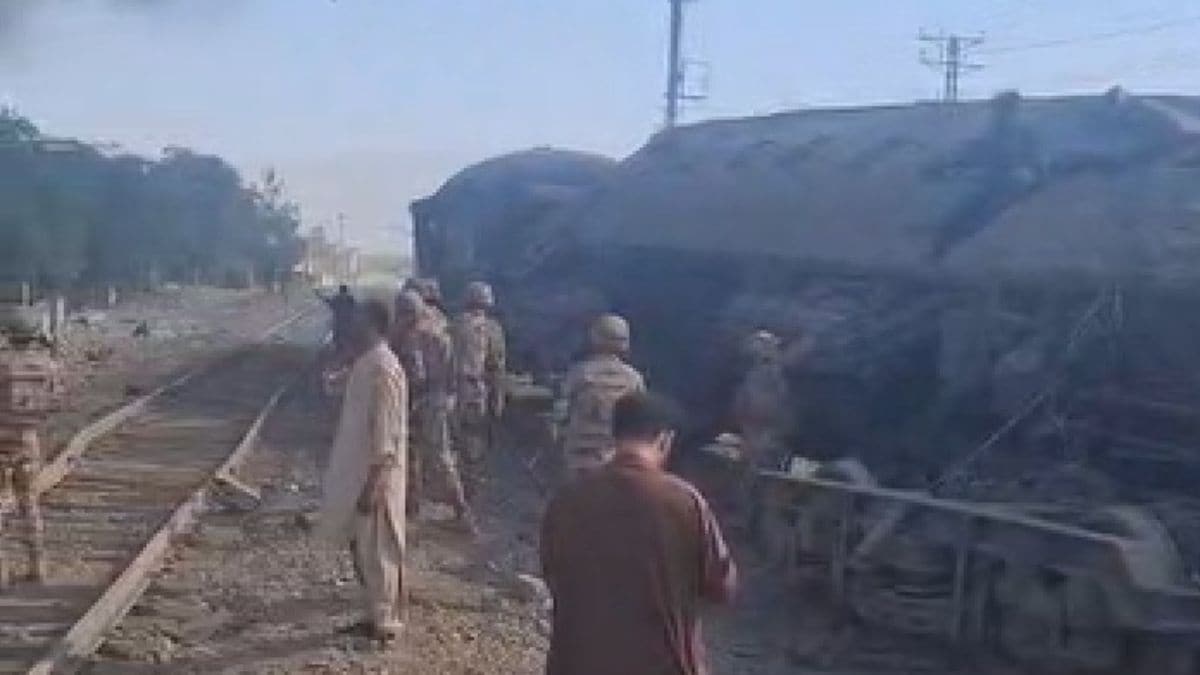
A sudden, violent detonation shattered the afternoon routine. In an instant, the screech of tearing metal replaced the steady hum of the tracks. The blast ripped through the passenger carriages, derailing the train and turning a routine commute into a scene of chaotic devastation. Dozens of lives were cut short in the wreckage, leaving behind scattered belongings, unfinished conversations, and a community plunged into mourning. More information into this topic are explored by USA Today.
This is the human cost of a conflict that often plays out in brief, sterile headlines on the other side of the world. Behind the cold statistics of casualties and claims of responsibility lies a deeper, more painful reality about the fragility of peace in a region caught in the crosshairs of geopolitics and insurgency.
The Weight of the Shrapnel
When a train is targeted, the impact ripples far beyond the twisted metal left on the tracks. Consider a hypothetical passenger—let us call him Tariq—a young laborer returning home to Quetta after months of working in the factories of Punjab. His pockets hold his hard-earned wages, intended for his family's winter supplies. His mind is already at the dinner table, imagining the faces of his children.
When the bomb explodes, Tariq does not just become a data point in a news report. His absence becomes a permanent void in a household that depended entirely on him.
The blast near Quetta, for which the Baloch Liberation Army (BLA) quickly claimed responsibility, is part of a deliberate strategy. Insurgent groups frequently target transport links and infrastructure to challenge the state's authority and disrupt economic activity. Yet, the immediate victims are rarely the policymakers or the military commanders. They are the everyday citizens—students, laborers, families—who simply needed to get from one city to another.
The geography of Balochistan compounds the tragedy. The province is vast, arid, and sparsely populated, making rescue operations inherently difficult. When an emergency occurs on a remote stretch of track, medical help is often hours away. Local residents and surviving passengers are frequently the first to respond, pulling victims from the debris using bare hands and makeshift tools long before sirens echo in the distance.
A History Carved in Stone
To understand why a train line becomes a battlefield, one must look at the landscape itself. Balochistan is Pakistan’s largest province by area, yet it remains the least populated and most economically marginalized. It is a region rich in natural resources, from natural gas to vast mineral deposits, standing as a crucial hub for international trade routes, including major foreign-funded infrastructure projects.
This stark contrast between mineral wealth and local poverty has fueled decades of grievance.
Balochistan Province: High Strategic Value vs. Local Marginalization
├── Natural Resources (Gas, Minerals, Deep-water Ports)
└── Local Realities (Economic Underdevelopment, Infrastructure Gaps)
Insurgent factions like the BLA argue that the central government exploits the province's resources without returning the wealth to its people. The state, conversely, views these militant groups as terrorists sabotaging national development and regional stability, often with external backing.
The railway, built during the colonial era and maintained through decades of political turbulence, is a potent symbol. To the state, it represents integration, progress, and national unity. To the insurgents, it is a vulnerability—a long, exposed artery that can be severed to send a message to Islamabad and international investors.
The Insecurity of the Commute
For those who live in Quetta or rely on the transport networks of Balochistan, fear is an unwanted travel companion. Every departure carries a unspoken weight. Parents say goodbye to their children with a little more intensity; travelers check the news nervously before purchasing a ticket.
Security forces employ thousands of personnel to guard the tracks, patrolling vulnerable choke points and utilizing drone surveillance to spot anomalies. But a railway line stretching across hundreds of miles of remote desert is impossible to secure completely. A single hidden device, placed in the dead of night, can undo months of security efforts in a fraction of a second.
This vulnerability shakes the public confidence necessary for economic growth. When travel becomes an act of courage, regional trade slows down, investments dry up, and isolation deepens. The cycle of economic hardship and political resentment continues to spin, feeding the very instability that caused the violence in the first place.
Beyond the Smoldering Metal
As the smoke clears from the latest derailment, the immediate response follows a familiar pattern. Condemnations are issued from government offices. Security cordons are tightened. Investigators sift through the debris to determine the exact nature of the explosives used.
But the true challenge lies in addressing the underlying fractures that allow such violence to persist. Military measures can secure a perimeter or clear a track, but long-term stability requires bridging the deep economic and political divides that define the relationship between the periphery and the center.
The twisted tracks will be repaired. New sleepers will be laid, and the Jaffar Express will eventually run again, its whistle blowing across the Balochistan plateau. But for the families of those who did not arrive in Quetta, the journey will never truly end. They remain stranded in the moment of the blast, waiting for answers that a standard news report can never provide.