Every time a minor grid flicker in the territory triggers safety brakes and leaves commuters stuck between floors, the media runs the exact same lazy panic narrative. Headlines scream about hundreds of stranded citizens, public safety crises, and failing infrastructure. It is theater for the anxious.
The standard public reaction is sheer outrage directed at utility providers and property managers. People treat a temporary mechanical standstill like a catastrophic structural failure. They act as if a steel box locking securely into place after a voltage dip is an indicator of decay rather than the exact opposite.
Let us be entirely clear about how modern vertical transit is built. When a power fluctuation hits, elevators do not plummet to the basement like a Hollywood action sequence. They do the exact opposite. The safety systems engage immediately because the default state of a high-speed lift is absolute security, not continuous motion. If the power sags even a fraction of a volt below operational thresholds, gravitational brakes clamp down with mechanical certainty. The system chose your temporary inconvenience over your permanent obituary.
Yet, public discourse treats this fail-safe mechanism as a scandal. Commuters trapped for an hour in a well-ventilated cabin with emergency lighting start tweeting about negligence. They demand absolute zero downtime in a world where electrical grids are massive, interconnected webs subject to transient anomalies. That expectation is technologically illiterate.
I have spent two decades consulting on high-rise MEP coordination across dense urban centers, and I have watched facility managers spend fortunes trying to appease people who demand absolute perfection from complex electro-mechanical assemblies. We have engineered our buildings to be so foolproof that users have completely forgotten how machines actually work. When a backup generator takes thirty seconds to synchronize or a frequency inverter trips, passengers panic because they have been conditioned to believe that life should never pause for even a second.
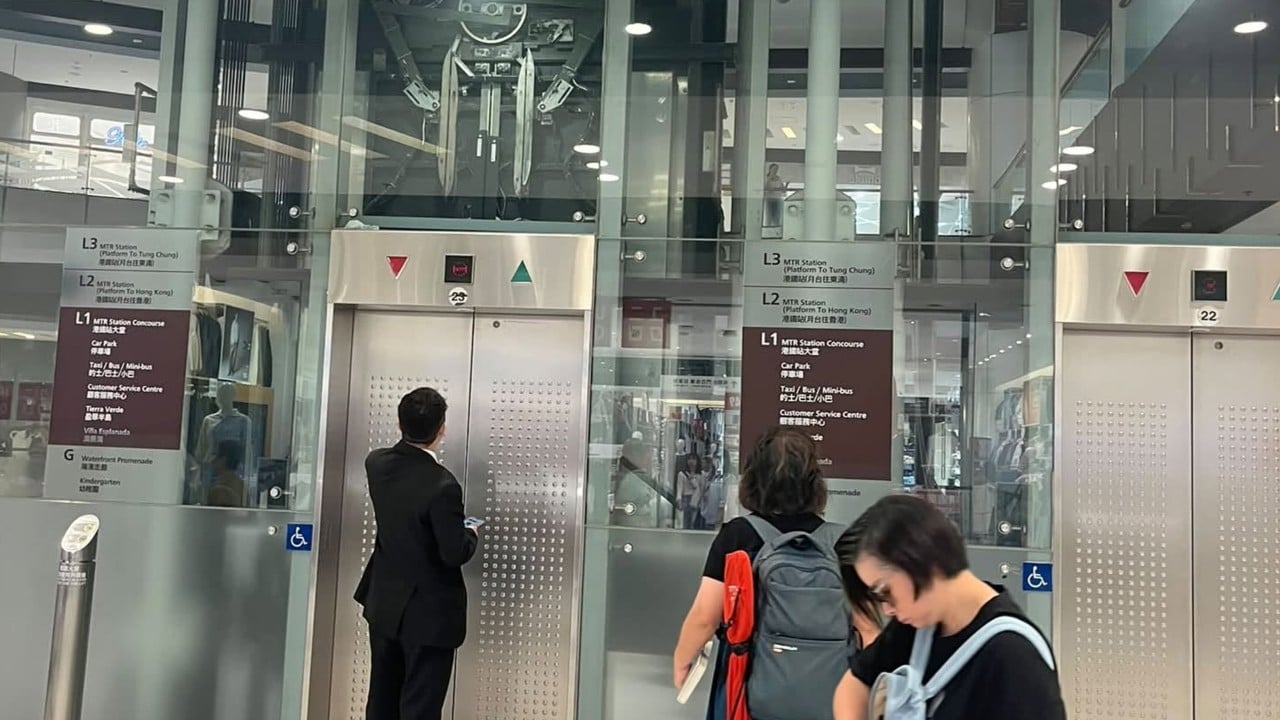
This brings us to the core misconception underpinning every mainstream report on Hong Kong lift entrapments. The narrative assumes that a power dip causing a stoppage is a malfunction. It is not. It is a feature designed to prevent disaster. The real hazard is not the lift stopping; the hazard is the hysterical reaction of people who treat a temporary timeout like an emergency evacuation.
Consider the mechanics of a modern traction lift. You are suspended in a car connected by multiple steel wire ropes, each capable of supporting the car's maximum load several times over. Beneath you is a counterweight. Beside you are guide rails. Surrounding the whole apparatus are governors and safety gears designed to wedge into the rails if speed exceeds safe parameters. When the power dips, the brake coil loses current, and springs force the brake pads onto the drum. The car stops. Smoothly. Securely.
The discomfort is purely psychological. You are sitting in a box with air circulation, emergency lighting, and an intercom, feeling aggrieved because your commute to a meeting is delayed by forty minutes.
Contrast this with the alternative. If systems ignored micro-dips to keep traffic moving, we would see catastrophic failures when voltage surges damage sensitive controller logic boards while the car is in motion. Modern elevators use variable frequency drives that are intensely sensitive to electrical quality. A minor grid instability can cause erratic motor behavior if safety interlocks do not cut power instantly. Stopping the car is the safest possible response.
The media loves to run stories about hundreds of people trapped because big numbers generate clicks. But let us look at the actual risk exposure. Out of millions of daily journeys across thousands of towers in a dense metropolis, a weather-induced grid wobble catches a fraction of a percent of riders mid-transit. They are inconvenienced. None are harmed by the stoppage itself.
The obsession with eliminating every micro-interruption leads down a dangerous path. Property owners start installing over-engineered redundancy systems that cost millions, passing those costs down to tenants and buyers, all to satisfy a public that refuses to tolerate minor friction. We are prioritizing psychological comfort over economic reality.
If you get stuck in a lift because of a grid dip, your first impulse should not be indignation. Your first impulse should be gratitude that the engineers who designed the building cared more about your safety than your schedule.
Stop demanding miracles from machines. Start understanding the physics of modern infrastructure. The next time the lights flicker and the brakes lock, lean against the wall, take a breath, and accept that being slightly late is the small price you pay for not plunging down a shaft.
The system worked. Get over it.