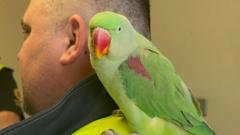
Troy the African Grey parrot is finally back on his perch. He's safe. He's fed. Most importantly, he's far away from the runways of Dublin Airport. This wasn't just a simple case of a pet getting lost. It was a multi-day saga that saw a bird navigate one of the busiest pieces of airspace in Ireland while his owner, Lubomir, dealt with the kind of stress most pet parents can't even imagine. If you think a lost dog is a nightmare, try tracking a creature that can fly 30 miles per hour and blends into a cloudy sky.
The story started when Troy slipped away from his home in Santry. For those who don't know the Northside of Dublin well, Santry is right on the doorstep of the airport. It's a matter of minutes for a bird with Troy’s wingspan to go from a suburban garden to the high-security perimeter of a major international travel hub. When he took off, he didn't just fly around the block. He headed straight for the restricted zones where jet engines and hawks usually rule the roost.
The high stakes of a bird in the airfield
Most people see a parrot and think of crackers or funny phrases. I see a survival situation. African Greys are incredibly smart, but they aren't built for the Irish wind or the massive noise of a Boeing 737 taking off nearby. When Troy ended up at Dublin Airport, it wasn't just about him being "lost." He was in a zone where his presence could actually trigger safety protocols. Airports take bird strikes seriously. Usually, they're worried about gulls or crows. A pet parrot is a whole different ball game.
Lubomir didn't just sit around and hope for the best. He went on a massive search. He used social media. He talked to anyone who would listen. The breakthrough came when staff at the airport spotted the bird. But catching a parrot in a giant open field isn't like catching a cat in a closet. These birds are skittish. They're fast. One wrong move and they're gone again, miles away into a different zip code.
Dublin Airport staff actually played a massive role here. They didn't just shoo him away. They worked with the owner to ensure the bird could be recovered without causing a ground stop or endangering the animal. It took patience. It took several sightings and a lot of waiting. Eventually, the luck of the Irish—or maybe just some really good parrot treats—brought Troy back into his owner's hands.
Why African Greys are a unique challenge to find
You've got to understand the biology here to appreciate why this was so difficult. African Greys are masters of camouflage in certain lights. Their feathers are a soft, smoky gray that looks exactly like a Dublin rain cloud. If Troy sat still on a concrete ledge or a gray hangar roof, he was basically invisible.
These birds also have a specific psychology. When they get out, they often go into a state of "flight or fight" that actually makes them forget how to come down. They fly up high because it's safe. Then they get stuck. They're hungry and tired, but they're too scared to descend to a human, even one they love. I've seen cases where owners have to wait days for the bird to get hungry enough to finally take the risk of flying down to a familiar shoulder.
What to do when your bird takes a flight of fancy
If you find yourself in Lubomir's shoes, you don't have time to panic. Minutes matter. The first thing you do is get their cage outside. It sounds simple, but a bird recognizes its "bedroom" from the air better than it recognizes you. Put their favorite snacks in there. If you have another bird that they get along with, put that bird’s cage nearby too. The sounds of a flock member are a powerful homing beacon.
You also need to contact the authorities immediately if you live near an airport or a busy road. In Troy's case, alerting the airport was a smart move. If the ground crew knows there is a pet in the area, they might be more inclined to help with a rescue rather than seeing it as a pest to be moved along.
- Don't chase. If you see them, stay still.
- Use familiar sounds. Play recordings of your own voice or other birds on a loop.
- Update the microchip. Yes, parrots should be chipped or at least have a registered leg band.
- Social media is your best tool. Local community groups on Facebook or X (formerly Twitter) can spread a photo faster than any flyer on a telephone pole.
The reality of bird ownership near transport hubs
Living near an airport like Dublin means you have to be twice as careful. The wind currents created by large buildings and open runways can catch a small bird and carry it much further than it intended to go. Troy was lucky. He didn't get sucked into an engine. He didn't get attacked by the local hawk population that many airports use for pest control. He found a spot to hunker down and stayed there until the right people saw him.
The emotional toll on Lubomir was clear to anyone following the story. It's a gut-wrenching feeling. You look at an empty perch and realize how quiet the house is. Parrots aren't just pets; they're toddlers that live for sixty years. They have personalities, grudges, and favorite jokes. Losing one is like losing a family member who just happens to have feathers.
Keeping your pet safe from the skies
The takeaway here isn't just a "feel good" story. It's a warning. Even the most well-trained bird can spook. A car backfiring or a sudden gust of wind can trigger an instinctive flight response. Once they're up there, the world looks completely different to them. They don't see "the house with the red door." They see a sea of gray roofs.
If you have a bird, invest in a high-quality travel carrier and never, ever take them outside without a harness or a cage, no matter how much you trust them. Troy’s Dublin Airport adventure ended with a happy reunion and a very relieved owner, but it could have easily gone the other way. Check your window screens. Double-check your door latches. Make sure your bird's leg band info is up to date in a central database.
Don't wait for a crisis to realize your bird isn't as "stay-at-home" as you think. Get a GPS tracker if you plan on doing any outdoor training. They're small now, light enough even for an African Grey. It's a small price to pay to avoid spending three days scouring the perimeter of an international airport. Troy is home because of a mix of luck, community effort, and an owner who refused to give up. Make sure you're doing the work now so you never have to rely on luck alone.


