Barbados wasn't just a colony. It was a factory. For centuries, the British Empire operated a brutal, high-output machinery of human extraction on this small Caribbean island. We aren't talking about abstract historical "wrongs" here. We’re talking about a specific, quantifiable theft of life. A recent landmark report from the University of the West Indies (UWI) has finally put a number on it, and it’s staggering. Britain extracted roughly 25 million years of human life and labor from enslaved people in Barbados alone.
Think about that scale. That isn't just a statistic. It’s the equivalent of millions of lifetimes burned away to build the banks, manors, and industries that still define modern Britain. If you've ever walked through the City of London or marveled at an English country estate, you're looking at the physical manifestation of those stolen years.
The Brutal Math of the Sugar Machine
History books often sanitize the transatlantic slave trade. They use words like "commerce" or "triangular trade." Let’s be blunt. It was a death trap. Barbados became the blueprint for the plantation economy. By the mid-1600s, the island shifted from small-scale tobacco and cotton farming to large-scale sugar production. This changed everything. Sugar was the oil of the 17th century. It was incredibly profitable and incredibly lethal to produce.
The UWI report, led by world-renowned historian Sir Hilary Beckles, breaks down how this extraction worked. It wasn't just about the hours worked in a day. It was about the total erasure of a person’s potential. Most enslaved people on Barbadian sugar plantations died within seven to ten years of arrival. They were worked to death, literally.
When you calculate the "years of life" lost, you aren't just counting the time spent swinging a machete. You're counting the decades of life they should have had. You're counting the children who weren't born or who died in infancy because of systemic malnutrition and exhaustion. When the report says 25 million years, it’s measuring the gap between a natural human lifespan and the truncated, agonizing existence forced upon the enslaved.
Why Barbados Was Different
Barbados was the first colony where the enslaved population actually outnumbered the white settlers by a massive margin. This created a permanent state of high-tension surveillance and extreme violence. The 1661 Barbados Slave Code became the legal template for the rest of the British Empire, including Jamaica and the American South. It codified the idea that Black people weren't human beings but "chattel"—property.
This legal framework allowed for the maximum possible extraction of labor. There were no "off" days. There was no retirement. Even the elderly and the young were squeezed for every bit of utility. The British didn't just want sugar. They wanted total economic dominance. Barbados gave it to them. At one point, this tiny island was more valuable to the British Crown than all the North American colonies combined.
The wealth generated here didn't stay in the Caribbean. It flowed back to Liverpool, Bristol, and London. It funded the Industrial Revolution. It built the Royal Navy. It essentially bankrolled the modern world. The 25 million years stolen from Barbados represent the primary capital for the British Empire’s global expansion.
The Debt That Nobody Wants to Pay
The conversation around reparations usually gets bogged down in "who is alive today." That's a distraction. The UWI report frames this as an economic and moral accounting. When a corporation steals intellectual property or a country illegally seizes assets, there are legal mechanisms for restitution. Why is human life treated differently?
Sir Hilary Beckles and the CARICOM Reparations Commission argue that the poverty seen in the Caribbean today is not a failure of the people living there. It’s the direct result of centuries of "underdevelopment" by design. Britain didn't just take the labor; they took the profit and left the island with the bills. They left an island with exhausted soil and a population suffering from the generational trauma of systemic abuse.
It’s also vital to remember that when slavery was "abolished" in 1833, the British government didn't pay a single cent to the enslaved. Instead, they paid £20 million in compensation to the slave owners. That was 40% of the national budget at the time. British taxpayers only finished paying off the debt for that "compensation" in 2015. You might have been paying for your ancestors' "loss of property" without even knowing it.
The Myth of the Benevolent Empire
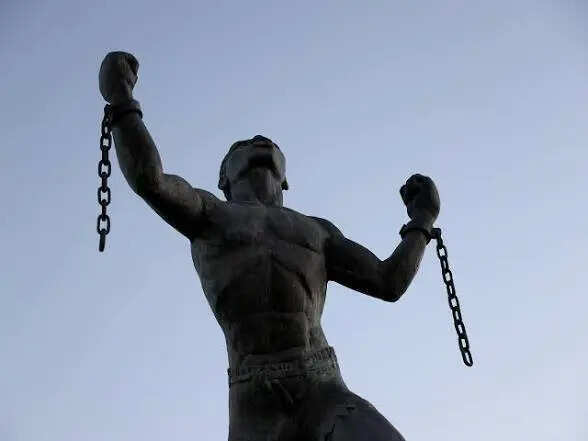
There's a persistent narrative that Britain was the "moral" power because it eventually ended the slave trade. That’s a convenient half-truth. They ended it only after the economic model began to shift and after countless slave rebellions—like Bussa’s Rebellion in Barbados in 1816—made the system too expensive to maintain through pure force.
Ending the trade didn't end the extraction. The "Apprenticeship" system that followed slavery was just slavery with a different name. People were still forced to work for their former masters for no pay for years. The extraction of those 25 million years continued well into the 19th century under various legal guises.
What This Means for You Today
This isn't just about history. It’s about the current global economic order. The gap between the "developed" West and the "developing" Caribbean is a gap created by this 25-million-year theft. It affects trade deals, climate change vulnerability, and international debt.
If you want to actually understand this, you need to look past the political rhetoric. Start by looking at the numbers.
- Read the CARICOM Ten Point Plan for Reparatory Justice. It’s not just about cash transfers. It’s about debt cancellation, public health investment, and technology transfer.
- Support the Bridgetown Initiative. Led by Barbados Prime Minister Mia Mottley, this is a modern effort to reform the global financial system so it stops penalizing island nations that were historically looted.
- Challenge the curriculum. If your local school is still teaching that the British Empire was mostly about building railways and "spreading civilization," it’s time to bring up the 25 million years of stolen life.
We can't get those years back. We can't un-die the millions who perished in the cane fields. But we can stop pretending the wealth of the modern world appeared out of thin air. It was built on the backs of people who were never paid, in a system that was designed to use them up and throw them away. Acknowledging the 25 million years is just the first step toward a balance sheet that actually makes sense. Look into the archives, support the researchers at UWI, and demand that the history of Barbados be told as an economic reality, not a colonial fairy tale.