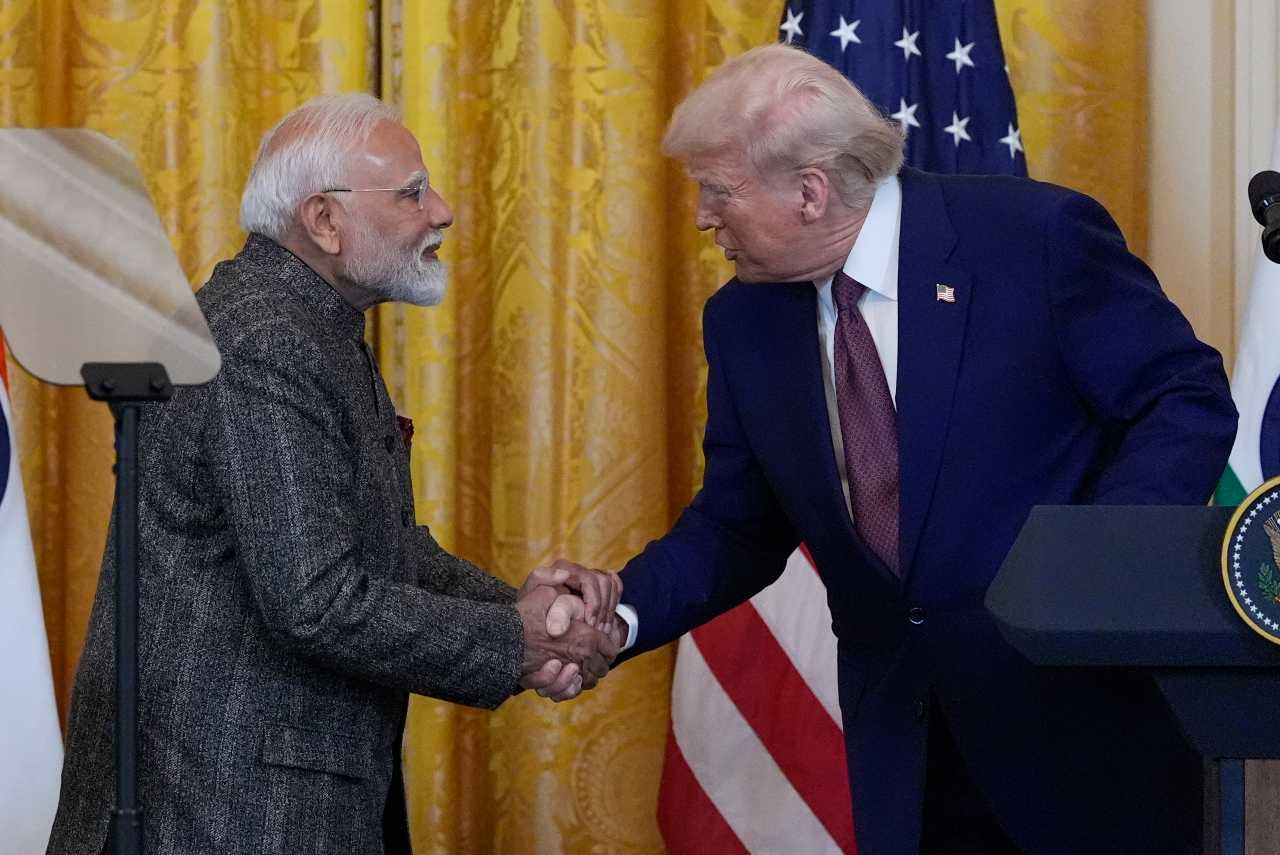
Donald Trump just put India right back in his economic crosshairs. Speaking to reporters at the White House on Thursday, June 4, 2026, the US President didn't hold back on his view of history. He claimed that for decades, New Delhi basically treated America like an open piggy bank.
"For years, India took advantage of the United States," Trump said. "They charged us tremendous tariffs and paid nothing."
But then came the twist. According to Trump, that dynamic isn't just changing; it has completely flipped. He proudly declared that the US is now "making a lot of money with India."
If you're trying to figure out what this means for global markets, you aren't alone. It sounds like classic campaign-style rhetoric, but there's a massive web of actual policy, judicial defeats, and intense backroom negotiations driving these words. Despite the blunt accusation, Trump made sure to inject some personal warmth, calling Indian Prime Minister Narendra Modi a "good friend" and stating flatly that a trade deal is coming soon.
It's a bizarre mix of public pressure and political friendship. Let's look at what's actually happening behind the scenes because the real story is a lot more complicated than a White House soundbite.
The Chaos Behind the Reversal Claim
To understand why Trump thinks the US is suddenly making money off India, you have to look at the absolute chaos that hit US tariff policy earlier this year.
Back in August, Trump slapped a punitive 25% tariff on Indian imports, furious that New Delhi was buying Russian oil and effectively helping finance the war in Ukraine. Fast forward to February 2, 2026, and both nations managed to strike an interim trade deal. That agreement was supposed to slash those combined US tariffs on Indian goods from a brutal 50% down to a much more manageable 18%. The White House even put out a fact sheet confirming that Trump agreed to drop the extra 25% levy because India committed to stopping its purchases of Russian oil.
Then the lawyers got involved.
On February 20, 2026, the US Supreme Court dealt Trump a massive blow. The judges struck down his global tariffs, ruling that he completely blew past his executive authority. The court stated that the 1977 International Emergency Economic Powers Act, which Trump used to justify the taxes, doesn't actually give the president the power to just impose tariffs at will.
Trump didn't blink. Hours after the ruling, he pivoted to the 1974 Trade Act, immediately imposing a temporary 10% tariff on global imports for a maximum of 150 days while demanding Congress approve a permanent extension. The very next day, he cranked that rate up to 15%, calling it the "fully allowed, and legally tested" level.
When Trump says the US is making money now, he's talking about the raw cash flowing into US customs from these sweeping baseline tariffs. India used to enjoy easy access to the US market while keeping its own domestic barriers high. Now, every ship leaving Mumbai or Chennai for an American port faces a strict tax collector at the border.
The New 12.5 Percent Forced Labor Threat
Just as Indian negotiators thought they were navigating the baseline tariff mess, Washington dropped a brand-new bombshell. The Office of the United States Trade Representative (USTR), led by Ambassador Jamieson Greer, just proposed a new 12.5% tariff aimed at 60 global economies.
India sits right near the top of that list.
The justification this time isn't geopolitics or oil. It's labor. The US claims these 60 economies are failing to effectively block imports made with forced labor from entering their own domestic markets. According to the USTR proposal, countries that have solid restrictions against forced labor goods will face a 10% tariff, while countries without comparable measures—including India, China, Japan, the UK, and Vietnam—get slapped with the full 12.5% penalty.
Greer didn't mince words about the policy. He stated that the failure of important trading partners to police forced labor creates an unlevel playing field that forces American workers to compete unfairly.
This isn't just an idle threat. It's a massive point of leverage right in the middle of active negotiations.
Commas and Full Stops in New Delhi
You'd think all these tariff threats would crash the trade talks entirely. Strangely, it's doing the opposite. Officials from both sides just wrapped up four intense days of negotiations in New Delhi, running from June 1 to June 4, 2026.
The American delegation, led by chief negotiator Brendan Lynch, huddled with India's team, headed by Darpan Jain, an additional secretary in the Department of Commerce. They dug into the gritty details: market access, customs procedures, non-tariff barriers, and economic security.
The word from inside the rooms is surprisingly positive. India's Commerce and Industry Minister, Piyush Goyal, downplayed the tension, suggesting that the first phase of the Bilateral Trade Agreement (BTA) is practically done. He told the press that negotiators are basically just arguing over "commas and full stops" at this point.
US Ambassador to India Sergio Gor backed up that optimistic view, confirming that the talks are in their final stages with only a tiny handful of unresolved issues left on the table.
The Looming Russian Oil Deadline
There's one more ticking clock that could ruin this sudden burst of optimism: June 17, 2026.
That's the day the current US waiver allowing India to buy Russian oil officially expires. Washington initially granted these time-limited waivers to prevent a total collapse of global energy supplies after conflict erupted in West Asia and threats emerged around the critical Strait of Hormuz. Because Gulf oil was suddenly risky, India used the legal loophole to restart its heavy buying of discounted Russian crude.
US Secretary of State Marco Rubio made it clear to Congress this week that the Biden-era leniency is dead. He stated that the underlying policy of the US is to sanction Russian oil, and they want to end the exemptions as soon as possible.
The US Treasury Department holds the power to extend that waiver. If they let it expire on June 17, India faces a brutal choice: stop buying Russian oil entirely or watch Trump's trade diplomacy dissolve back into a wave of punitive 25% tariffs.
How Businesses Can Navigate the Tariff Volatility
If you're running a business that relies on the US-India supply chain, you can't afford to just sit back and watch the political theater. The rules are changing by the week. You need a concrete plan to protect your margins right now.
- Audit Your Supply Chain Immediately: The USTR is explicitly targeting forced labor connections under Section 301. You need absolute transparency on every tier of your supplier network in India. If your sub-tier suppliers can't prove their labor practices, you're looking at a sudden 12.5% cost spike.
- Re-evaluate Contractual Incoterms: Don't get caught holding the bill for unexpected border taxes. Review your shipping agreements. If you're importing into the US under Delivered Duty Paid (DDP) terms, you bear the entire brunt of Trump's sudden tariff adjustments. Switch to Free on Board (FOB) or Cost, Insurance, and Freight (CIF) where possible to redistribute tariff liabilities.
- Build 15 Percent Buffers into Q3 Pricing: Do not price your goods based on the assumption that an interim trade deal will instantly wipe away duties. With the Supreme Court ruling pushing Trump to use the 1974 Trade Act, the 15% baseline tariff is the reality for the next few months. Build that exact margin loss into your short-term financial forecasts.
Trump and Modi might be good friends, but when it comes to the balance sheet, Washington is playing a brutal game of economic hardball. Expect a deal, but expect to pay the entry fee first.