The Arctic is no longer a frozen wasteland on the edge of the map. It is the newest theater for global dominance. President Donald Trump has officially secured a high-stakes trilateral agreement with Denmark and Greenland that fundamentally rewrites North American defense.
If you thought his first-term ambitions to purchase the island were just a passing social media stunt, think again. The framework signed in late 2026 gives the United States permanent control over military and security interests across Greenland without rewriting the island's sovereign borders.
What the Greenland Defense Agreement Actually Changes
For decades, the United States relied on the 1951 defense framework to operate the vital Pituffik Space Base (formerly Thule Air Base). That era of limited cooperation is over. The new treaty opens up massive strategic breathing room for Washington in the High North.
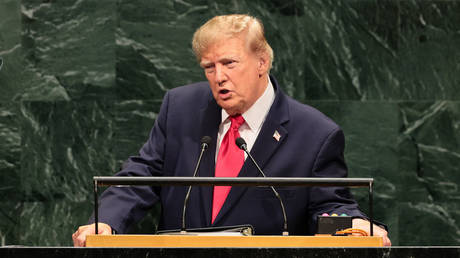
Under the terms agreed upon by Trump, Danish Prime Minister Mette Frederiksen, and Greenlandic Prime Minister Jens-Frederik Nielsen, the scope of US operations expands dramatically:
- Expanded Military Footprint: The US gains the right to modernize and expand operations at Pituffik, alongside creating two brand-new defense areas at Narsarsuaq and Mestersvig.
- Unrestricted Access: The agreement codifies free overflight, land transit, and undersea access across Greenland and its surrounding territorial waters.
- The Golden Dome Initiative: Preamble language sets the stage for placing a modern missile defense architecture—frequently referred to as the "Golden Dome"—directly on Greenlandic soil.
- Total Adversary Exclusion: Non-NATO states, specifically China and Russia, are legally barred from establishing military installations or executing sensitive infrastructure investments on the island.
Why the White House Needed This Now
Geopolitics in the polar north are moving at a breakneck speed. Melting ice caps are opening up new commercial shipping lanes and exposing trillions of dollars in untapped rare earth minerals. Both Beijing and Moscow have spent years trying to secure economic and military footholds in the Arctic circle.
China has repeatedly attempted to finance dual-use infrastructure projects in Greenland, masking state-backed strategic plays as commercial mining investments. By locking foreign ownership and investment screening strictly within NATO, EU, and approved partner frameworks, Washington effectively slammed the door on Chinese expansionism.
This is classic peace through strength doctrine. By maintaining constant pressure, the administration forced a breakthrough that military planners had sought for generations.
The Local and European Fallout
Not everyone in Nuuk or Copenhagen is popping champagne. While leaders framed the deal as a necessary shield for collective safety, the path to signing left deep political scars.
Greenlandic officials have noted a severe breach of trust born from intense diplomatic arm-twisting. Local politicians in the Inatsisartut parliament raised alarms over long-term commitments that would bind an independent Greenland should the territory ever vote to secede from the Danish realm. Even so, the treaty includes explicit continuity clauses: if Greenland gains full independence down the road, the security arrangement remains completely binding, and the nation stays locked into NATO.
European leaders swallowed a bitter pill. They realized that opposing Washington outright in the Arctic was a losing battle, opting instead to negotiate strict environmental guardrails and preferential contracting rules for local Greenlandic businesses to save face.
What Comes Next for Arctic Dominance
The ink is dry, but the logistical heavy lifting is just beginning. Engineering corps and aerospace commands are already drafting blueprints to expand radar tracking and missile interception capabilities across the newly designated defense zones.
You are watching a permanent shift in global power projection. The Arctic is locked down, adversary access is restricted by treaty, and Washington has secured its northern flank for generations to come.