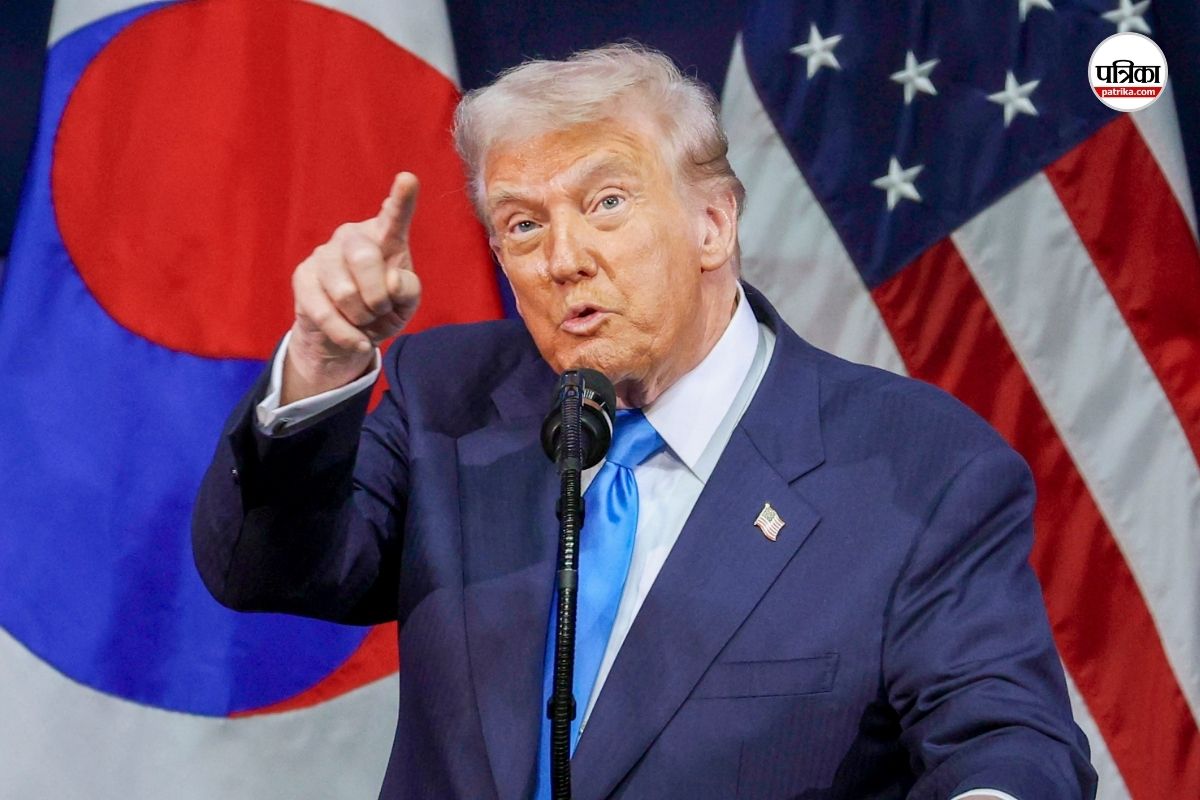
Donald Trump’s recent assertions regarding the Israeli offensive in Lebanon and the exclusion of Hezbollah from ceasefire frameworks reflect a shift toward a "Total Attrition" doctrine. This strategy prioritizes the systematic dismantling of non-state actor infrastructure over the diplomatic "Freeze and Contain" models favored by traditional international relations schools. By analyzing the mechanics of the conflict, the structural limitations of current ceasefire negotiations, and the specific strategic alignment of the Trump administration’s rhetoric, a clear pattern of prioritized regional restructuring emerges.
The Logic of Hezbollahs Exclusion
The central friction in Lebanese border stability is the distinction between Lebanese state sovereignty and Hezbollah’s operational autonomy. When Trump signals that Hezbollah is not part of a ceasefire, he is addressing a fundamental mechanical failure in previous diplomatic efforts: the mismatch between political accountability and military agency.
- The Agency Gap: The Lebanese government frequently negotiates on behalf of its territory, yet lacks the kinetic capability to enforce terms on Hezbollah. This creates a "Bad Faith Buffer," where the state signs agreements it cannot uphold, providing Hezbollah with a period of re-armament under the guise of state-level diplomacy.
- Asymmetric Incentives: A conventional ceasefire offers Hezbollah a recovery window. From a strategic standpoint, a non-state actor with a deep-tunneling and high-mobility logistics network gains more from a "pause" than a conventional military force (the IDF) that relies on maintaining high-tempo intelligence, surveillance, and reconnaissance (ISR) cycles.
- The Unilateral Enforcement Model: Trump’s rhetoric suggests a transition toward a model where Israeli security is not dependent on mutual agreement but on the unilateral degradation of the opponent’s capability until a "Point of Irrelevance" is reached.
The Strategic Triad of the Israeli Offensive
The current military operations in Lebanon are not merely retaliatory; they function as a targeted deconstruction of a multi-decade defense architecture. To understand the impact of the statements supporting these strikes, one must analyze the three specific pillars of the IDF’s operational objectives.
Pillar I: Command and Control (C2) Decapitation
The elimination of high-ranking leadership is often criticized as a "Whack-a-Mole" strategy. However, in the context of Hezbollah—a highly centralized organization with localized operational cells—the removal of the top-tier command creates a "Coordination Tax." Remaining units must operate independently, losing the ability to conduct complex, multi-axis attacks that require synchronized timing and shared intelligence.
Pillar II: The Logistics of the Litani
United Nations Security Council Resolution 1701 mandated that Hezbollah remain north of the Litani River. The failure of this resolution created a "Creeping Frontline." The current offensive aims to restore a physical buffer zone. Trump’s support for these strikes validates the argument that international resolutions without enforcement mechanisms are strategically void. The mechanism here is a "Force-Based Re-zoning," where the IDF physically clears the area to prevent the deployment of short-range anti-tank guided missiles (ATGMs) that have paralyzed northern Israeli communities.
Pillar III: Deterrence of the Patron
The secondary objective is the signaling of risk to Iran. By allowing a high-intensity conflict to continue without the pressure of an immediate ceasefire, the U.S. (under a Trump-aligned framework) removes the "Safety Valve" that Iran relies on to protect its regional proxies. This increases the cost of Iranian support, as the assets they invested billions into over three decades are liquidated in weeks without achieving their strategic goals.
The Economic and Civil Cost Function
Conflict in Lebanon is often viewed through a lens of human tragedy, but for a strategic analyst, it must also be viewed as an economic exhaustion model. Lebanon’s economy was already in a state of hyperinflationary collapse prior to the escalation.
- Infrastructure Degradation: The targeting of dual-use infrastructure (roads, bridges, and communication hubs used for military transport) increases the cost of logistics for both the militant group and the civilian population.
- The Displacement Variable: Over a million displaced people creates a domestic political pressure cooker within Lebanon. The goal of allowing the offensive to continue is to force a choice upon the Lebanese state: accept a future as a failed state dominated by a militia, or leverage the crisis to re-assert state control over its southern borders.
Trump’s Doctrine vs. The Liberal Institutionalist Approach
The tension between Trump’s statements and the current U.S. administration’s approach represents a clash between "Transactionalist Realism" and "Institutionalist Stability."
The Institutionalist Approach seeks immediate cessation of hostilities to prevent regional spillover and minimize humanitarian fallout. This approach views a ceasefire as a tool to prevent the "Worst Case Scenario."
Trump’s approach, as evidenced by his support for the strikes, views a premature ceasefire as the "Worst Case Scenario." In this framework, stopping the fighting before Hezbollah’s capabilities are fundamentally broken ensures a more violent conflict in the 3 to 5-year horizon. This is a "Front-Loading of Risk" strategy—accepting high intensity and high risk now to achieve a decisive shift in the regional power balance later.
Potential Bottlenecks and Strategic Limitations
Despite the clarity of the offensive’s goals, several operational bottlenecks remain that statements of political support cannot resolve.
- Urban Entrenchment: As the IDF moves into more densely populated areas, the "Efficiency-to-Casualty Ratio" drops. High-tech aerial superiority loses its edge in rubble-choked urban environments where Hezbollah has spent years preparing "Kill Zones."
- The Vacuum Problem: Even if Hezbollah is pushed north of the Litani, who holds the ground? The Lebanese Armed Forces (LAF) are currently underfunded and politically compromised. Without a reliable "Hold Force," the IDF is faced with the choice of a long-term occupation—which is a political and economic drain—or a withdrawal that leads to the inevitable return of the militia.
- Information Warfare: The longer the offensive continues, the more the "Aggressor Narrative" takes hold in the international community. While Trump may be immune to this pressure, the logistical and diplomatic support needed from European and Arab partners becomes harder to maintain as civilian casualties mount.
The Mechanism of "Maximum Support"
When a former and potential future president uses his platform to back an offensive, it functions as a "Geopolitical Green Light." This influences the risk calculus of regional actors in three specific ways:
- Israeli Confidence: Knowing that a primary ally may soon transition to a policy of zero-interference allows the Israeli war cabinet to plan for longer-term, more aggressive objectives rather than rushing for a "Quick Win" before U.S. election cycles.
- Proxy Hesitation: Other Iranian-backed groups (such as those in Iraq or Yemen) must calculate whether their intervention will be met with a more forceful U.S. response under a different administration, potentially limiting the scope of a multi-front war.
- The Abraham Accords Context: Trump’s support for Israel is inextricably linked to his prior work on the Abraham Accords. The strategy is to prove that Israeli military strength is the only reliable guarantor of regional stability against Iranian expansion, thereby forcing Arab states to choose between an alliance with a dominant Israel or a chaotic region led by non-state actors.
Calculating the Probability of a Hezbollah Resurgence
The likelihood of Hezbollah’s return to the border is a function of "Reconstruction Speed" versus "Monitoring Efficacy."
If the post-conflict phase relies on UNIFIL or the LAF without a significant change in their mandate (specifically Chapter VII enforcement powers), the probability of re-infiltration within 24 months is near 90%. Trump’s dismissal of the ceasefire logic suggests he recognizes this failure. The alternative is a "Managed Exclusion Zone," where Israel maintains the right to strike any construction or movement in the border region indefinitely—a model similar to the "War Between Wars" strategy used in Syria.
Strategic Forecast
The strategic imperative moving forward is not the negotiation of a ceasefire document, but the establishment of a "Technical Denial" regime. This involves:
- The permanent destruction of the cross-border tunnel architecture through thermal and seismic methods.
- The implementation of a "Red Line" policy regarding long-range precision-guided munitions (PGMs) transit from Syria into Lebanon.
- The leveraging of Lebanese internal politics to decouple the national identity from Hezbollah’s resistance narrative.
The current offensive, backed by the rhetoric of high-level U.S. political figures, is designed to reach a "Point of No Return" for Hezbollah’s southern infrastructure. The success of this strategy hinges on the ability of the IDF to maintain operational tempo through the winter months and the willingness of the next U.S. administration to provide a diplomatic umbrella against international calls for de-escalation. The end goal is the transformation of the Lebanon-Israel border from a "Hot Zone" of active militia presence to a "Static Perimeter" where the threat is managed through persistent ISR and targeted kinetic intervention rather than failed diplomatic treaties.


