The global economy doesn't like surprises. Right now, it's getting a face full of them. When Donald Trump ramped up his strategy against Iran—transitioning from "Maximum Pressure" sanctions in his first term to the current 2026 military strikes—the shockwaves didn't just stay in the Middle East. They hit your gas tank, your grocery bill, and the retirement accounts of millions.
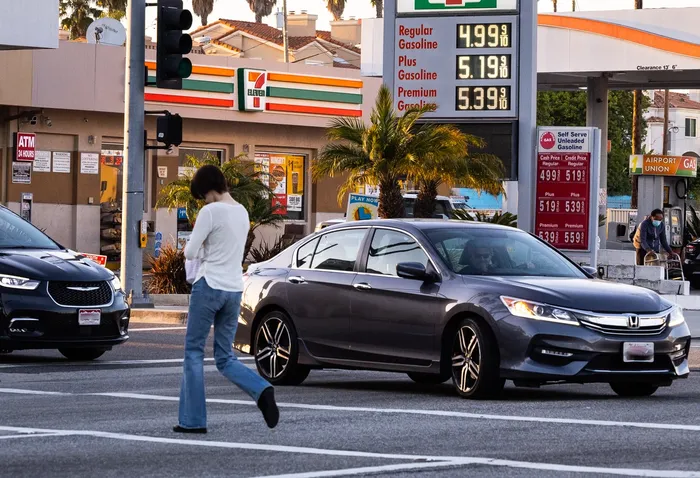
You've probably noticed the price at the pump creeping past $4 or $5 in some spots lately. That’s not a coincidence. When the United States and Israel launched "Operation Epic Fury" earlier this year, it effectively poked a hornet’s nest in the world’s most sensitive energy corridor. If you're wondering how a conflict thousands of miles away dictates the price of eggs in Ohio, it’s all about the Strait of Hormuz.
The Chokepoint That Holds the World Hostage
Imagine a narrow hallway where 20% of the world's oil and nearly a third of its liquefied natural gas (LNG) must pass every single day. That's the Strait of Hormuz. Iran knows this is their biggest "kill switch" for the global economy.
In response to the recent strikes on their military infrastructure, Iran didn't just fight back with missiles; they fought back with math. By threatening shipping traffic, they've turned the Persian Gulf into a no-go zone for major tankers.
- Supply Drop: Before the 2026 conflict, roughly 150 tankers moved through the strait daily.
- The Current Reality: That number has crashed into the single digits on some days.
- The Price Spike: Crude oil, which was sitting comfortably around $70 a barrel, skyrocketed past $100 almost overnight.
When oil prices jump that fast, everything gets more expensive. Shipping companies aren't just worried about the price of fuel; they're worried about their ships being blown up. Insurance for these vessels has become a nightmare. Even with the U.S. Navy offering escorts, most commercial liners don't want to take the risk. They’re rerouting around Africa, which adds weeks to delivery times and thousands of dollars in extra costs per container.
Why Maximum Pressure 2.0 Hits Differently
Back in 2018, Trump pulled out of the JCPOA (the Iran Nuclear Deal) and slapped on heavy sanctions. It hurt Iran's economy—inflation there hit 40%—but the global impact was manageable because other countries like Saudi Arabia could ramp up production to fill the gap.
This time, the script has changed. The 2026 conflict has physically damaged energy infrastructure. We aren't just talking about "financial restrictions" anymore; we're talking about smoking ruins at Qatari gas facilities and Saudi pipelines.
The World Trade Organization recently warned that if these energy prices stay high, we’re looking at a 0.3% shave off global GDP growth this year. That sounds like a small number until you realize it represents hundreds of billions of dollars in lost economic activity. Europe is getting hit the hardest. As a heavy energy importer still reeling from the loss of Russian gas, Europe could see its growth drop by a full 1%.
The Stealth Winner in This Chaos
While the U.S. is tied up in a hot war and the Middle East is on fire, one country is playing the long game: China.
China has spent years positioning itself as the "electrostate" leader. Every time a Middle Eastern conflict sends oil prices through the roof, it makes electric vehicles and renewable energy look a lot more attractive to the average consumer. China controls the lion's share of the battery supply chain.
While Trump doubles down on fossil fuels and military intervention, he’s inadvertently speeding up the world’s transition away from the very resources the U.S. is trying to secure. It’s a bit of a paradox. You fight to control the oil, and in doing so, you make oil so expensive and unreliable that people stop wanting to use it.
The 2026 Ceasefire and the Toll Booth Strategy
The most recent development—a tentative two-week ceasefire—isn't exactly a return to the old "normal." Reports suggest a 10-point plan where Iran and Oman might actually start charging "transit fees" for ships using the Strait of Hormuz.
Think about that. What was once considered an international waterway could become a massive, Iranian-controlled toll booth.
- Revenue Shift: Iran would use these fees for "reconstruction" (and likely more military hardware).
- Increased Costs: Every barrel of oil passing through would have an "Iran tax" baked into the price.
- Control: It formalizes Iran's grip on the world's most critical chokepoint.
If this becomes the new standard, the "Trump effect" on the global economy won't just be a temporary spike in prices. It’ll be a permanent restructuring of how energy is traded and moved.
What You Should Actually Do About It
If you're looking at your portfolio or your business budget, don't wait for a "return to $60 oil." That ship has literally sailed—or been rerouted around the Cape of Good Hope.
- Hedge Your Energy Costs: If your business relies on shipping or heavy fuel use, lock in rates now. The volatility isn't going away while the "toll booth" negotiations are active.
- Watch the Dollar: Geopolitical instability usually drives people toward the U.S. dollar as a safe haven, but the massive military spending associated with this conflict is a double-edged sword. Keep an eye on inflation data.
- Diversify Out of Traditional Logistics: The reliance on the Strait of Hormuz is a systemic risk that isn't being solved; it's being managed. Look for suppliers that use overland routes or different maritime corridors.
The reality is that "Maximum Pressure" has evolved into "Maximum Uncertainty." Whether you agree with the strategy or not, the economic bill is coming due, and we're all paying it at the checkout counter. Don't expect a quick fix. Even if the guns go silent tomorrow, the cost of doing business in a fractured Middle East has just hit a new, much higher baseline.