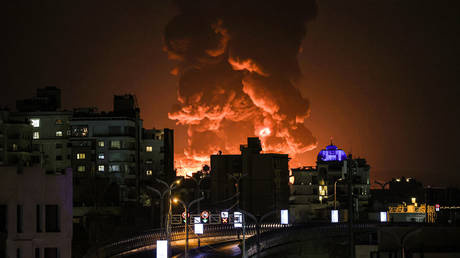
The headlines in April 2026 feel like a grim rerun, but the stakes have never been higher. We're currently watching a two-week ceasefire play out, a fragile pause after President Trump threatened what he called the "complete demolition" of Iranian infrastructure. If you've been following the news, you know the drill. Tensions spike, the Strait of Hormuz gets choked off, oil prices skyrocket, and the world holds its breath. But this isn't just another diplomatic spat. We're witnessing the transformation of the "Maximum Pressure" campaign into a literal, shooting war that nobody seems to know how to finish.
The reality is that "Operation Epic Fury," the U.S.-led military intervention that kicked off in early 2026, has hit a wall. While the administration claimed it would only take a few weeks to dismantle Iran's nuclear and missile capabilities, the ground reality is a messy, grinding conflict. It’s becoming the very thing Trump once campaigned against: an endless entanglement in the Middle East.
The Strategy That Locked the Door
The path to this "forever war" didn't start with the first missile strike in February. It began with a policy that left no room for retreat. By reinstating the Maximum Pressure campaign in early 2025, the Trump administration boxed both Washington and Tehran into a corner. When you demand "zero oil exports" and the total dismantling of a nation's defense architecture without offering a realistic diplomatic off-ramp, you're not negotiating. You're waiting for a collapse or a fight.
Tehran chose to fight.
Throughout 2025, Iran responded to economic strangulation by accelerating its nuclear enrichment. By the time the IAEA sounded the alarm in mid-2025, Iran had enough 60% enriched uranium for roughly a dozen warheads. This "counter-pressure" was designed to force the U.S. back to the table, but it backfired. Instead of a deal, it triggered the largest aerial bombardment campaign the region has seen in decades.
A War of Diminishing Returns
The military results of the last few months are a mixed bag. On one hand, U.S. and Israeli strikes have severely degraded Iran's formal military infrastructure.
- Missile Production: Satellite imagery suggests that Iran's ability to manufacture new solid-fuel propellant is offline.
- Naval Assets: The Iranian Navy has been largely neutralized as a conventional force.
- Nuclear Sites: Facilities at Natanz and Isfahan have taken heavy hits, likely setting back the enrichment timeline.
But here’s the problem: you can't bomb an ideology or a decentralized proxy network into submission. Even with a 90% drop in daily missile launches since the war started, the "baseline rate of fire" remains. Iran is still hitting targets in Israel and the Gulf. More importantly, the death of high-ranking officials, including the reported killing of the Supreme Leader, hasn't led to the immediate regime collapse some in Washington expected. Instead, it’s created a power vacuum that the IRGC (Islamic Revolutionary Guard Corps) is filling with even more radical, desperate tactics.
The Strait of Hormuz Trap
The global economy is currently tethered to a 21-mile-wide strip of water. When Iran effectively closed the Strait of Hormuz earlier this year, it wasn't just a military move; it was an economic nuke. Roughly 20% of the world's oil flows through that passage.
Trump’s recent ultimatum—reopen the Strait or face "apocalyptic" consequences—highlights the desperation of the situation. The U.S. can't afford a global energy crash, but it also can't stay in a state of high-intensity conflict forever. The current ceasefire, mediated by Pakistan and Oman, is a recognition that the military "quick fix" failed.
The cost of these operations is staggering. We're talking nearly $60 million a day just for naval and aircraft deployments. That doesn't even count the billions spent on interceptors to defend against drone swarms. When Trump says "wars can be fought forever" because the U.S. has unlimited munitions, he’s ignoring the fact that the Pentagon is already worried about dwindling stockpiles. You can't fight a 21st-century war with 20th-century inventory management.
Why There Is No Easy Exit
The reason this is becoming a forever war is that the objectives keep shifting. Is the goal to stop a nuclear bomb? To change the regime? To protect shipping lanes? Depending on which day you check Truth Social or listen to a Pentagon briefing, the answer changes.
Without a defined "win" state, the military stays in a holding pattern. We've seen this movie before in Iraq and Afghanistan. You win the initial battles, you topple the visible leadership, and then you spend the next ten years trying to manage the chaos you created.
Right now, the CIA is reportedly working with ethnic militias inside Iran to spark internal revolts. This might seem like a clever way to avoid putting "boots on the ground," but it’s a recipe for a multi-sided civil war. If Iran collapses into a failed state, the "forever war" won't be about missiles; it'll be about containing the fallout of a nation of 90 million people falling apart in the heart of the Middle East.
The Regional Realignment
One surprising side effect is the "convergence of anxieties" among Gulf states. Nations that used to be quiet about their cooperation with Israel are now working in lockstep with the U.S. and Israeli militaries. It’s a tactical alliance born of fear. But don't mistake this for a long-term peace. These countries are terrified of being the primary targets for Iranian retaliation if the U.S. decides to pack up and go home.
The Immediate Outlook
The two-week ceasefire is a window, not a door. If the U.S. uses this time to demand total surrender, the war will resume the moment the clock hits zero. Realistically, there are only a few ways this goes from here:
- The "Slow Burn": A return to low-level conflict where the Strait is partially open, but strikes continue periodically. This is the classic forever war scenario.
- Horizontal Escalation: The conflict spreads further into Lebanon, Yemen, and Iraq, forcing a massive increase in U.S. troop presence.
- The Grand Bargain: A face-saving deal that allows Iran to keep some civilian nuclear capacity in exchange for a total freeze on regional proxy activity.
Honestly, the third option looks the least likely given the current rhetoric. Trump’s brand is built on "winning," and a compromise often looks like a loss to his base.
If you're looking for what to watch next, keep your eyes on the tanker insurance rates and the rhetoric coming out of Tehran's provisional leadership. If they don't see a path to economic survival, they have every incentive to break the ceasefire and take the global economy down with them. The cycle is set. Breaking it requires a pivot toward a reality-based diplomacy that currently doesn't exist in the West Wing.