When Donald Trump attacked LeBron James over pregame movement during the national anthem in October 2026, the real story was not a single clip on social media. It was a decade-long collision between two high-reach attention engines operating across sports, politics, and mass media.
Standard coverage of this feud treats it like a chronological scrapbook. A typical news recap lists past quotes, mentions old rivalries, and ends where the latest clip starts. That approach explains what happened, not why a routine pregame moment turns into an instant national argument.
To understand the conflict clearly, treat the feud as a repeated signaling game between two public figures who command massive audiences and competing cultural coalitions. Instead of guessing motives, break the history down into four structural parts: the trigger event, the four-stage escalation arc, the incentive mechanics behind each side's moves, and the limits of what either figure can actually gain from another flare-up.
Deconstructing the Trigger and the Competing Narratives
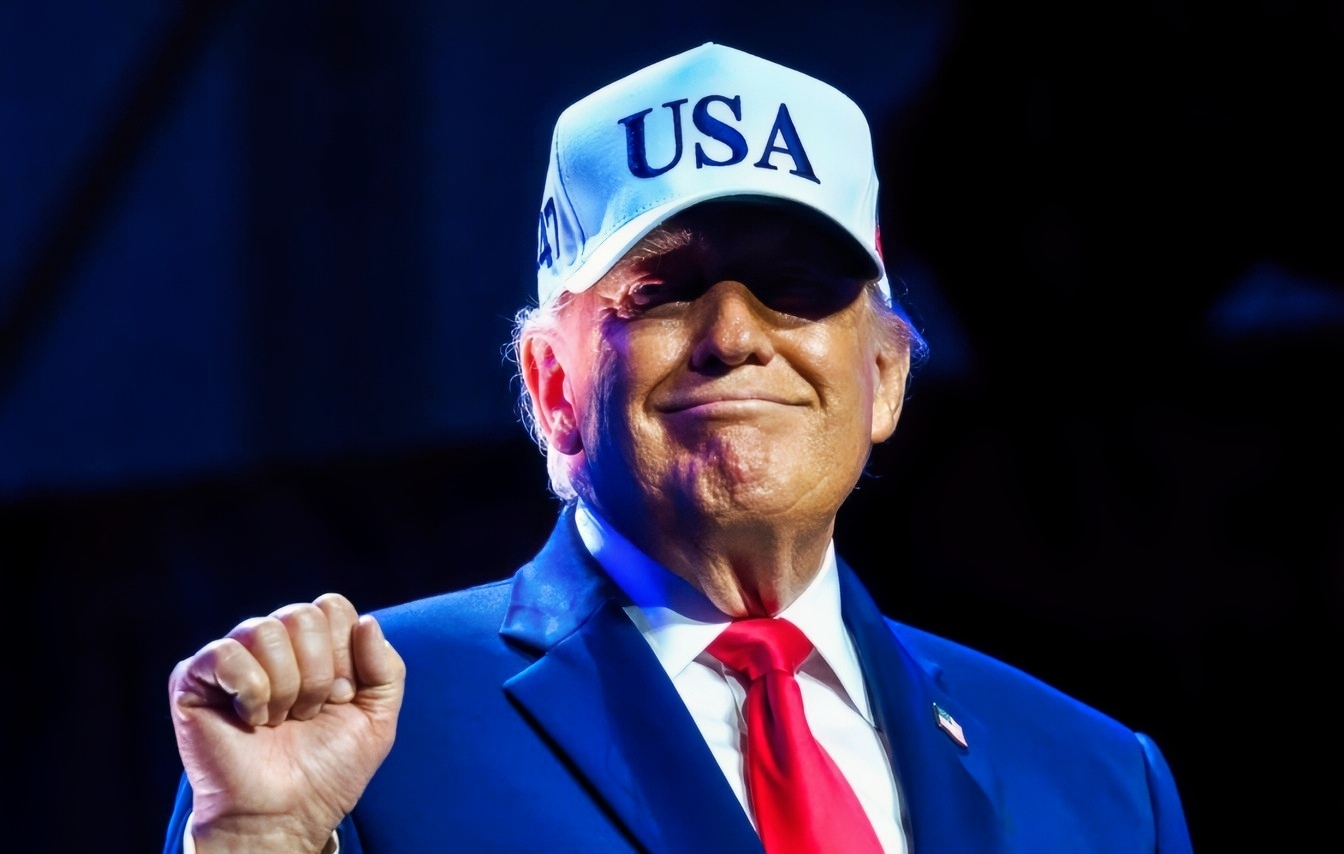
The October 2026 flashpoint centered on video shared by Trump showing James—now in his record 24th NBA season with the Philadelphia 76ers—swinging his arms and miming warm-up or shooting motions during the national anthem ahead of a game against the New York Knicks at Madison Square Garden. Trump called him a "total disgrace," accused him of disrespecting the country, and demanded an apology to military service members. James brushed it off afterward as a "slow news day".
A superficial reading stops at whether James was protesting or stretching. A sharper reading looks at ambiguity exploitation. When an action is visually ambiguous—such as stretching or moving in line while teammates stand still—neither side has to prove intent to win an argument online. Trump frames the posture as a deliberate breach of civic ritual. James treats the framing itself as manufactured noise beneath his focus on the game.
In political communication, ambiguous visuals are high-leverage raw material. Because viewers project their existing beliefs onto unclear footage, a short clip can serve simultaneously as proof of disrespect to one audience and proof of overreach to another.
Known Facts Versus Educated Hypotheses
Separating verified public record from strategic interpretation prevents sloppy analysis:
- Known facts: Trump has repeatedly criticized James publicly since his first presidency, including over anthem protests in sports, media interviews, and James's political commentary. James has repeatedly spoken out on racial justice, civic participation, and public leadership, rejecting the "shut up and dribble" framing. In late October 2026, Trump posted a clip of James moving during the anthem before a Knicks game and called for an apology, while James dismissed the criticism as a slow news day.
- Educated hypotheses: Trump's decision to surface and amplify the anthem clip likely reflects an ongoing effort to energize culturally conservative voters and dominate news cycles through familiar high-profile foils. James's minimal, dismissive response likely reflects a calculated effort to deny the accusation oxygen while keeping attention on his on-court transition in Philadelphia.
The Four-Stage Escalation Arc
Competitor timelines often flatten years of friction into a single list of insults. In reality, the conflict progressed through four distinct stages, each raising the stakes and broadening the audience.
Stage 1: Symbolic Friction and Public Role Clashes (2017–2018)
During the 2017–18 NBA season, James wore mismatched shoes—one black, one white—with the word "equality" on them and publicly criticized Trump's leadership and tone toward the public. Trump pushed back online, attacking James's television interviews and invoking Michael Jordan as a preferred standard.
At this stage, the dispute was mostly about role boundaries. James argued that a president holds a moral and civic obligation to unite and guide citizens of all backgrounds. Trump treated James as an entertainer stepping outside his lane and questioned his judgment.
Stage 2: The "Shut Up and Dribble" Inflection Point (2018)
When media criticism told James and other athletes to stick to sports rather than weigh in on social and political issues, James rejected the premise outright, invoking earlier generations of activist athletes such as Muhammad Ali, Jim Brown, Bill Russell, and Jackie Robinson.
This shift changed the game from a personal back-and-forth into a legitimacy contest. James was no longer merely reacting to political headlines; he was claiming historical standing as a civic voice whose platform carried social responsibility.
Stage 3: Institutional Mobilization and Peer Pushback (2020–2021)
During the 2020 season amid widespread racial justice protests and a presidential election, James emphasized off-court impact, voter turnout, and collective empowerment, earning Associated Press Male Athlete of the Year honors. The next year, soccer star Zlatan Ibrahimovic argued that athletes hurt themselves by taking political stances, prompting James to reiterate that he would not stay silent on issues he viewed as wrong.
Here, the conflict moved beyond Trump versus James. It became a broader debate inside global sports over whether superstar status is an apolitical commercial asset or a megaphone for social advocacy.
Stage 4: Legacy Replay and Anthem Framing (2026)
By October 2026, James was a veteran icon in his 24th season playing for Philadelphia, while Trump was once again criticizing him over national anthem conduct. Instead of needing a fresh policy speech or an explicit protest gesture, the feud could ignite from a brief pregame clip.
The history mattered because neither man was starting from zero. Past clashes acted as context multipliers, allowing a few seconds of pregame footage to trigger years of stored resentment and loyalty across both camps.
The Incentive Mechanics Behind Each Move
Why does a feud like this keep resurfacing even when neither side says anything new? Because the underlying incentive structure rewards repetition.
The Attention Economy and Outrage Loop
In modern media, conflict outperforms consensus because strong emotion drives sharing, commentary, and algorithmic distribution. When a prominent political figure criticizes a top athlete over a patriotic symbol like the national anthem, outlets across the political spectrum have an immediate reason to cover it.
The mechanism works through asymmetric salience:
- For Trump's coalition, national anthem norms act as a high-clarity cultural marker tied to patriotism and respect for the military.
- For James's supporters and broader sports audiences, policing pregame body language often reads as petty distraction or targeted grievance.
Neither side needs to persuade the other's core base. Each side reinforces identity within its own camp while keeping both names at the center of daily coverage.
Brand Equity Versus Political Capital
From a strategic standpoint, Trump and James trade in different currencies. Trump converts media dominance and cultural confrontation into political visibility, narrative control, and base mobilization. James converts athletic longevity, cultural influence, and commercial reach into personal brand power and social influence.
A crucial cause-and-effect link that surface-level recaps miss is diminishing marginal shock. The first time an athlete clashes with a president over politics or symbols, it feels seismic. By the tenth iteration, audiences already know the script. That is why James's "slow news day" line landed as a containment tactic: by labeling the controversy boring, he tried to lower the emotional temperature and starve the story of escalation.
Tactical Playbook for Navigating High-Stakes Cultural Clashes
Whether you manage a public brand, lead a communications team, or analyze media narratives, high-visibility clashes over symbols follow predictable mechanics. You can apply a four-step diagnostic whenever a routine moment gets reframed as a cultural offense:
- Audit the visual ambiguity first. Determine whether the clip or quote shows an indisputable act or an open-ended movement that people are interpreting through prior bias. Do not debate intent on ambiguous footage without establishing what is actually visible.
- Map the underlying grievance, not the surface prop. An anthem clip, a shoe choice, or a one-liner is rarely the whole issue. Identify the deeper tension—such as civic duty, free expression, or institutional trust—that gives the surface detail its charge.
- Choose between oxygen starvation and direct rebuttal. Direct rebuttal feeds engagement metrics and extends the news cycle. Dismissive framing or brief factual clarification works better when the goal is to shorten the cycle, whereas direct engagement is necessary only when silence lets a false claim harden into consensus.
- Separate short-term noise from long-term equity. Track whether a flare-up actually changes core audience loyalty, commercial partnerships, or voting behavior, rather than confusing loud online chatter with durable persuasion.
Limitations and Failure Modes
No communications framework eliminates risk in a polarized media environment. Three real-world limitations constrain every response:
- Context cannot always be restored once clipped. Short social media videos strip away surrounding seconds, camera angles, and routine habits, often reaching millions before full context circulates.
- Dismissal can look evasive to critics. Calling an accusation a "slow news day" signals confidence to allies, yet critics will read the same phrase as arrogance or refusal to apologize.
- Legacy baggage overrides present intent. When two figures have sparred for years, audiences judge the latest exchange through past grievances rather than treating it as an isolated event.
Strategic Play for Future Flare-Ups
Treat future clashes between major political and sports figures as recurring media cycles rather than isolated surprises. For anyone tracking or managing these dynamics, the highest-leverage move is to compress your response window and anchor on concrete facts: state clearly what happened, avoid escalating name-calling that prolongs algorithmic reach, and redirect focus back to measurable core performance—on the court, in an organization, or in policy execution. Over a multi-year rivalry, disciplined restraint paired with consistent action outperforms reactive outrage every time.
Trump slams LeBron James over behavior during national anthem
This short clip directly captures the October 2026 national anthem flashpoint and LeBron James's immediate postgame brush-off discussed in the analysis.