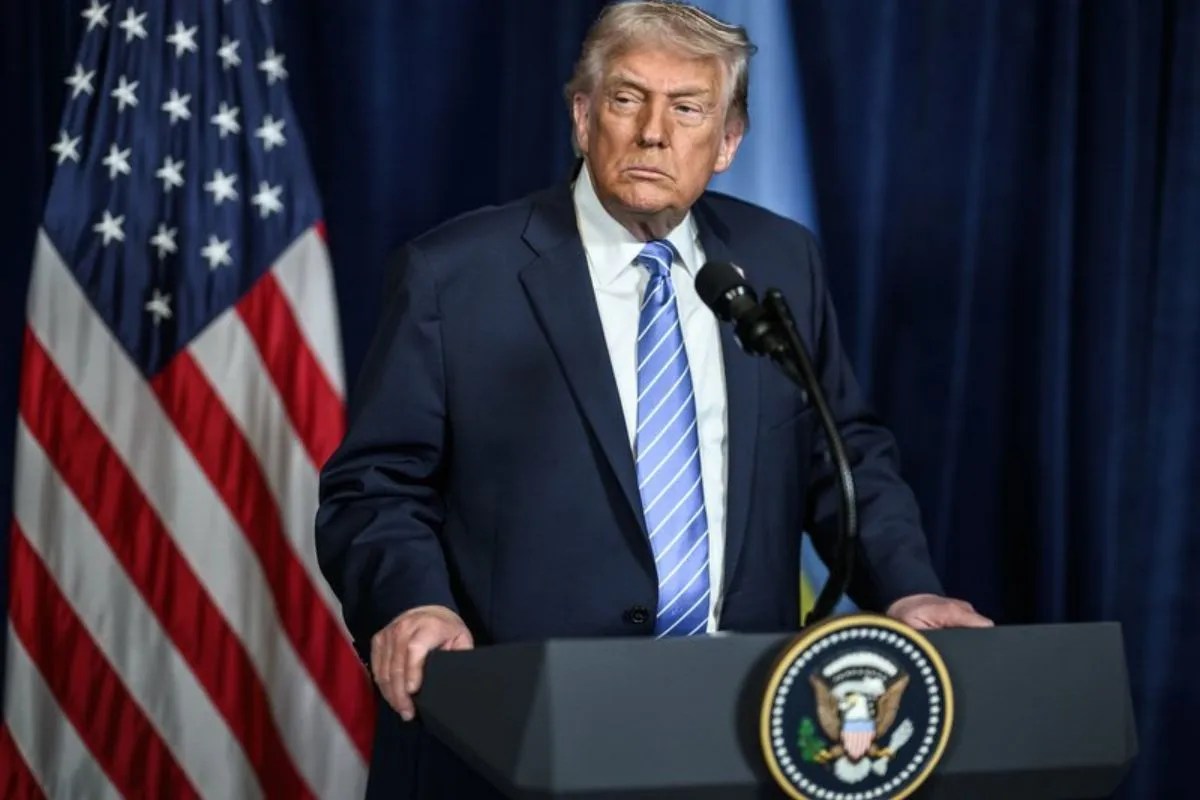
On July 8, 2026, global crude oil prices surged by more than 5 percent within hours of U.S. President Donald Trump declaring that the temporary ceasefire and memorandum of understanding with Iran was officially over. International benchmark Brent crude jumped 5.3 percent to cross $78 a barrel, while West Texas Intermediate climbed to $74.23, shattering a brief period of artificial stability that financial markets had naively priced in as permanent. This sudden spike did more than just rattle energy desks. It triggered an immediate 500-point drop in the Dow Jones Industrial Average, signaling a painful realization that global supply chains remain entirely vulnerable to abrupt political pivots.
The market reaction exposes a profound disconnect between paper trading and physical reality. For weeks, Wall Street analysts pushed a narrative that geopolitical risk was manageable, pointing to record-breaking domestic oil production in the United States as a shield against foreign shocks. But a single afternoon press conference proved that domestic volume cannot offset the immediate terror of a closed shipping lane or a renewed hot war in the Middle East.
The Short Squeeze That Caught Capital Markets Off Guard
To understand the scale of the 5 percent price jump, one must examine the positioning of speculative capital prior to the announcement. Following the signing of the U.S.-Iran memorandum of understanding in June, hedge funds and institutional commodity traders aggressively amassed short positions. They wagered heavily that a wave of pent-up Iranian crude would flood the market, dragging prices down toward the $60 range.
When the President announced that the truce was dead after fresh maritime incidents, those short positions turned into a financial trap. Traders scrambled to buy back futures contracts to cap their losses, creating an aggressive upward spiral in pricing. This was not merely a reaction to a disruption in actual physical supply. It was a classic liquidity squeeze exacerbated by algorithmic trading models that are poorly calibrated for erratic policy shifts.
The underlying math reveals just how thin the margin for error is in global oil logistics. Even with U.S. production tracking at high levels, the global system relies on the frictionless movement of barrels through highly vulnerable chokepoints. When those chokepoints are threatened, speculative capital shifts overnight from pricing abundance to pricing scarcity.
The Illusion of Absolute Energy Security
Throughout the past year, political rhetoric has championed the concept of total energy independence. Government fact sheets regularly highlight that domestic crude production has achieved historic highs, insulating the domestic consumer from international price shocks. This perspective is fundamentally flawed because crude oil is a globally fungible commodity.
American drillers cannot dictate the global price of oil. If a conflict in the Persian Gulf drives Brent crude to premium levels, domestic producers will sell to the highest international bidder or adjust their domestic pricing to match the global benchmark. The physical presence of oil under American soil does not act as a price control when the broader international market enters a state of panic.
Furthermore, the type of crude produced in abundance within domestic shale basins is primarily light, sweet crude. Many complex refineries along the Gulf Coast are architecturally configured to process heavier, sour slates, which are typically imported from regions now facing heightened geopolitical friction. This structural mismatch means the domestic market remains tied to international supply lines, regardless of total aggregate production figures.
The Strategic Importance of the Strait of Hormuz
At the center of this sudden market crisis is the Strait of Hormuz, a narrow waterway through which roughly a fifth of the world’s petroleum consumption passes daily. The collapse of the ceasefire directly revives the threat of asymmetric maritime warfare, including drone strikes on commercial tankers and retaliatory seizures of cargo ships.
The Geography of a Shipping Bottleneck
The strait is remarkably narrow, with shipping lanes in each direction measuring only two miles wide. This tight geography makes commercial shipping an easy target for state and non-state actors looking to project leverage. When the U.S. Treasury Department temporarily eased sanctions via General License X in late June, insurance premiums for tankers operating in the region dropped significantly. That trend has now reversed.
Maritime insurance syndicates are already adjusting war-risk premiums upward in response to the broken truce. These added operational costs are passed directly down the supply chain, inflating the landed cost of crude before it even arrives at a refinery. For major importing economies in Europe and Asia, these logistical penalties act as an immediate tax on economic growth.
The Limits of Alternative Routing
Proponents of market resilience often point to cross-country pipelines in Saudi Arabia and the United Arab Emirates as viable bypass routes that can mitigate a closure of the strait. However, these pipelines have a combined capacity that can handle only a fraction of the total volume that moves by ship through the waterway. The physical infrastructure required to entirely reroute Persian Gulf energy exports simply does not exist.
The Macroeconomic Collateral Damage
An abrupt 5 percent increase in energy costs complicates the broader economic picture, particularly regarding persistent global inflation. The International Monetary Fund has warned that rising energy costs threaten to stall years of progress made by central banks in stabilizing consumer prices.
- Slowing European Growth: Continental economies, already burdened by weak industrial output, are highly sensitive to sudden energy price increases, forcing a downward revision of growth projections.
- A Shift in Central Bank Policy: Central banks that were prepared to lower interest rates may be forced to hold borrowing costs higher for longer to combat the inflationary impact of expensive oil.
- The Burden on Emerging Markets: Developing nations that rely entirely on imported energy face immediate currency depreciation and balance-of-payments crises as their oil import bills swell.
This economic damage is unevenly distributed. While energy-exporting nations stand to gain short-term windfalls from higher prices, the broader global manufacturing and transport sectors face immediate margin compression.
The Broken Blueprint of Temporary Diplomacy
The collapse of the June memorandum of understanding underscores the inherent volatility of using short-term sanctions relief as a diplomatic bargaining chip. General License X was designed to allow temporary U.S. dollar transactions for Iranian oil products to gauge diplomatic compliance. Instead, it created an unstable market environment where compliance was assumed, but never structurally locked in.
Relying on temporary licenses and verbal agreements creates severe operational risks for multinational energy companies. Compliance departments must constantly evaluate the legality of multi-million-dollar maritime shipments that take weeks to travel from extraction points to refining hubs. The sudden snapback of hostilities demonstrates that temporary diplomatic windows rarely provide the predictability required for long-term capital investments.
The global energy market is now forced back into a familiar defensive posture. The assumption that political agreements could smoothly introduce millions of barrels of sidelined oil back into the global economy has been thoroughly debunked. Wall Street must now price crude based on structural deficits and chronic geopolitical instability, rather than the optimistic projections of short-term diplomatic breakthroughs.