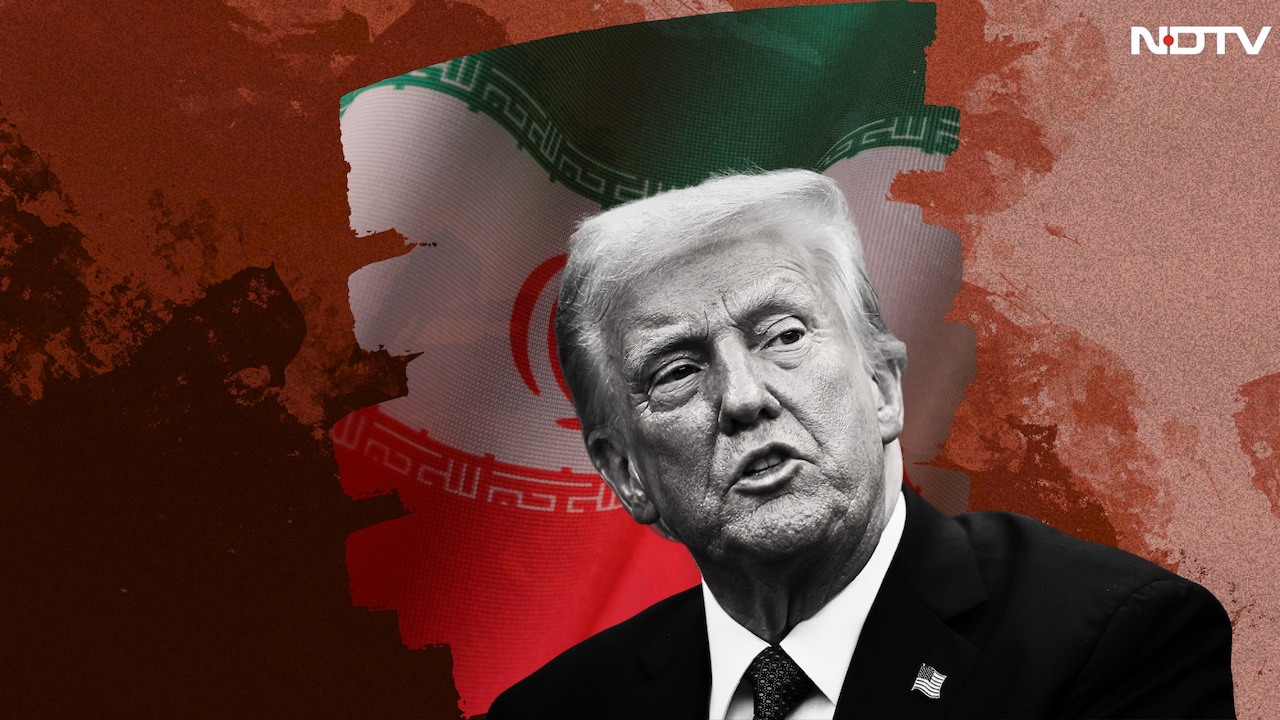
Mainstream coverage of Washington's latest standoff with Tehran routinely frames a conditional pause in military strikes as a sudden pivot toward restraint or de-escalation. That reading misses the mechanics of modern coercive diplomacy. When an administration signals it will hold off on kinetic action only if an adversary meets specific conditions, it is not backing down—it is establishing a tripwire.
According to political science and deterrence frameworks established by strategists like Thomas Schelling in Arms and Influence, compellence relies on making the threat of future pain credible enough to force behavioral change without immediately absorbing the costs of full-scale war. By attaching explicit conditions to a pause, policymakers shift the burden of escalation onto Tehran while preserving military readiness and diplomatic leverage.
The Anatomy of Coercive Leverage
Standard news cycles treat military options as a binary switch: either bombers are in the air, or peace talks are underway. In practice, statecraft operates along a continuous spectrum of pressure.
- Calculated Ambiguity vs. Clear Red Lines: A conditional pause defines a threshold. While strategic ambiguity keeps adversaries guessing about what triggers retaliation, a conditional hold sets a visible benchmark—such as halting proxy attacks on maritime shipping, freezing enrichment levels, or releasing detained nationals—that creates measurable accountability.
- Buying Operational Time: Military deployments in the Persian Gulf and the broader Middle East require massive logistical coordination, air-defense repositioning, and regional basing agreements. Pausing kinetic strikes allows Pentagon planners to harden regional assets and align intelligence-sharing networks before any potential exchange begins.
- Economic and Diplomatic Squeezing: Holding off on airstrikes denies Tehran the "rally-around-the-flag" domestic effect that foreign bombardment almost always generates. Instead, it keeps international focus on sanctions enforcement, energy export restrictions, and diplomatic isolation.
Why the "Restraint vs. Escalation" Framing Fails
Observers looking at U.S.-Iran relations often ask whether a conditional pause signals weakness or strength. That question rests on a flawed premise. In asymmetric deterrence, both sides evaluate risk differently:
- Washington's Calculus: Direct military conflict risks regional spillover, disruptions to global oil transit through the Strait of Hormuz, and prolonged entanglement. A conditional pause maximizes leverage while minimizing immediate domestic and economic fallout.
- Tehran's Calculus: Iranian leadership prioritizes regime survival and regional deterrence through its network of allied militias. Accepting explicit external conditions carries severe domestic political costs, meaning Tehran typically responds with calibrated counter-pressure rather than outright capitulation.
The Structural Risks of Conditional Ultimatums
While conditional pauses offer tactical flexibility, international relations scholars—including Robert Jervis in Perception and Misperception in International Politics—highlight serious vulnerabilities in compellent strategies:
- Commitment Traps: Once a leader publicly states that strikes will resume if Condition X is violated, failing to follow through damages credibility across other theaters, from Eastern Europe to the Indo-Pacific.
- Miscalculation by Proxies: Regional militias operating with varying degrees of autonomy may launch attacks that cross Washington's red lines without direct authorization from Tehran, triggering an automatic escalation neither capital intended.
- Narrowing Off-Ramps: Public conditions make quiet face-saving compromises harder to negotiate. If neither side can claim a diplomatic win without appearing to bow to an ultimatum, a temporary pause merely delays a wider confrontation.
Evaluating What Comes Next
To read developments between Washington and Tehran accurately, analysts look past headline rhetoric and track three concrete indicators:
- Force Posture Shifts: Watch carrier strike group movements, Patriot and THAAD battery deployments, and aerial refueling tanker positioning rather than press briefings.
- Backchannel Signaling: Track quiet mediation efforts through traditional regional intermediaries such as Oman, Qatar, or Switzerland, which historically carry substantive proposals when public rhetoric hardens.
- Maritime and Proxy Incident Rates: Measure actual kinetic activity in the Red Sea, Iraq, and Syria over a 30-to-60-day window to see whether deterrence is holding or eroding on the ground.
A conditional pause is neither an olive branch nor an abandonment of force; it is a high-stakes test of whether credible threat alone can achieve what airstrikes rarely settle on their own.