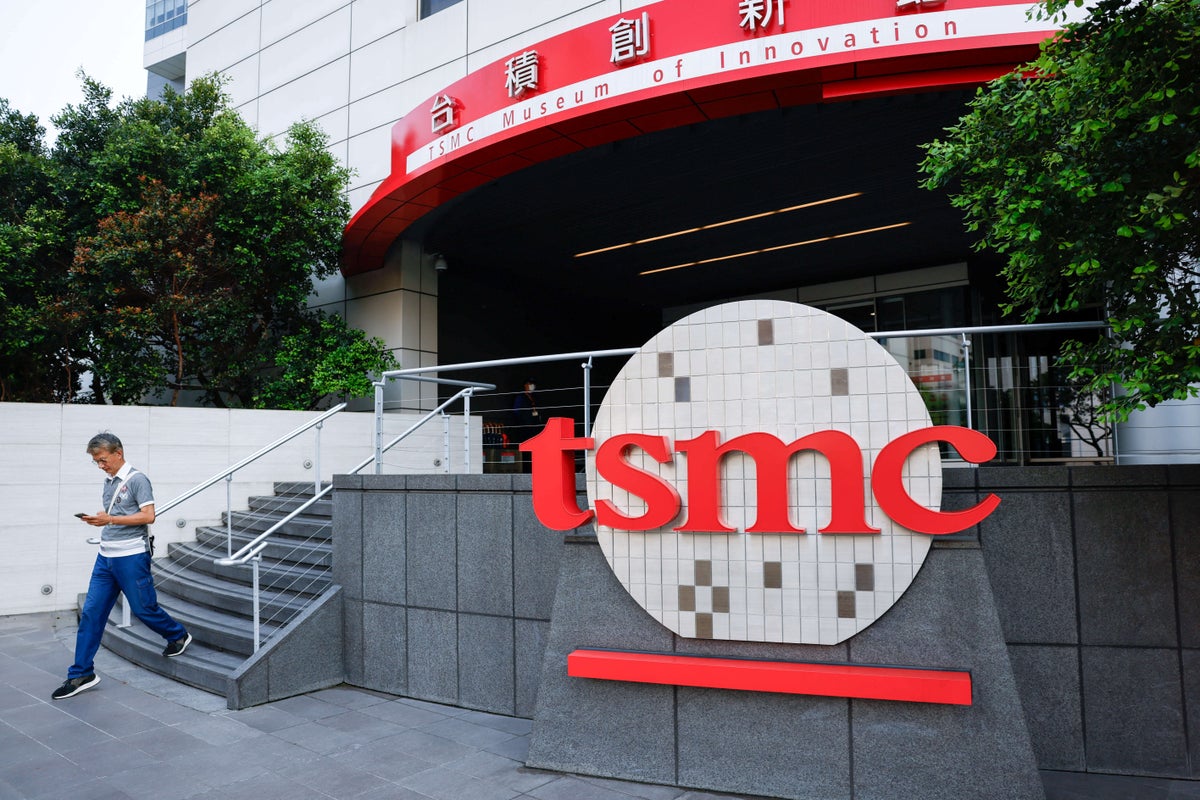
Taiwan Semiconductor Manufacturing Company (TSMC) just posted a 58.3% surge in net income for the first quarter of 2026, a financial performance that would be celebratory in any other era. But these record-breaking figures—NT$572.48 billion in profit on NT$1.13 trillion in revenue—arrive as the shadow of the Iran war stretches across the global energy and gas markets. While Apple and Nvidia continue to funnel billions into 3-nanometer wafers, the industry is quietly reckoning with a paradox. The very conflict that threatens the world’s energy stability is accelerating a desperate, high-stakes arms race for the silicon that powers modern warfare and artificial intelligence.
TSMC is no longer just a chipmaker. It has become the central clearinghouse for a world that has decided AI is the only way to survive the coming decade.
The Silicon Shield and the Persian Gulf
The correlation between a regional war in the Middle East and a Taiwanese chip foundry’s balance sheet is not accidental. As the conflict in Iran intensified, oil prices spiked 58% in a single month. For most manufacturers, this is a death knell. For TSMC, it functioned as a secondary catalyst for demand.
The logic is brutal. When kinetic warfare breaks out, the "Silicon Shield"—the idea that TSMC’s global importance prevents invasion—is tested by the reality of supply chains. The Iran war has choked the Strait of Hormuz, through which a third of the world’s liquefied natural gas (LNG) flows. This is not just an energy problem; it is a chemistry problem. Helium, a critical byproduct of LNG processing, is essential for the lithography and cooling processes used to make the chips inside your iPhone 17 or Nvidia’s latest B200 accelerators.
Qatar, which provides 34% of the world’s helium, has seen its exports throttled. This has sent a shiver through the industry. Major players like Apple and Nvidia are not just buying chips for today; they are front-loading orders and securing capacity at any cost before the "helium cliff" hits. This "panic-buying" of production slots is a significant driver behind TSMC’s 66.2% gross margin.
The 3 Nanometer Monopoly
Advanced technologies, specifically those at 7-nanometer nodes and below, now account for 74% of TSMC’s total wafer revenue. The 3-nanometer node alone contributed 25% of the quarterly take.
There is a technical reason for this concentration. In a world where energy costs are skyrocketing due to the war, efficiency is the only hedge against inflation. A data center running Nvidia’s H200s or Apple’s M-series silicon consumes less power per calculation than older hardware. For hyperscalers like Microsoft and Google, the transition to 3-nm isn't a luxury; it is a survival strategy to keep operational costs from ballooning alongside global electricity rates.
The Hidden Helium Crisis
While the headlines focus on profit jumps, the investigative reality is found in the "consumables" column of the semiconductor ledger. TSMC consumes roughly 7% to 10% of Taiwan's total electricity. That is a massive exposure to energy volatility.
But the helium shortage is the more immediate threat to the 2026 outlook. Most liquid helium has a shelf life of roughly 45 days before it escapes even the most advanced storage containers. If the Strait of Hormuz remains contested into the summer, the "inventory cushion" that TSMC’s CFO Wendell Huang alluded to will evaporate.
The industry is currently operating on long-term contracts that shield them from spot price spikes, but physical availability is a different beast. You cannot etch a wafer with a contract; you need the gas. TSMC has responded by allocating a staggering $56 billion in capital expenditure this year. A portion of this is going toward aggressive recycling systems and "helium-free" cooling research, but those are multi-year pivots. For the next two quarters, the company is effectively racing against a calendar of depleting gas reserves.
The Nvidia and Apple Dependencies
Nvidia and Apple currently represent the twin pillars of TSMC’s dominance. Nvidia’s demand is driven by the sovereign AI movement—nations realizing they need their own internal computing power to manage everything from domestic energy grids to missile defense systems.
Apple, meanwhile, is locked into a cycle of seasonal refreshes that cannot be delayed without catastrophic impacts on its stock price. This gives TSMC immense pricing power. If TSMC raises the price of a wafer by 10% to cover the rising cost of neon or helium, Apple pays it. They have no other choice. Samsung’s 3-nm yields remain inconsistent, and Intel’s foundry services are still in a "show-me" phase for the most advanced nodes.
This lack of alternatives has created a "bottleneck premium." TSMC is capturing the value of the entire tech ecosystem's anxiety.
Geopolitical Realignment and the $165 Billion Bet
In response to the pressures highlighted by the Iran war, TSMC has accelerated its "reshoring" efforts, committing $165 billion to fabrication plants in the United States. This is a strategic retreat from the vulnerability of the Pacific.
However, moving the "how" of chipmaking doesn't solve the "with what." The raw materials—the high-purity chemicals, the rare earth elements, and the noble gases—are still tethered to the very regions currently on fire. The profit jump we see today is the result of a world trying to buy its way out of a burning building.
The question for investors and analysts is not whether TSMC can continue to grow, but what happens when the supply of the "invisible" ingredients finally runs dry. The current earnings report shows a company at the absolute peak of its powers, but it also reveals a global economy so dependent on a single point of failure that even a record-breaking profit feels like a warning.
The silicon age is being squeezed by the oil age. And for now, the silicon is winning because it is the only thing that can calculate a way out.