The clock in a small tea house in North Tehran doesn't tick; it hums. It is a low, persistent sound that competes with the hiss of the samovar and the muffled roar of traffic outside. For the people sitting on faded Persian rugs, sipping bitter black tea through sugar cubes held between their teeth, that hum has begun to sound like a countdown.
Politics, when viewed from a podium in Washington D.C., is a series of strategic maneuvers and rhetorical flourishes. From a distance, a "deadline" is merely a calendar entry. But for the millions of people living within the blast radius of a geopolitical fallout, a deadline is a physical weight. It sits in the chest. It changes the way a father looks at his daughter. It alters the price of bread by sunset.
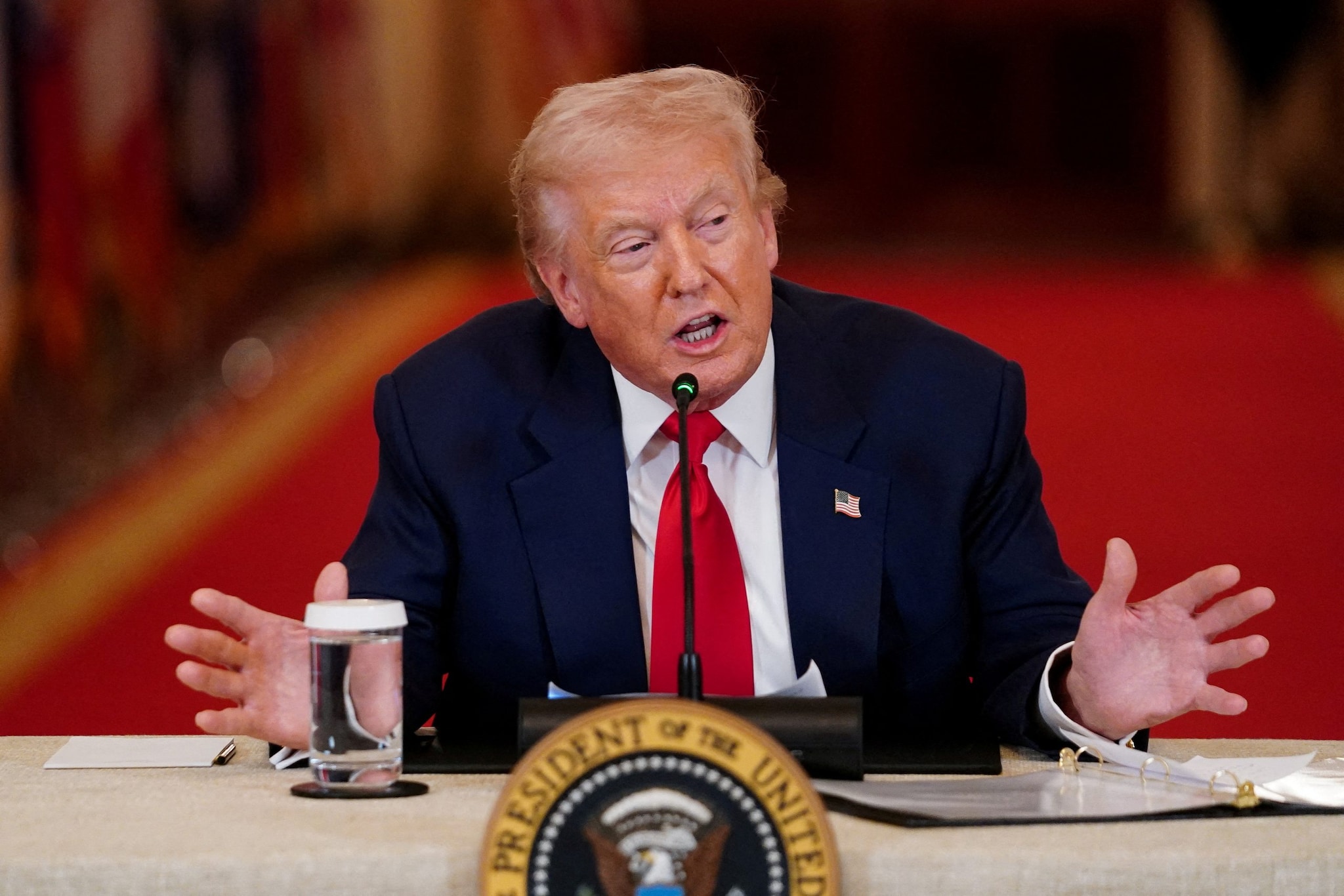
The latest word from the White House didn't just ripple through the halls of the United Nations; it crashed into the lives of ordinary citizens. Donald Trump has extended the deadline for the Iran nuclear deal to Tuesday. It sounds like a reprieve. In reality, it is a tightening of the noose.
The Language of the Abyss
To understand the stakes, we have to look past the televised bravado. The threat issued was visceral: stay the course or prepare to live in "hell."
This isn't the sterilized language of traditional diplomacy. It’s the language of an ultimatum. When world leaders use words like "hell," they aren't talking about abstract policy failures. They are painting a picture of total economic isolation, of a nation severed from the arteries of global trade, and the very real possibility of kinetic conflict.
Imagine a shopkeeper in Isfahan. Let’s call him Reza. Reza doesn't care about the intricacies of uranium enrichment percentages or the specific wording of Paragraph 36 of the JCPOA. What Reza knows is that every time a headline flashes across his phone, the value of the rial in his cash drawer shrivels. He knows that "Tuesday" isn't just a day of the week anymore. It is a boundary. On one side of that boundary, there is a precarious, difficult peace. On the other, there is a void.
The embassies are already reacting, though not with the solemnity one might expect. In a strange, modern twist of statecraft, social media has become the primary battlefield. While the world holds its breath, official embassy accounts are swapping barbs and memes. They mock the deadlines. They needle each other with digital sarcasm. It is a jarring contrast—the high-stakes terror of a looming "hell" met with the glib, detached snark of a Twitter thread.
The Ghost of 2015
To see why this Tuesday feels different, we have to remember the hope that preceded it. The 2015 deal was sold as a generational breakthrough. It was the moment the pressure cooker finally hissed and let out some steam. For a brief window, the world felt slightly more stable.
But trust is a fragile currency, and in the current climate, the exchange rate is abysmal. The U.S. administration views the original deal not as a solution, but as a stay of execution that was far too lenient. They see a regime that has used the breathing room to expand its influence across the Middle East, from the ruins of Aleppo to the mountains of Yemen.
From Washington’s perspective, the deal was a band-aid on a gaping wound. From Tehran’s perspective, the deal was a promise that was broken before the ink was even dry.
Now, the two sides are standing on opposite sides of a canyon, shouting through megaphones. The extension to Tuesday is a final, desperate invitation to blink. But when both sides pride themselves on never blinking, the result is usually a collision.
The Invisible Toll of the "Tuesday"
We often talk about sanctions as if they are surgical tools. We imagine them targeting the bank accounts of generals and the private jets of politicians. The truth is much messier.
Sanctions are a blanket of snow that eventually turns into a glacier. It starts with the luxury goods. Then it moves to the industrial parts. Eventually, it reaches the medicine cabinets. A mother in Shiraz searching for specialized insulin doesn't see a strategic move to curb regional hegemony. She sees a child who cannot get the care they need because the "Tuesday" deadline didn't go the right way.
This is the "hell" that was referenced. It is the slow-motion collapse of a middle class. It is the brain drain of the brightest students fleeing to Europe or Canada because they don’t want to spend their youth waiting for the next ultimatum.
The psychological toll is perhaps the most profound. Living under a constant threat of "Tuesday" creates a society of high-functioning anxiety. You don't buy a house. You don't start a business. You wait. You watch the news. You listen to the hum of the clock in the tea house.
The Mockery and the Mirror
The mockery coming from the embassies serves a purpose, though it’s a cynical one. It is meant to project strength. If you can laugh at a threat, you aren't afraid of it. But this digital bravado is a mask. Behind the memes and the sharp-tongued press releases, there is a frantic scramble.
The European allies are caught in the middle, playing the role of the exhausted parent trying to keep two brawling siblings from burning the house down. They are looking for "third ways" and "alternative mechanisms," trying to find a linguistic trick that allows everyone to claim victory without actually changing their positions.
But language has its limits. Eventually, the clock reaches midnight.
The threat of "hell" is a powerful rhetorical tool, but it is also a dangerous one. When you promise hell, you leave yourself very little room for a dignified exit. If Tuesday passes and nothing changes, the credibility of the threat evaporates. If Tuesday passes and the hammer falls, the path back to the negotiating table is likely buried under the rubble of broken relations.
The Human Cost of High Stakes
Consider the sailors in the Strait of Hormuz. Consider the oil prices that dictate whether a family in rural Ohio can afford to heat their home this winter. This isn't just an Iranian story; it’s a global one. The "hell" described by the President has a way of spreading.
Conflict in this region doesn't stay contained. It leaks. It manifests as higher prices at the pump, as shifts in the global stock market, and as a general sense of instability that makes the entire world feel a little less safe.
We are watching a game of chicken played with nuclear-capable stakes. The master storyteller in this scenario isn't a writer; it’s the momentum of history itself. We have seen this play before. We know the acts. We know the climax. What we don't know is if the actors have the courage to rewrite the ending at the very last second.
As Tuesday approaches, the air in Tehran feels thick. It’s the same feeling you get before a massive summer storm—the stillness that is somehow louder than noise. People are filling their tanks with gas. They are checking their savings. They are looking at the sky.
The samovar continues to hiss. The tea continues to brew. But the sugar cubes don't taste as sweet when you’re wondering if this is the last Tuesday of the world as you know it.
The sun will rise on Wednesday. The question that remains, and the one that haunts every household from the Potomac to the Caspian, is what kind of world it will illuminate. Will it be a world where diplomacy found a narrow, winding path through the thorns? Or will it be the first morning of the "hell" that was promised?
The hum of the clock is getting louder.