We love our shrines. We love sanitizing history into manageable weekend excursions where gift shops sell commemorative coffee mugs next to plaques explaining how simple folks did extraordinary things. The announcement that Jimmy Carter's family farm in Plains, Georgia, is officially transitioning into a preserved public site follows this exact, predictable script. Everyone is cheering. Historians are popping champagne. Heritage tourism boards are projecting economic spikes in Sumter County.
They are all missing the point. Recently making headlines in this space: The LAPD Backyard Pool Tragedy Is Not an Isolated Freak Accident.
Turning a working, breathing piece of agricultural land into a static museum piece does not honor a legacy of humility. It kills it.
I have spent years watching historic preservation projects turn vibrant cultural touchstones into architectural taxidermy. You take a space defined by mud, sweat, and economic precariousness, slap a velvet rope around the porch, and call it education. What visitors actually get is a sanitized diorama that completely erases the gritty reality of what made the subject unique in the first place. Further insights into this topic are detailed by Associated Press.
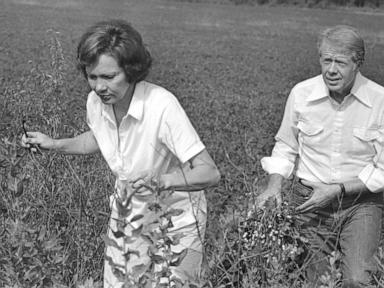
Let us look at the lazy consensus. The narrative goes like this: Jimmy Carter was a peanut farmer from rural Georgia who rose to the presidency, maintained his down-home values, and therefore his physical roots must be locked in amber so future generations can pilgrimage to the soil that birthed him. It sounds poetic. It plays well on evening news broadcasts.
It is also fundamentally anti-agrarian.
A farm is not a monument. A farm is a factory floor operating under the chaotic whims of weather, commodity markets, and biological decay. The moment you federalize it, staff it with park rangers in pristine uniforms, and manicure the perimeter for tour buses, you stop preserving history. You create a theme park.
The Myth of Static Heritage
Real preservation requires utility. When Carter returned to Plains after his presidency, he didn't retreat into a curated historical exhibit. He dealt with the brutal math of agricultural debt, local community politics, and the slow economic erosion of rural America. By freezing the farm in a specific era of its past, we strip away the most vital part of the Carter story: adaptation.
The standard public history model assumes that people learn best by staring at tractors that no longer run and looking at fences they are forbidden to touch. This is a profound misunderstanding of human curiosity. We learn by seeing systems work, break, and rebuild.
Imagine a scenario where the National Park Service took the same multi-million dollar preservation budget and instead funded an active, cutting-edge agricultural co-op on those exact acres. Imagine young farmers learning sustainable peanut cultivation, managing modern supply chain crises, and grappling with the exact economic pressures that smallholders face today. That would be a living tribute. That would make Jimmy Carter nod. Instead, we are getting a glorified photo-op.
Critics of my stance will argue that physical preservation is the only way to protect historical integrity against the relentless march of commercial development. They claim that without federal intervention, the land would be carved up into subdivisions or strip malls.
They have a point. Unregulated sprawl is a real threat. But protection does not have to mean mummification. We have invented a false binary where land either becomes a museum or a parking lot. There is a massive, underexplored middle ground: active, working historical trusts that remain commercially viable while honoring their lineage through practice rather than performance.
What People Get Wrong About Plains
Let us address the tourism angle directly, because the local economic argument is usually the final shield for projects like this. Town leaders in Plains are banking on an influx of heritage tourists buying lunch at local diners and walking down Main Street.
History shows us a harsher truth about presidential birthplaces and childhood homes. The economic boom is almost always front-loaded. Visitors come for the ribbon-cutting year, buy a T-shirt, take a selfie by the grain silo, and never return. Meanwhile, the local infrastructure strains under the weight of maintaining federal tourist standards while the surrounding rural economy continues its quiet, systemic decline.
You cannot jump-start a dying rural county by turning a farm into a postcard. Economic revitalization requires industry, broadband access, decentralized manufacturing, and educational pipelines—not another gift shop selling jars of local honey at a four-hundred percent markup.
We use these historic sites as emotional band-aids for structural failures. We feel good about honoring a president's humble beginnings while ignoring the modern economic conditions that make those exact beginnings nearly impossible to replicate today.
The Cost of Nostalgia
Nostalgia is an expensive drug. It convinces us that the past was simpler, that hard work automatically equaled upward mobility, and that land has intrinsic sacred value independent of what we do with it.
Jimmy Carter’s life was defined by restless action. From naval nuclear engineering to peanut warehousing, from governorship to camp David accords, from post-presidential habitat building to eradication of tropical diseases, his entire ethos was about solving active problems. He was never a man who looked backward.
So why are we spending millions of dollars forcing his legacy to look backward?
When the tour groups line up to shuffle through the peanut warehouse and nod solemnly at the restored farmhouse, ask yourself who this is really for. It is not for the farmer trying to make payroll this week. It is not for the young people fleeing rural Georgia because there are no economic engines left. It is for tourists seeking a comforting, frictionless fairy tale about American possibility.
We do not need another monument to look at from behind a rope. We need spaces that challenge us, function in the present, and refuse to let us off the hook with a pleasant afternoon walk through yesterday.
Drop the velvet ropes. Let the dirt get tracked up. If we are going to honor a legacy built on stubborn, uncomfortable work, we should at least have the courage to keep working the ground.