The United Arab Emirates has delivered a blunt message to Washington and its regional allies: military strikes against Iran will not produce a quick exit from the current Middle East crisis. Instead, Abu Dhabi warns that kinetic escalation guarantees a protracted, economically ruinous conflict with no viable off-ramps. For a federation whose global brand depends entirely on stability, open skies, and uninterrupted maritime trade, war in the Persian Gulf is an existential threat.
This position is neither naive pacifism nor sudden sympathy for Tehran. It is cold, calculated self-preservation born from geography and hard lessons.
The Geography of Vulnerability
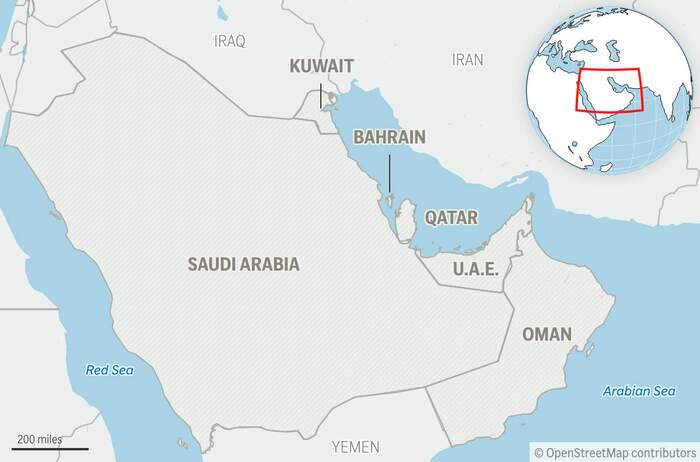
Look at a map of the Persian Gulf. The physical distance between Iran’s southern coastline and the glittering skyscrapers of Dubai and Abu Dhabi is less than a hundred miles across open water. At the Strait of Hormuz, that gap narrows to roughly twenty-one miles.
In modern warfare, twenty-one miles is nothing. Ballistic missiles and low-flying drones launched from Iranian territory can reach Emirati desalination plants, oil terminals, and financial districts in mere minutes. Air defense batteries, no matter how advanced or expensive, operate on probabilities rather than certainties. When hundreds of projectiles are fired in coordinated swarms, something eventually gets through.
Emirati leadership learned this lesson the hard way in early 2022, when Houthi militants launched drone and missile attacks deep into Abu Dhabi. The strikes hit fuel trucks near the airport and killed three civilians, briefly shattering the illusion of an impenetrable desert sanctuary. That incident forced a fundamental rethink in the Emirati capital.
Military planners in Abu Dhabi quickly realized that relying solely on Western security guarantees leaves them exposed. Even if an allied coalition can decimate Iranian infrastructure over several weeks, the immediate retaliatory storm would fall directly on Gulf Arab cities. Washington can absorb the shockwaves of a regional war from across an ocean. The UAE cannot.
The Myth of the Surgical Strike
Western hawks frequently argue for targeted, limited military action to degrade Iranian capabilities or restore deterrence. In theory, a clean strike destroys a specific facility, forces Tehran to back down, and resets the diplomatic table.
In practice, that script almost never works.
- Asymmetric Escalation: Tehran rarely responds to direct hits with symmetrical force. Instead, it activates regional proxies, disrupts shipping lanes, and targets soft economic infrastructure across neighboring states.
- Political Paralysis: Once bombs fall, domestic pressure inside Iran makes immediate concessions politically impossible for its leadership, locking both sides into a cycle of retaliation.
- Undefined Endgames: Air campaigns can destroy buildings and hardware, yet they cannot compel a regime to alter its core strategic doctrine without a massive, prolonged ground commitment nobody wants to make.
When Emirati officials say there are no quick off-ramps, they are pointing directly at this flaw in military logic. Starting a shooting war is easy. Dictating when and how it stops is nearly impossible.
To illustrate how fast this unravels, consider a hypothetical example. Imagine a targeted strike hits an Iranian naval base in Bandar Abbas on a Tuesday morning. By Tuesday afternoon, commercial shipping insurers raise war-risk premiums for the Strait of Hormuz by five hundred percent. By Wednesday, global oil tankers anchor outside the Gulf, refusing to enter. Within seventy-two hours, global energy markets convulse, and Dubai’s massive logistics and tourism sectors grind to a halt—all without a single foreign soldier setting foot on Iranian soil.
Protecting the Economic Engine
Over the past three decades, the UAE has executed one of the most ambitious economic transformations in modern history. While oil still provides vital revenue—particularly for Abu Dhabi—the federation has poured hundreds of billions of dollars into becoming the indispensable commercial hub connecting East and West.
Consider the pillars of the Emirati economic model:
- Global Aviation: Emirates and Etihad Airways rely on uninterrupted airspace to shuttle millions of passengers between Europe, Asia, and Africa. Missile exchanges close skies instantly.
- Maritime Trade: Jebel Ali Port in Dubai is one of the busiest container terminals on earth, serving as the primary transshipment hub for the entire region.
- Capital Attraction: High-net-worth individuals, hedge funds, and multinational corporations relocate to the UAE specifically because it offers predictable governance and physical safety in a volatile neighborhood.
A regional war destroys all three pillars simultaneously. Capital is cowardly; it flees at the first sound of air raid sirens and takes years to return.
Furthermore, the UAE has spent recent years aggressively pursuing bilateral trade agreements, courting Asian sovereign wealth, and positioning itself as a neutral clearinghouse for global commerce. Picking a kinetic fight with a massive neighbor—one that happens to be a major trading partner for Dubai’s merchant community—runs counter to every economic priority on the Emirati agenda.
The Quiet Diplomatic Pivot
Understanding the UAE's current posture requires looking back at its diplomatic trajectory since 2019. Following mysterious sabotage attacks on oil tankers off the coast of Fujairah and devastating strikes on Saudi oil facilities later that year, Abu Dhabi recognized that maximum-pressure campaigns were pushing the region toward a cliff.
Rather than doubling down on confrontation, the UAE quietly opened backchannels to Tehran.
They sent senior national security officials to Iran. They reinstated their ambassador. They rebuilt diplomatic bridges while maintaining their defense partnerships with the United States. Critics in Washington occasionally viewed this outreach with suspicion, interpreting it as hedging or appeasement.
In reality, it was basic risk management. By maintaining open lines of communication with Tehran, Abu Dhabi created a buffer against miscalculation. When tensions spike across the Levant or the Red Sea, Emirati diplomats can pick up the phone and speak directly to their Iranian counterparts, clarifying red lines and working to contain spillover before it reaches the Gulf.
This diplomatic architecture is fragile, and Emirati leaders know it will not survive a full-scale military confrontation. Once the missiles start flying, phone lines go dead.
The Water Crisis Nobody Mentions
Beneath the geopolitics and oil markets lies an even starker reality that keeps Gulf planners awake at night: water.
The UAE, like most of its Gulf Cooperation Council neighbors, possesses virtually no natural freshwater reserves. Roughly ninety percent of the country’s potable water comes from coastal desalination plants lining the Persian Gulf. These massive industrial complexes pull seawater in, strip out the salt, and pump fresh water to millions of residents in cities like Dubai, Abu Dhabi, and Sharjah.
These facilities are huge, stationary, and virtually impossible to hide.
A coordinated strike on a handful of major desalination plants—or a massive oil spill triggered by naval combat in the Gulf that clogs their intake pipes—would trigger a humanitarian catastrophe within days. You cannot import enough bottled water by air to sustain ten million people in a desert climate.
Military analysts often measure conflict in terms of destroyed radar sites, sunk frigates, and degraded missile launchers. Leaders in Abu Dhabi measure it in days of reserve water supply. That asymmetry in risk tolerance explains why the UAE refuses to cheerlead for military solutions advocated by commentators sitting thousands of miles away in safe capitals.
Friction With Allies and the Limits of Deterrence
The Emirati stance creates undeniable friction with more hawkish factions in both Washington and Israel. For years, the Abraham Accords were viewed by some strategists as the foundation for an integrated regional security bloc aimed squarely at containing Iran.
Abu Dhabi never saw it that way. While the UAE eagerly embraced intelligence sharing, technology transfers, and joint air defense exercises, it consistently resisted being drawn into an offensive anti-Iran coalition.
Washington's Credibility Gap
A major factor driving Emirati caution is lingering doubt about American staying power. Over the past decade, Gulf leaders have watched successive U.S. administrations pivot toward Asia, hesitate to respond to direct attacks on Gulf infrastructure, and frequently shift their regional priorities.
If Washington cannot guarantee total protection from the initial wave of retaliation—and if American political appetite for another Middle Eastern war is near zero—then local states must manage their own survival. Relying on a superpower whose domestic politics swing wildly every four years is a dangerous gamble when your survival is on the line.
The Trap of Escalation Dominance
Proponents of military force argue that overwhelming firepower establishes escalation dominance, forcing an adversary to back down out of fear of total destruction. Yet history in the Middle East shows that weaker actors rarely play by conventional rules. Instead of surrendering, they widen the battlefield, drag in third parties, and inflict steady, unsustainable economic pain until the stronger power tires of the fight.
The UAE recognizes that in a war of attrition across the Gulf, the side with the most gleaming skyscrapers and busiest airports has the most to lose.
What De-escalation Actually Requires
Rejecting military off-ramps does not mean ignoring the real threats posed by Iranian ballistic missiles, drone proliferation, or regional proxy networks. Emirati officials remain deeply wary of Tehran's ambitions and continue to invest heavily in their own sovereign defense capabilities, domestic arms manufacturing, and intelligence networks.
However, Abu Dhabi insists that lasting containment requires a political framework rather than a bombing campaign. That means tying regional de-escalation to broader diplomatic settlements, addressing the root conflicts fueling proxy warfare, and establishing clear maritime security protocols in the Gulf.
It is an imperfect, frustratingly slow approach. Diplomacy with Tehran yields incremental gains at best and requires constant vigilance against bad-faith maneuvering. Yet for a nation built on trade, logistics, and calculated risk, slow diplomacy beats rapid ruin every single time.
Until Washington and its partners can present a credible plan for what happens the day after the bombs stop falling, the UAE will continue standing firmly in the way of a war it knows it cannot afford to fight.