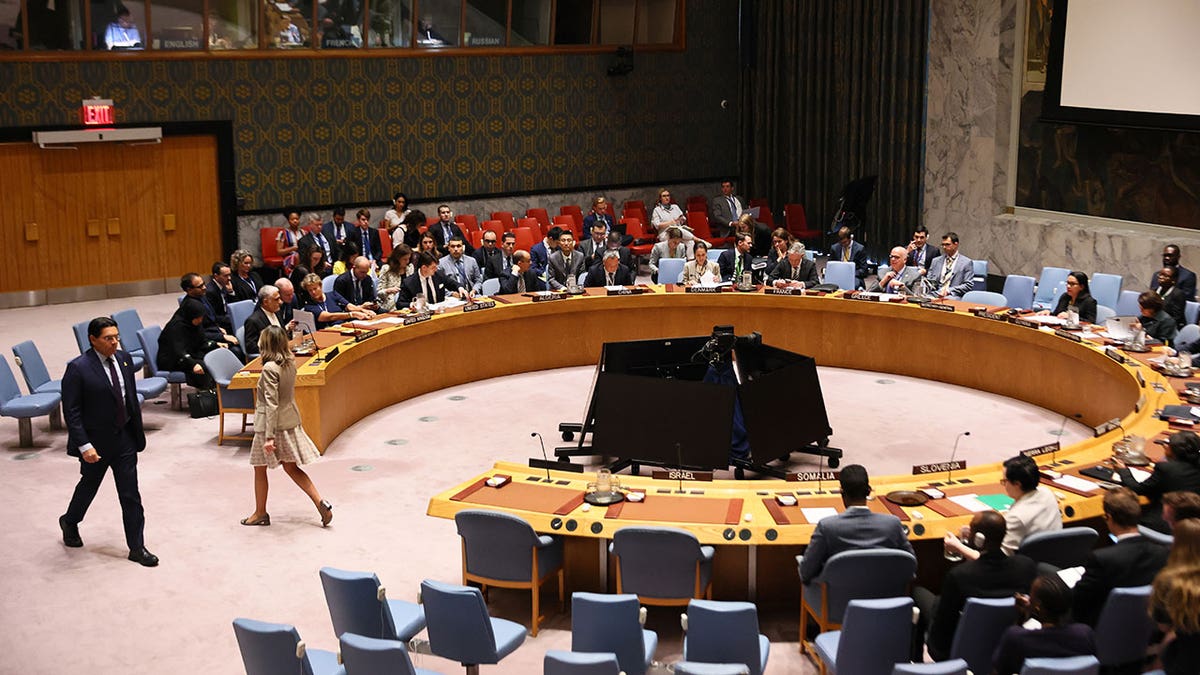
The United Nations just slapped sanctions on Algoney Hamdan Daglo, the brother of the RSF leader, and a handful of Colombian mercenaries. The headlines are treating this like a diplomatic victory. They want you to believe that freezing a bank account in Geneva or banning a soldier of fortune from flying commercial is a "blow to the war machine."
It isn't. It's theater for the bored.
If you actually look at the mechanics of how power functions in the Sahel and the Horn of Africa, you realize these sanctions are less like a tourniquet and more like a vitamin shot for the black market. We keep recycling the same failed 1990s playbook—thinking we can "starve" bad actors out of existence—while ignoring that we are actually just forcing them to evolve into more dangerous, decentralized, and untraceable entities.
The UN isn't stopping the war in Sudan; they are merely outsourcing its financing to the shadows.
The Myth of the Isolated Strongman
The common narrative is simple: cut off the money, stop the bullets. This assumes that a group like the Rapid Support Forces (RSF) operates like a standard Western corporation with a transparent balance sheet. It doesn't.
When the UN sanctions a high-profile figure like Algoney Hamdan Daglo, they aren't "breaking the bank." They are signaling to every other middleman in the region that it’s time to move the gold. Sudan isn't a country running on fiat currency and SWIFT transfers. It runs on the gold-for-guns pipeline.
By blacklisting the "official" names, the UN creates a massive arbitrage opportunity for shadow networks. I’ve seen this play out in Libya, in CAR, and now in Sudan. When you block the front door, the back door becomes the only way to play. The price of doing business goes up, which means more gold has to be mined, more labor has to be exploited, and more territory has to be seized to cover the "sanction tax."
The logic is flawed. You cannot "bankrupt" an insurgency that owns the literal ground it stands on.
Why Colombian Mercenaries Don't Care About Travel Bans
The inclusion of Colombian mercenaries in this latest round of sanctions is particularly laughable. The UN Security Council acts as if these men are booking their flights on Expedia and staying at the Hilton.
These are men who have spent decades navigating the most porous borders on the planet. A UN travel ban is a badge of honor for their resume, not a barrier to entry. Mercenary work in the 21st century is a decentralized gig economy. You don't need a central office in Bogota to move twenty guys into a conflict zone. You need a shell company in the UAE, a private charter from an unregulated airstrip, and a payment in cryptocurrency or physical bullion.
The UN is bringing a knife to a drone fight. They are targeting "individuals" when the problem is a globalized, liquid market for violence. If you take out five Colombians, ten more from the Balkans or the former Soviet states are ready to fill the vacuum.
The Sanction Paradox: Centralizing Power Through Scarcity
Every time we impose these "targeted" sanctions, we inadvertently help the warlord consolidate power. How? By destroying his competition.
In a "free" war market, various factions compete for resources. When sanctions hit, only those with the most sophisticated smuggling routes survive. By imposing costs that only the biggest players can pay, the UN effectively grants a monopoly to the most ruthless actors.
- Information Asymmetry: The RSF knows where the gold is. The UN only knows where the bank accounts were.
- Resource Consolidation: Smaller militias can't handle the heat of international scrutiny. They fold into the larger groups (like the RSF), making the main enemy bigger and harder to kill.
- The "Rally Round the Flag" Effect: Even in a fractured state like Sudan, international interference allows leaders to frame their greed as "national resistance" against Western imperialism.
The UAE Connection the UN Won't Touch
If you want to stop the war in Sudan, you don't sanction the brother of the leader. You sanction the buyers.
The RSF’s power doesn't come from a bank account in Khartoum; it comes from the gold refineries and the logistical hubs in the United Arab Emirates. But the UN won't touch that. It’s too messy. It involves actual diplomacy and economic consequences for "allies."
Instead, they pick low-hanging fruit. They sanction individuals who have already moved their assets into "non-aligned" jurisdictions. It’s the geopolitical equivalent of a "Security Theater" at the airport—it makes the public feel safe while the real threats walk through the side door.
The Humanitarian Cost of "Feeling Good"
We need to address the "People Also Ask" obsession with "How do sanctions help civilians?"
The brutal truth? They don't.
When you freeze the assets of people connected to the ruling class, they don't stop eating. They pass the cost down. They tax the food trucks. They seize the aid shipments. They monopolize the fuel. The "smart" sanctions touted by Washington and New York are rarely smart enough to avoid hitting the person trying to buy bread in Omdurman.
Imagine a scenario where a local businessman is trying to import medicine. Because "Sudan" is now a radioactive word in the compliance departments of every major bank, his letters of credit are rejected. He isn't the RSF. He isn't a mercenary. But he’s the one who can’t get his cargo cleared.
The RSF, meanwhile, is flying in whatever they want via private cargo planes that don't give a damn about a UN press release.
The False Choice: Sanctions vs. Silence
The critics will say, "So what? We do nothing?"
This is the binary trap that keeps the "Sanctions Industrial Complex" alive. Doing something that is actively counterproductive is worse than doing nothing. If you want to disrupt the RSF, you don't write a letter; you disrupt the physical supply chain.
- Target the Refineries: Stop the gold at the point of sale, not the point of extraction.
- Aggressive Secondary Sanctions: Hit the logistics firms in third-party countries that provide the planes and the fuel.
- End the "Mercenary" Myth: Treat private military contractors as what they are—illegal combatants—and hold their home countries (Colombia, Russia, etc.) directly responsible for their exports.
The Reality of Modern Warfare
War today is a business. The conflict in Sudan is a struggle over who gets to rent the state's resources to the highest bidder. When the UN intervenes with sanctions, they are just another market force. They change the price of the commodity, but they don't stop the trade.
The RSF isn't scared of the UN. They aren't scared of a travel ban. They have built an empire that is designed to thrive in the gaps of international law. To think that a few more names on a PDF list will change the trajectory of the siege of El Fasher is more than just optimistic—it's delusional.
We have to stop treating sanctions as a solution and start seeing them as the white flag they actually are. They are what we do when we have no real leverage and no political will to actually intervene.
The war in Sudan will end when the cost of fighting exceeds the profit of the gold. Right now, thanks to the shadow markets created by these very sanctions, war is the most profitable business in the country.
Stop cheering for the "blacklists." Start looking at the gold bars. Until the UN is willing to break the actual supply chain, they are just the RSF's unintentional business consultants.
The bank accounts are empty. The gold is gone. The war continues.
Do better.