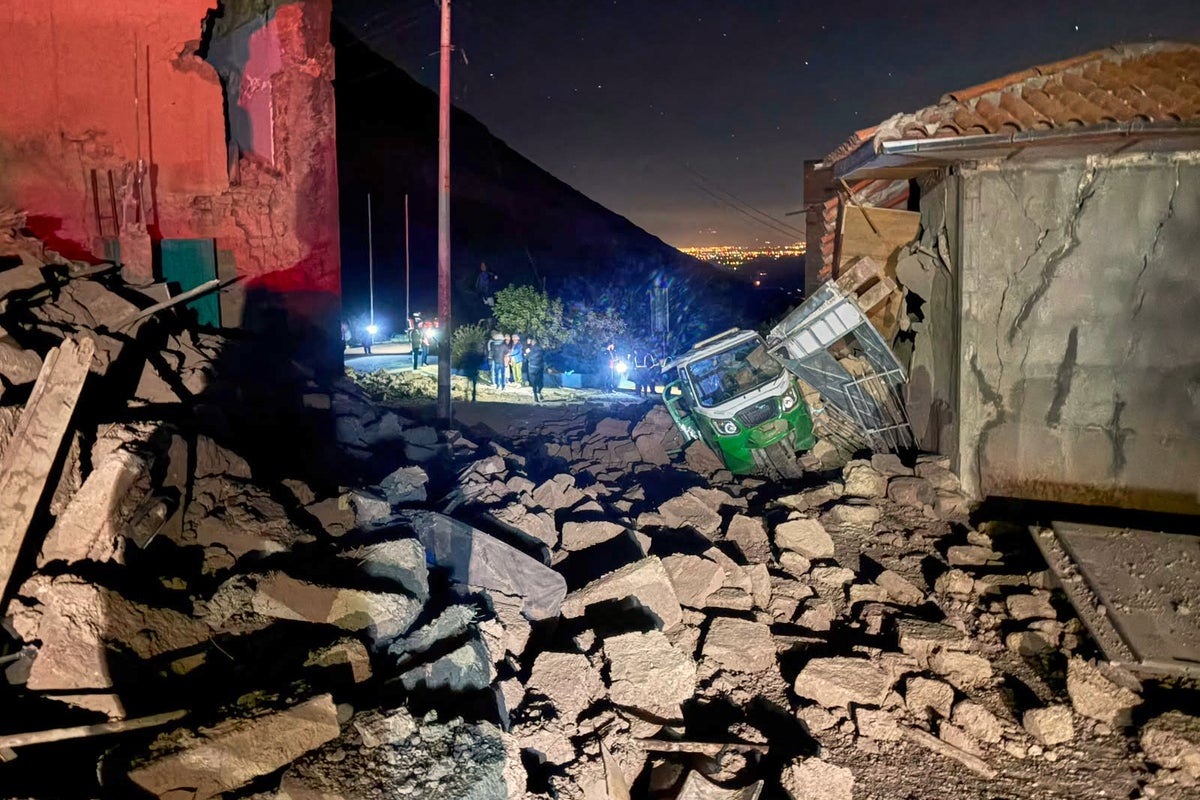
Two significant earthquakes hit southern Peru, leaving at least six people dead and 21 others injured. The tremors struck the department of Arequipa, a region long known for its volatile seismic history. While early reports often focus solely on the immediate numbers, the reality on the ground involves severe infrastructure damage, isolated communities, and a familiar scramble for emergency resources.
The first quake registered a magnitude of 5.1, followed shortly by a 5.3 magnitude aftershock. In southwestern Peru, these numbers mean collapsed adobe homes, blocked highways, and cut-off communications. Local authorities confirmed that the majority of casualties occurred in the province of Caylloma, where rural housing simply cannot withstand sustained ground shaking.
The Core Impact in Arequipa and Caylloma
When earthquakes strike Peru, the geological focus is usually the meeting point of the Nazca and South American tectonic plates. This specific event caused heavy shaking across the Colca Valley. The National Civil Defense Institute (INDECI) reported that the villages of Ichupampa, Chivay, and Achoma bore the brunt of the destruction.
Property damage is extensive. Over 40 homes collapsed entirely, and dozens more remain uninhabitable due to severe structural cracking. In these rural Andean communities, traditional building methods rely heavily on adobe—dried mud bricks. Adobe provides excellent insulation against freezing night temperatures, but it possesses virtually no tensile strength. When the ground moves, these buildings crumble rapidly.
Emergency crews faced immediate hurdles. Landslides triggered by the shaking dumped tons of rock and soil onto the main access roads, effectively trapping residents and slowing down incoming medical teams.
Why Small Magnitudes Cause Large Scale Destruction
A common misconception is that an earthquake needs to register above a 7.0 magnitude to cause fatalities. That is flat-out wrong. In areas with vulnerable infrastructure, moderate earthquakes between 5.0 and 5.5 cause catastrophic failures.
The depth of the epicenter plays a massive role. Both tremors occurred at a shallow depth of less than 10 kilometers. Shallow quakes unleash energy closer to the surface, resulting in much more violent vertical and horizontal ground movement directly beneath populated areas.
Furthermore, secondary hazards often duplicate the initial damage. In mountainous terrain, the shaking destabilizes steep hillsides. The resulting rockfalls destroy critical infrastructure, break water pipelines, and sever power lines, leaving entire towns completely in the dark.
Immediate Emergency Responses and Next Steps
The Peruvian government mobilized regional defense assets alongside INDECI to deliver emergency tents, blankets, and food rations to the displaced families. Local hospitals in Chivay received the majority of the 21 injured individuals, treating fractures, contusions, and severe trauma caused by falling debris.
For those living in or traveling through seismically active zones like southern Peru, relying solely on reactive emergency services is a mistake. Practical, immediate steps save lives before the shaking even begins.
Securing heavy furniture to walls prevents crush injuries during a tremor. Families must establish a clear evacuation plan to open spaces, completely avoiding narrow streets where falling tiles or collapsing facades pose deadly threats. Keeping a well-stocked emergency backpack containing water, non-perishable food, a radio, and first-aid supplies near the primary exit remains the absolute baseline for survival in any high-risk zone.