The theater lights dim, but the air doesn’t cool down. It stays thick with the smell of stale popcorn and the collective anxiety of an audience waiting to see if a pop star can actually act, and if a beloved comedic actor can actually break your heart.
We have all been burned by the Hollywood buddy comedy. We know the formula. Two mismatched souls are thrown together by wacky circumstances, they bicker for ninety minutes, trade a few predictable barbs, and eventually learn a surface-level lesson about friendship before the credits roll. It is a paint-by-numbers exercise designed to extract ticket money without leaving a single trace on your soul.
John Carney’s Power Ballad refuses to play that game.
Instead of a polished product, it gives us something messy, loud, and blindingly human. It is a story about the devastating friction between two entirely different kinds of musical desperation. On one side, you have the wedding singer who missed his shot but still possesses the raw, unvarnished soul of music. On the other, you have the stadium-filling pop icon who has all the fame in the world but has lost his creative compass.
When these two worlds collide, it isn’t just a clash of egos. It is a battle for artistic survival.
The Anatomy of an Accidental Duet
To understand why this film works, you have to look at the casting. On paper, pairing Paul Rudd with Nick Jonas sounds like a pitch generated by an algorithm trying to bridge two distinct demographics. Rudd is the internet's collective best friend—ageless, charming, and inherently relatable. Jonas is the pristine musical prodigy who grew up under the harsh glare of Disney spotlights and global stadium tours.
But contrast is where art breathes.
Rudd plays a gritty, down-on-his-luck wedding singer. His voice has the gravel of a man who has spent too many nights screaming over the din of open bars and clinking champagne glasses. He is a purist by necessity, clinging to the belief that music must be felt, not just manufactured.
Then enters Jonas, playing a version of a hyper-successful pop artist. His character is trapped in a gilded cage of brand management, algorithmic playlists, and the terrifying pressure of constant relevance. He can sell out arenas, but he cannot remember the last time a lyric made him cry.
The spark ignites when these two are forced into the same creative space. The film does not rely on flashy explosions or high-stakes car chases. The stakes are entirely internal. Can an artist who has given up on fame teach a pop star how to find his soul? And can that pop star give the wedding singer the stage he always deserved?
The Invisible Weight of the Second Chance
There is a specific kind of grief that comes with a deferred dream. You see it in the way Rudd’s character carries his guitar case—not like a prized possession, but like a heavy piece of luggage he can’t bring himself to leave behind. Anyone who has ever walked away from a passion to pay the rent knows this feeling. It is a quiet, dull ache.
Consider what happens when that ache is suddenly exposed to the blinding light of a superstar's world.
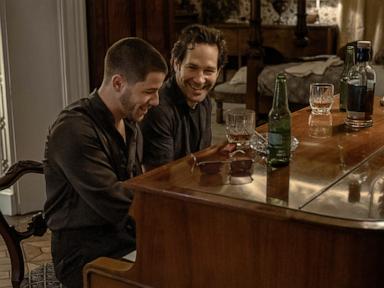
The film thrives in these uncomfortable, vulnerable spaces. In one standout scene, the two men sit in a dimly lit studio, stripped of their entourages and marketing teams. They argue over a single chord progression. It is a small moment, but it feels monumental. The camera lingers on the sweat on Rudd's brow and the defensive posture of Jonas's shoulders.
This is where the director’s expertise shines. John Carney, the mastermind behind Once and Sing Street, knows exactly how to capture the precise moment a song comes alive. He understands that music isn't just background noise; it is a character in its own right. The songs in Power Ballad aren't just catchy tunes designed to sell soundtracks. They are the actual dialogue through which these two broken men finally communicate.
Music acts as the ultimate truth serum. You can lie in an interview, and you can lie to your fans on social media, but you cannot lie when you are trying to hit a high note with another human being watching you from three feet away.
Stripping Away the Pop Star Veneer
The real surprise of the film is Nick Jonas. It is easy to be cynical about pop stars pivoting to cinema. We expect them to protect their image, to look beautiful, and to play characters that feel like extensions of their existing brands.
Jonas throws that playbook out the window.
He allows himself to look lost. There is a profound vulnerability in his performance as he portrays a man who realizes his entire career might be a beautifully packaged lie. He allows his character to be arrogant, insecure, and deeply unlikable at times, which only makes his eventual transformation feel earned.
Opposite him, Rudd delivers a performance stripped of his usual effortless charisma. He isn't the wisecracking hero here. He is tired. His humor is a shield against his own sense of failure. When he sings, it isn't perfect, but it is devastatingly real.
The movie asks a deeply uncomfortable question that resonates far beyond the music industry: What do you do when the thing you love the most is also the thing that has broken your heart?
The Resonance of the Final Chord
We live in a culture that commodifies everything. Art is broken down into metrics, engagement rates, and streaming numbers. It is easy to forget that at the center of every great song is just a human being trying to bridge the gap between their isolation and someone else's.
Power Ballad doesn't offer a clean, Hollywood ending where everyone gets a trophy and all problems disappear. It respects the audience too much for that. Instead, it offers something far more valuable: a reminder that collaboration requires sacrifice. To create something beautiful with someone else, you have to be willing to let them see your flaws.
As the final song plays and the credits begin to roll, the theater remains quiet for a beat. Nobody scrambles for their phone. Nobody rushes for the exit.
In the dark, you can hear the faint sound of people catching their breath, still vibrating from the raw, beautiful noise of two men who stopped pretending and just started singing.