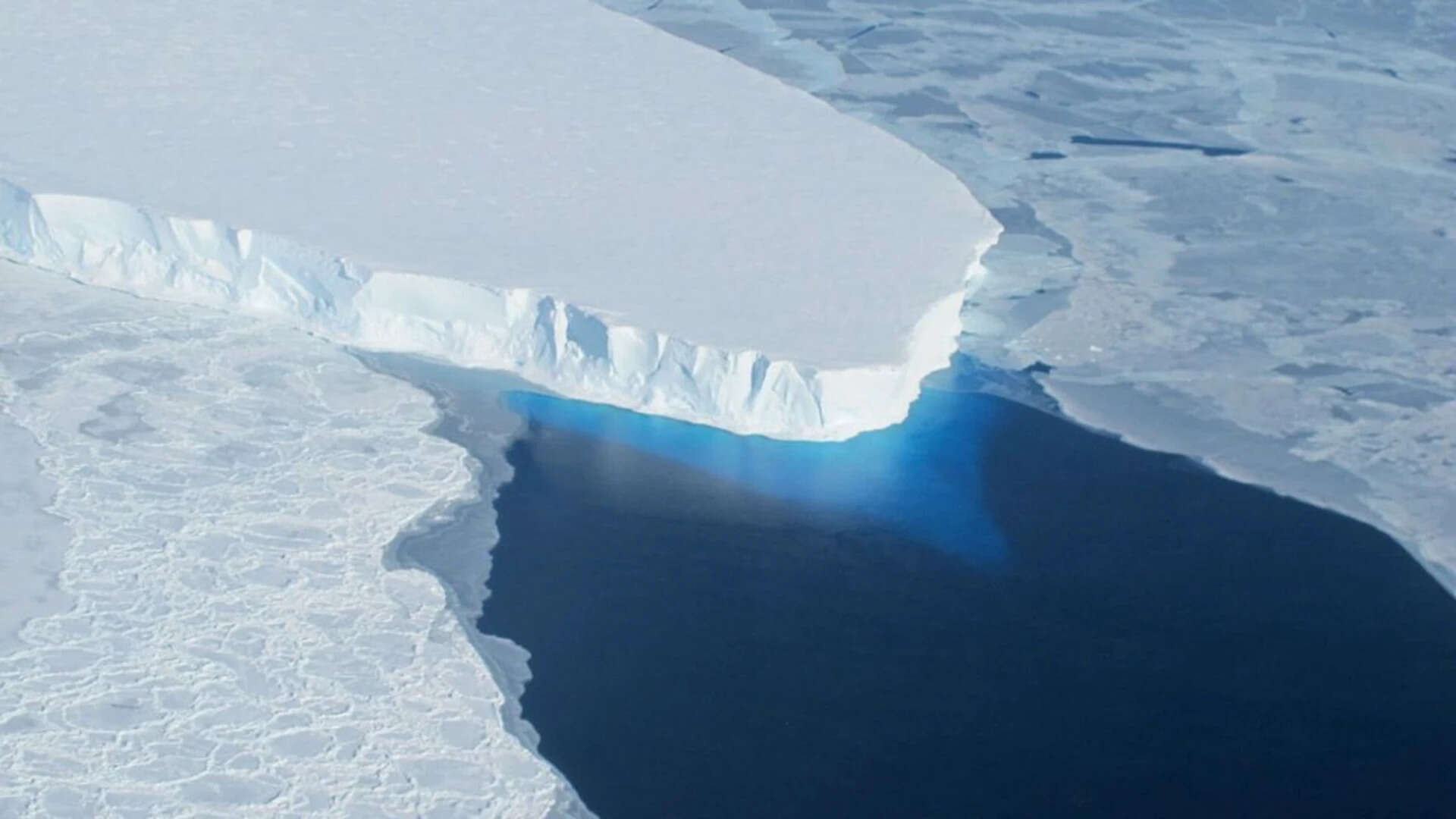
A Wall Beneath the Waves
Cold.
That is the first thing that hits you when you look at the bathymetric maps of the Amundsen Sea. Not just the physical freezing point of water, but the absolute, indifferent cold of an ocean quietly eating away at a continent.
For decades, glaciologists watched the massive Thwaites Glacier with a growing sense of dread. It earned a grim nickname in newsrooms: the Doomsday Glacier. But sensational nicknames tend to dull our senses. They turn a slow-motion catastrophe into a headline we swipe past on our phones while waiting for coffee.
Here is the truth. Thwaites is not just a block of ice. It is a cork. It holds back a vast basin of West Antarctic ice that, if released, contains enough water to raise global sea levels by over ten feet over the coming centuries.
And right now, warm ocean currents are sloshing underneath it, melting the cork from below.
So, a group of scientists proposed something that sounds, at first glance, like pure madness. They want to drop an 80-kilometer-long curtain onto the ocean floor. A giant flexible barrier anchored thousands of feet beneath the freezing surface, designed to block those warm underwater currents before they touch the glacier's underbelly.
It sounds like sci-fi hubris. But when the alternative is watching coastal cities drown mile by mile, radical engineering starts looking like the only practical thing left on the table.
The Hidden Culprit
Most people assume glaciers melt from the top down. We picture bright summer sun beating down on pristine white ice, creating turquoise streams that trickle off the edge.
That is not what is killing Thwaites.
The real killer is invisible, operating hundreds of meters below the surface. Deep water from the Circumpolar Deep Water current—water that is just a few degrees above freezing, which in glacial terms is burning hot—is heavier and saltier than the surface melt. It creeps along the deep canyons of the seafloor, sliding beneath the floating edge of the glacier like a blowtorch aimed at a foundation.
Picture a massive frozen cliff resting on an underwater bed of rock. The point where the ice leaves the rock and starts floating is called the grounding line. As warm water carves out hollows beneath this grounding line, the ice loses its grip. It destabilizes. It breaks away.
If you were standing on the deck of an icebreaker floating in the Pine Island Bay, you would see nothing unusual. The air would bite your cheeks. The icebergs would loom like silent, blue-white cathedrals. Everything would appear utterly still.
Yet underneath your boots, trillions of gallons of warmer water are constantly eroding the anchor points of the world's ice sheet.
The Canvas of the Deep
How do you stop an ocean current? You do not build a concrete dam. The ocean would shatter it in a season, and the logistics of pouring concrete in the Antarctic shelf are impossible.
Instead, researchers led by figures like John Moore, a glaciologist from the University of Lapland, began modeling a flexible solution.
Think of a dense, heavy fabric curtain—buoyant enough to float upright from the seabed, but anchored firmly to the ocean floor with massive cables. It would not seal off the ocean entirely. Water could still flow over the top. But by standing 100 meters tall off the ocean floor, it would act as a buffer, catching the dense, warm water creeping along the deep channels and forcing it to turn back.
Hypothetically, imagine a harbor engineer named David standing on a frigid deck in 2035, supervising the deployment of a prototype module. The winch groans as a heavy, reinforced geotextile sheet sinks into the black water. It is an act of sheer desperation, yet grounded in precise fluid dynamics. If David and his team can reduce the warm water reaching the grounding line by even 50%, they buy the glacier decades—maybe even centuries—to stabilize.
The engineering challenges are mind-boggling. The curtain must survive relentless deep-sea currents, icebergs scrubbing the ocean floor, and the intense pressure of the polar depths. It has to be anchored without destroying the delicate benthic ecosystems that call those dark waters home.
And then there is the cost. Estimates run into tens of billions of dollars.
That number makes people flinch. It sounds absurd for a piece of fabric in a place where almost no human will ever set foot.
Counting the Unseen Dollars
But consider what happens next if we do nothing.
A ten-foot rise in sea levels is not a slow tide that gently pushes beach chairs back a few yards. It is the permanent loss of New York, Shanghai, London, Mumbai, and Miami. It is the displacement of hundreds of millions of people. It is the complete rewrite of human geography, agriculture, and global finance.
Compare tens of billions of dollars for a subterranean curtain to the trillions of dollars required to rebuild human civilization inland. Suddenly, the curtain looks like a bargain. It is an insurance policy for the world's coastlines.
Of course, the idea faces fierce resistance, even within the scientific community. Critics argue that geoengineering projects like this are dangerous distractions. They worry that if world leaders think a giant curtain can save the ice, they will stop reducing carbon emissions. They fear side effects—unintended disruptions to ocean currents that could alter weather patterns thousands of miles away.
These doubts are valid. No glaciologist views an underwater curtain as a substitute for cutting greenhouse gases. It is not a cure. It is a tourniquet.
You apply a tourniquet when the patient is bleeding to death. You do not do it because it heals the wound; you do it to keep the patient alive long enough to get them into surgery.
The Long Horizon
Standing on the edge of the Antarctic continent, human ambition feels extraordinarily small. The ice has been there for millions of years, moving according to ancient, slow cycles of freezing and thawing.
We are now forcing those cycles to run at breakneck speed.
The proposal to hang an 80-kilometer curtain in the dark, icy depths of the Amundsen Sea is a strange, breathtaking testament to human ingenuity—and human fault. It is a monument to our willingness to attempt the impossible because we spent two centuries ignoring the inevitable.
Whether the curtain ever gets built remains an open question. Testing is currently limited to small-scale models in wave tanks and fjords. Years of testing, environmental impact assessments, and diplomatic negotiations lay ahead before a single anchor is dropped into the Southern Ocean.
Yet, the project shifts how we think about the crisis. It moves us past passive observation and into the realm of radical defense.
The ice continues to groan and shift in the far south, indifferent to our debates. Deep below the waves, warm water keeps creeping along the ocean floor, eating away at the foundations of our world. The curtain rests on a drafting table for now, a desperate, brilliant thread hanging between us and the rising tide.