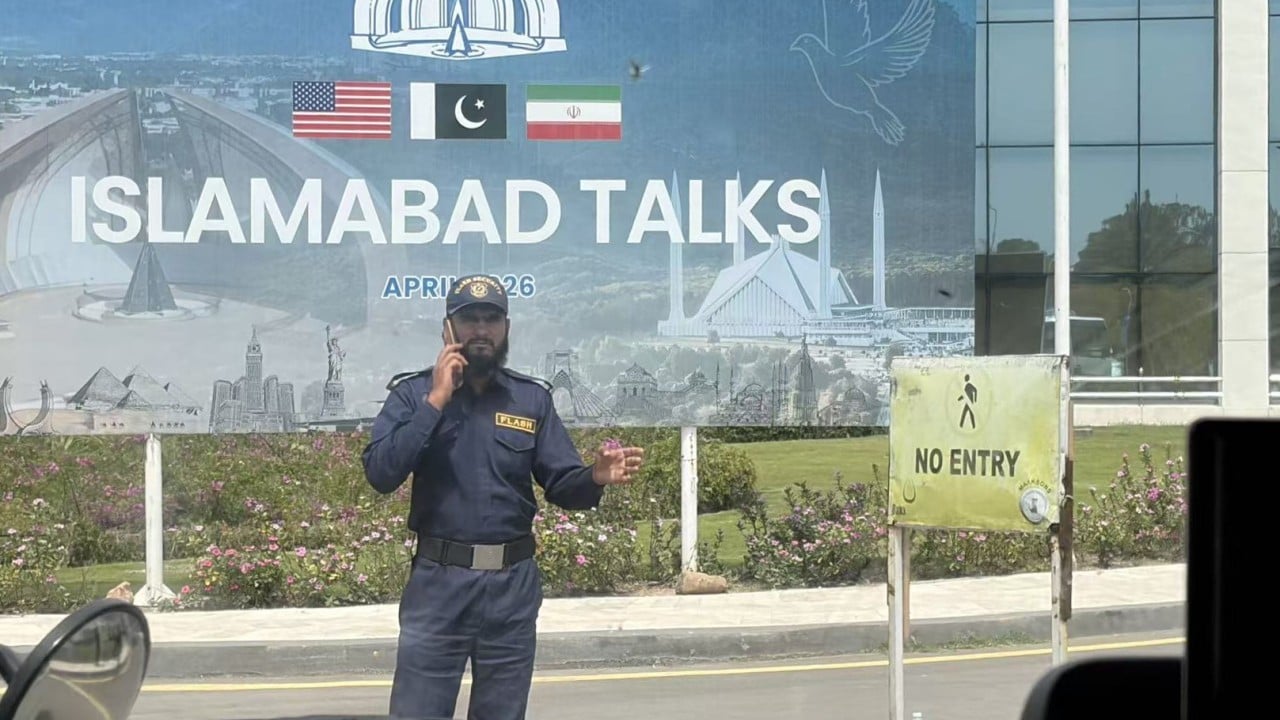
Don't believe the optimistic headlines coming out of Islamabad. While diplomats sit in air-conditioned rooms in Pakistan trying to hash out a deal, the reality on the water is much darker. We’re currently in the middle of a shaky two-week ceasefire, but the "peace talks" feel more like a countdown to a larger explosion.
If you're wondering why your gas prices are creeping up or why the news feels particularly heavy this week, it’s because the Strait of Hormuz is effectively a parking lot. President Trump just initiated a naval blockade. Iran is threatening to make every port in the region "unsafe." This isn't just a diplomatic spat. It's a high-stakes game of chicken with the global economy.
The Islamabad Deadlock
The weekend marathon in Pakistan was supposed to be the breakthrough. Vice President J.D. Vance and the U.S. delegation spent over twenty hours trying to squeeze concessions out of Iranian Foreign Minister Abbas Araghchi. It didn't work. The U.S. wants a total end to nuclear enrichment and a permanent reopening of the Strait. Iran wants the U.S. to pay reparations for the February strikes and unfreeze billions in assets.
Neither side is budging. Araghchi claims Washington "moved the goalposts" just as a deal was close. Meanwhile, Trump is posting on social media that Iran has "no cards" and is only talking because they're desperate. It’s hard to find common ground when one side thinks the other is about to collapse and the other feels they have nothing left to lose.
What is Actually Happening in the Strait
Forget the talk of "freedom of navigation" for a second. Let's look at the numbers. About 20% of the world's oil trade passes through that narrow stretch of water. Right now, there are roughly 20,000 seafarers trapped on ships in the Persian Gulf. They're running low on supplies and don't know if they'll be caught in a crossfire.
The U.S. blockade, which officially started yesterday, targets any ship that pays a transit toll to Iran. Trump's logic is simple. Cut off the money, and the regime dies. But the IRGC is using this ceasefire to lay more mines and solidify their grip on the maritime traffic. It's a mess. If the talks don't resume and succeed before the ceasefire expires on April 21, we aren't just looking at more talks. We're looking at "extensive attacks" on Iranian energy sites.
Why This Round is Different
In previous years, these talks were about "de-escalation" or "rejoining a deal." In 2026, the stakes are existential. Since the joint U.S.-Israeli strikes in February, the Iranian leadership is fractured. You have President Masoud Pezeshkian trying to play the moderate to the West while hardliners in the IRGC are pushing for more confrontation.
The death of Khamenei earlier this year changed everything. The power vacuum in Tehran makes it nearly impossible for a single negotiator to sign off on a deal. If Araghchi gives up too much, he might not have a government to go back to. If he gives up too little, the U.S. resumes the bombing.
The Economic Ripple Effect
You might think a conflict in the Middle East is a world away, but the blockade is a direct hit to your wallet. Global oil and gas prices are already spiking because shipping has essentially ceased in the region.
- The IEA has released 400 million barrels of oil just to keep prices from hitting the moon.
- The UK and France are hesitant to join the blockade, fearing it'll trigger a wider war they can't afford.
- Supply chains are rerouting around the Cape of Good Hope, which adds weeks to delivery times and massive costs to everything from electronics to grain.
The Israel and Lebanon Factor
You can't talk about U.S.-Iran relations without looking at Beirut. While the ceasefire is technically holding in Iran, Israel is still pounding Lebanon. Envoys are meeting in Washington tomorrow to discuss a separate Lebanon peace deal, but Iran insists that any deal for them must include a ceasefire for Hezbollah.
The U.S. sees these as two separate issues. Iran sees them as one and the same. This disconnect is why the "inches away" deal Araghchi mentioned is probably a fantasy.
What Happens Next
The ceasefire ends on April 21. That's the real deadline. If there isn't a second round of talks in Islamabad or Ankara by then, the U.S. has already signaled its next move. More troops are entering the region. The naval blockade is being reinforced.
Watch the Strait. If you see reports of "mine-sweeping operations" or "interceptions," the talks have officially failed.
Prepare for higher energy costs through the summer. If you're invested in international markets, the volatility isn't going away. The most practical thing you can do right now is keep an eye on the April 21 deadline. If no extension is announced by the 19th, the region is likely headed back into full-scale conflict. Stay informed, but don't buy the hype that a "breakthrough" is just around the corner. The gap between these two sides has never been wider.