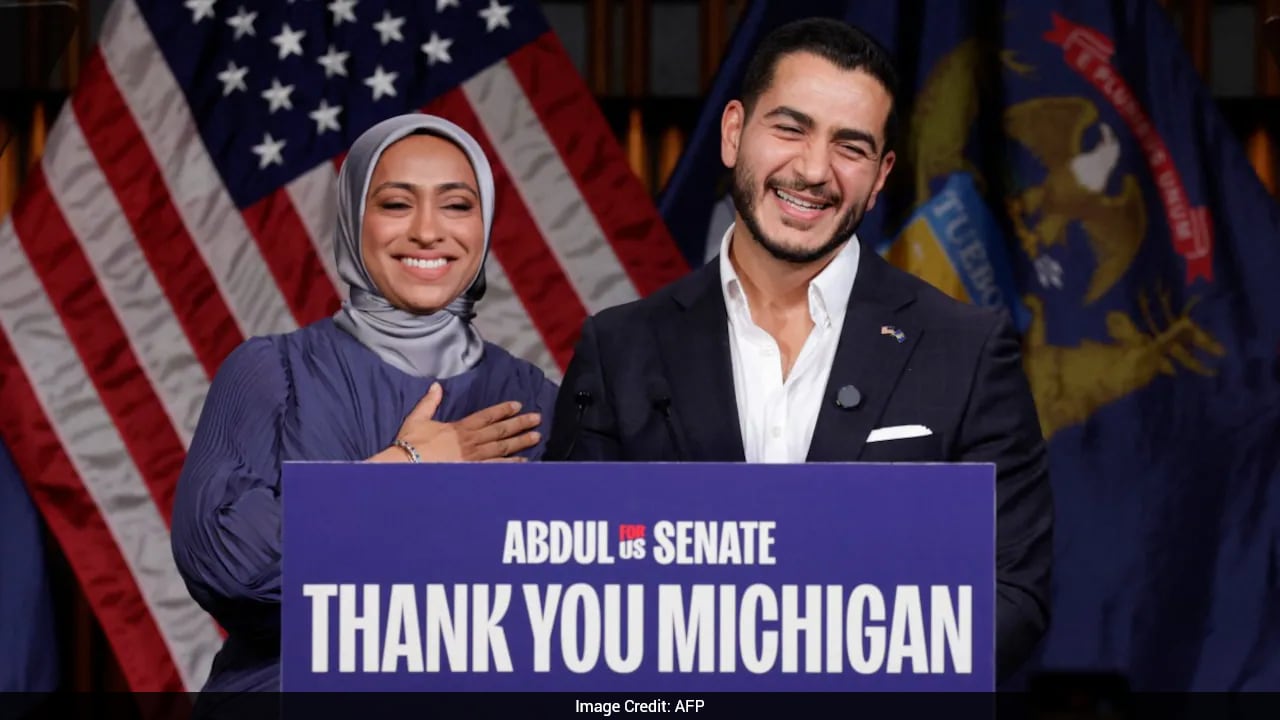
Viral town-hall confrontations do not automatically flip swing states, yet Abdul El-Sayed's October 2026 exchange in Caro, Michigan, became a focal point of a cycle in which he defeated Republican former Rep. Mike Rogers with roughly 52.5% of the vote to Rogers's 45.5%. Surface-level commentary on a moment like "Heckled, Branded Terrorist, He Still Won. Abdul El-Sayed's Viral Moment" usually treats virality as a cause rather than a symptom. A rigorous strategic audit separates the mechanics of attention capture from the structural drivers of turnout, persuasion, and coalition arithmetic in a battleground Senate race.
Deconstructing the Competitor Narrative
Standard viral-moment commentary relies on a compressed causal chain: a hostile question or smear occurs, a candidate delivers a sharp clip, social media amplifies it, and electoral victory follows. That framing is analytically thin because it confuses salience with persuasion. In high-information, heavily spent Senate contests—Michigan's 2026 race drew over $243 million in total spending—most voters already hold baseline partisan priors or are reacting to cumulative economic and institutional signals rather than a single online clip.
To evaluate what actually happened around the Caro town hall and the broader campaign against El-Sayed, we can separate known facts from educated hypotheses:
- Known fact: At an October 2026 town hall in Caro, Michigan, an attendee who gave his name as "Tommy"—later identified as former Sen. Josh Hawley aide Thomas Teepell—pressed El-Sayed to disavow the Muslim Brotherhood, prompting a nearly five-minute exchange in which El-Sayed disavowed the group, invoked historical parallels to anti-Catholic scrutiny of John F. Kennedy, and challenged the questioner on religious doctrine in American law.
- Known fact: Throughout the general election, Republican opponents and allied figures—including Mike Rogers, President Donald Trump, and Vice President JD Vance—repeatedly raised allegations or insinuations tying El-Sayed to the Muslim Brotherhood, extremism, or Sharia law, while El-Sayed countered by pointing to his Michigan upbringing and steering voters toward cost-of-living pressures such as gas prices, groceries, housing, and trade impacts.
- Known fact: On November 3, 2026, El-Sayed won Michigan's open U.S. Senate seat (2,520,895 votes, or about 52.54%, to Rogers's 2,181,111 votes, or about 45.46%, per preliminary AP figures), becoming the first Muslim American elected to the U.S. Senate.
- Educated hypothesis: The viral clip likely operated primarily as a base-mobilization and framing-defense asset for Democrats rather than a mass converter of undecided Republicans in red-leaning counties.
The Three Pillars of Viral Heckling and Counter-Framing
When a campaign confronts a planted or adversarial identity-and-extremism line of attack in public, the interaction functions across three distinct operational layers.
1. The Provocation Mechanism (Asymmetric Cost)
A hostile questioner in a public forum incurs minimal cost to assert a frame. By demanding a disavowal of a controversial foreign or transnational group, the questioner forces the candidate onto defensive terrain before a single substantive policy point is spoken. Even when the candidate answers "yes," the clip still circulates with the accusation attached, which satisfies the provoker's baseline objective: keeping cultural or security suspicion in the feed.
2. The Reframing Mechanism (Reversing the Burden)
A disciplined response does not merely answer the literal question; it re-audits the premise. When El-Sayed answered affirmatively and immediately asked why the question was being asked—framing the exchange around dual loyalty, constitutional boundaries, and historical precedent—he shifted the visual dynamic from a candidate on trial to a candidate cross-examining an assumption. In media economics, contrast drives retention: an exchange where a candidate turns a hostile premise back onto the speaker holds viewer attention longer than a terse denial.
3. The Distribution Mechanism (Algorithmic Polarity)
Viral political clips rarely travel with a single meaning; they act as Rorschach tests. Supporters view the clip as proof of composure and constitutional principle, while opponents edit or frame the same sequence as evasion or ideological ambiguity. Because engagement algorithms reward high-velocity reaction and quote-tweeting regardless of sentiment, both camps inadvertently subsidize reach—though the net electoral payoff depends on whether the clip reinforces your coalition's turnout or energizes the opponent's.
The Cost Function of Identity Attacks in a Swing State
In political strategy, every messaging choice carries an opportunity cost. Attacking a candidate's name, faith, or family background consumes finite oxygen during the closing weeks of a campaign. If swing and persuadable voters perceive the attack as overreaching, unfair, or disconnected from household economics, the attack suffers diminishing or negative marginal returns.
Consider the trade-off in Michigan. Michigan is a classic industrial and suburban battleground where voters routinely weigh manufacturing, trade policy, healthcare, and everyday prices. When attackers concentrate heavily on identity insinuations, they risk two structural errors:
- The Salience Mismatch: Voters prioritize pocketbook and local economic anxieties over abstract or unsubstantiated foreign-group allegations, allowing the target to pivot back to gas, groceries, housing, and regional industry.
- The Sympathy Backfire: When critics or hecklers press a line that looks like guilt by association or religious scrutiny, persuadable moderates who might otherwise be open to a policy critique of the candidate can recoil from the messenger.
This dynamic illustrates a cause-and-effect relationship that viral-moment articles routinely miss: a viral defense rarely wins an election by itself, but an overextended identity attack can actively hand the target a high-leverage contrast moment.
Step-by-Step Operational Playbook for High-Stakes Exchanges
For campaigns, communicators, and organizational leaders facing bad-faith public questioning or coordinated smears, discipline beats improvisation. The sequence below outlines how to manage an unscripted confrontation without ceding the narrative.
- Answer cleanly in one beat, then diagnose the premise. State a clear, unambiguous answer immediately so clips cannot credibly claim refusal, then ask what assumption motivates the question.
- Elevate the frame to a shared civic rule. Anchor the response in a recognizable constitutional principle, institutional norm, or historical parallel that broader audiences understand without specialized context.
- Flip the test of principle. Ask a reciprocal question that tests whether the challenger holds the same standard for their own side, exposing double standards in real time.
- Pivot to material stakes before exiting the clip. Close the thought by connecting back to concrete issues voters care about—costs, jobs, or public service—so the takeaway is forward-looking rather than purely reactive.
- Audit provenance and counter-clip rapidly. Verify who the questioner is and whether the line is part of a coordinated roll-out, then distribute the full context rather than letting opponents isolate a ten-second fragment.
Limitations and Failure Modes
No rhetorical counter-strategy is a silver bullet. A sharp town-hall exchange can fail if the underlying allegation touches a real vulnerability, if the candidate loses emotional control and validates caricatures, or if the clip is edited aggressively on partisan channels where counter-context never reaches the viewer. Moreover, a strong viral moment in a single town or demographic pocket cannot rescue a campaign with weak ground game, underfunded persuasion, or misaligned economic messaging.
Strategic Recommendation
Treat viral town-hall clips as amplifiers of an existing structural advantage, never substitutes for coalition math. If you are advising a campaign or leading an organization under coordinated cultural pressure, pair every defensive counter-clip with relentless repetition of high-salience material issues—household costs, regional economic security, and competence—while keeping unscreened public forums active so the organization projects accessibility rather than bunker mentality. Measure success not by retweets or view counts in the 48 hours after a confrontation, but by whether persuadable voters end the week thinking about your core agenda rather than your critics' obsession.