CBOE Global Markets functions as a systemic tax on financial market uncertainty. While standard retail market commentary reduces exchange platforms to transactional volume plays, a structural assessment reveals that CBOE occupies a highly defensible, structurally protected monopoly within the global derivatives infrastructure. The investment thesis relies not on generic volume expansion, but on the proprietary ownership of core volatility benchmarks and exclusive licensing agreements that render its revenue model highly resilient during periods of structural market stress.
To understand the operational leverage of this enterprise, one must isolate its capital allocation strategy, structural moats, and the precise macroeconomic mechanics that govern derivative transaction volumes.
The Architecture of Proprietary Financial Moats
The competitive positioning of a standard equity exchange is vulnerable to fee compression and order-flow migration. Competitors can underprice transaction fees to capture market share. CBOE bypasses this structural vulnerability through its proprietary derivatives ecosystem, specifically its exclusive rights to list options contracts linked to the S&P 500 Index (SPX) and the CBOE Volatility Index (VIX).
This structural moat operates across three distinct operational layers:
- Exclusive Intellectual Property Contracts: The multi-decade licensing agreements with S&P Dow Jones Indices isolate the SPX options suite from direct exchange competition. Market participants seeking institutional-scale index options execution have no alternative venue, removing the threat of fee compression in this segment.
- The Liquidity Network Effect: High-volume derivatives trading requires deep order books and narrow bid-ask spreads. Because institutional market makers concentrate their capital where the order flow is dense, a self-reinforcing loop occurs. Capital concentration creates tighter spreads, which attracts further transactional volume, raising the barrier to entry for any theoretical alternative product.
- The VIX Complex Monopoly: The VIX index is the global standard for pricing equity market variance. CBOE owns the methodology and the clearing infrastructure for VIX futures and options. This makes it impossible for another marketplace to replicate the exact hedging instruments utilized by institutional programmatic trading desks.
This product mix shifts CBOE from a commoditized transaction engine to a high-margin utility. While standard equity trading generates razor-thin capture rates per contract, proprietary index products yield substantially higher average revenue per contract (RPC).
The Volatility Capture Function
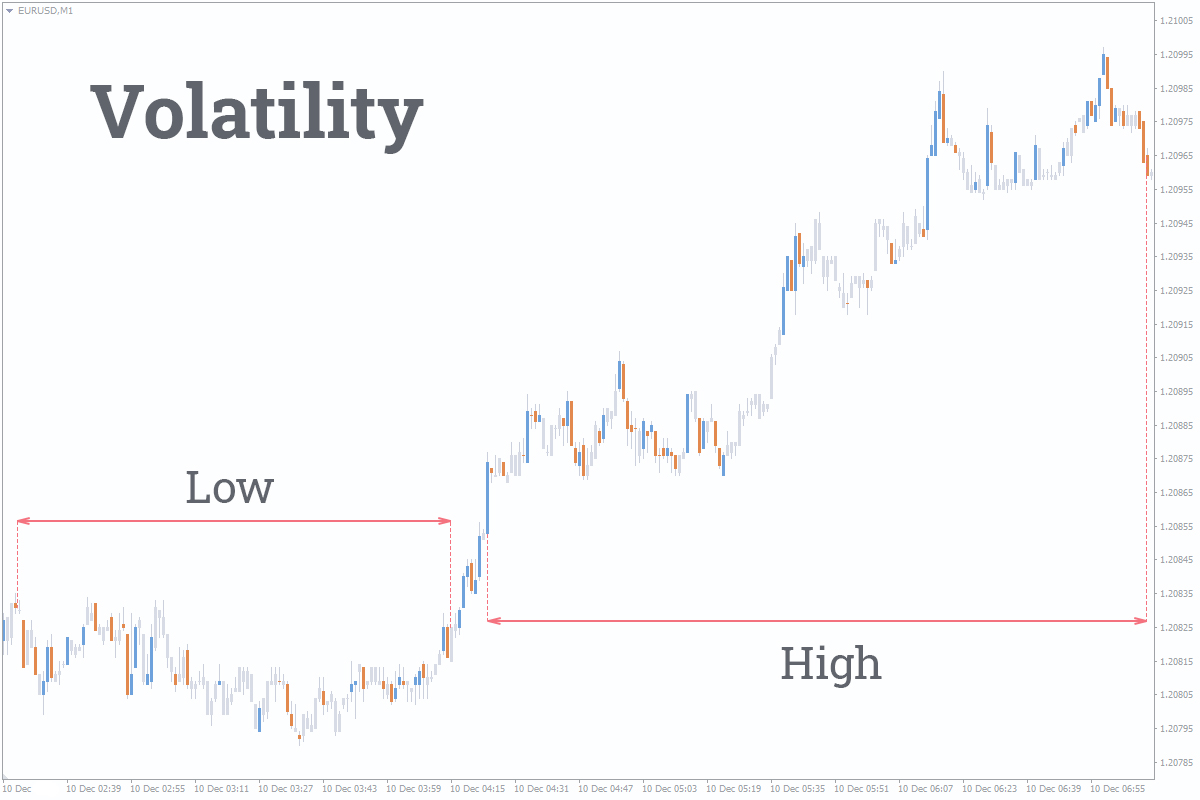
The core economic driver of CBOE is its counter-cyclical volume capture function. In periods of macroeconomic stability, asset prices rise linearly, and transaction volumes remain predictable. However, when market uncertainty accelerates, institutional asset managers deploy hedging strategies, driving an exponential expansion in option volumes.
$$\text{Transaction Revenue} = \sum (\text{Volume}_i \times \text{RPC}_i)$$
Where $i$ represents the asset class (e.g., multi-listed options, proprietary index options, futures).
During periods of structural market dislocation, the volume component scales exponentially while the proprietary nature of the index products allows CBOE to maintain or increase the RPC. This architecture establishes an organic hedge for a diversified investment portfolio: the asset performs optimally when broader equity markets experience systemic contractions.
This operational leverage is driven by fixed-cost scalability. The technical infrastructure required to clear one million contracts can handle ten million contracts without a linear scale-up in capital expenditure. Consequently, volume expansions drop directly to the operating margin line, accelerating free cash flow generation precisely when capital availability across the rest of the market tightens.
Structural Headwinds and Capital Allocation Limits
An objective valuation model must account for the systemic constraints and regulatory variables that limit CBOE's operational execution. The enterprise is not without structural vulnerabilities.
The Over-the-Counter Migration Risk
A primary risk to the centralized exchange model is the expansion of over-the-counter (OTC) derivative structures. Institutional counter-parties frequently construct customized, bilateral swaps and variance agreements outside of public exchange clearinghouses to avoid public reporting requirements and standardized margin constraints. If institutional liquidity shifts permanently toward customized OTC products, the aggregate addressable volume for standardized exchange-traded options contract groups contracts.
Structural Compression of Volatility Cycles
Extended macroeconomic cycles defined by aggressive central bank liquidity intervention tend to suppress the spot value of the VIX. When implied volatility remains artificially depressed for multi-quarter durations, retail and institutional interest in short-term options hedging strategies wanes. This systemic dampening of the volatility cycle compresses trading velocity, challenging the platform's organic revenue growth outside of its baseline equity transaction fees.
Capital Allocation Disruption
The efficiency of CBOE's balance sheet depends directly on its free cash flow conversion rate. When the corporate strategy shifts toward high-premium mergers and acquisitions to buy geographical diversification—such as expansions into digital assets or foreign spot exchanges—it introduces integration risks and potential return on invested capital (ROIC) dilution. Capital spent on unproven technical infrastructure reduces the capital available for share repurchases and dividend growth.
The Operational Velocity of Zero Days-to-Expiration Options
The rapid expansion of Options with Zero Days to Expiration (0DTE) has fundamentally altered the volume baseline for CBOE. Previously, options volume was anchored to monthly or weekly expiration cycles. The institutionalization of 0DTE contracts has effectively converted structural hedging tools into high-velocity intraday trading instruments.
This structural shift alters the revenue composition by decarbonizing the reliance on systemic crisis events. Volatility is no longer required to manifest as a multi-month bear market to drive transaction fees. Instead, intraday variance driven by macroeconomic data releases (e.g., Consumer Price Index reports or Federal Open Market Committee decisions) induces intense, concentrated bursts of 0DTE trading activity.
This behavior pattern stabilizes the exchange's baseline revenue throughout prolonged bull markets. The product class transforms what was historically a highly cyclical financial model into a more consistent, recurring transaction engine. The cost function of managing this high-frequency transaction load is minimal, as the exchange utilizes its pre-existing electronic clearing matrix, leading to expanded operating margins.
Definitive Strategic Outlook
CBOE Global Markets represents a pure structural bet on the permanent financialization and increasing complexity of global asset markets. The business model cannot be evaluated using the metrics applied to standard capital-light technology firms or traditional credit-sensitive asset managers. It must be priced as a critical financial utility that profits from market friction and risk distribution.
The tactical play requires monitoring the spread between the transaction volumes of multi-listed options and proprietary index options. Wealth creation inside this capital structure accelerates when proprietary index options outpace generic equity options, as the margin profile of the former is structurally superior. Long-term capital allocation efficiency will be determined by management's ability to resist dilutive international acquisitions and instead funnel cash flow into continuous share retirement, optimizing earnings per share expansion against a backdrop of structurally higher global market volatility.