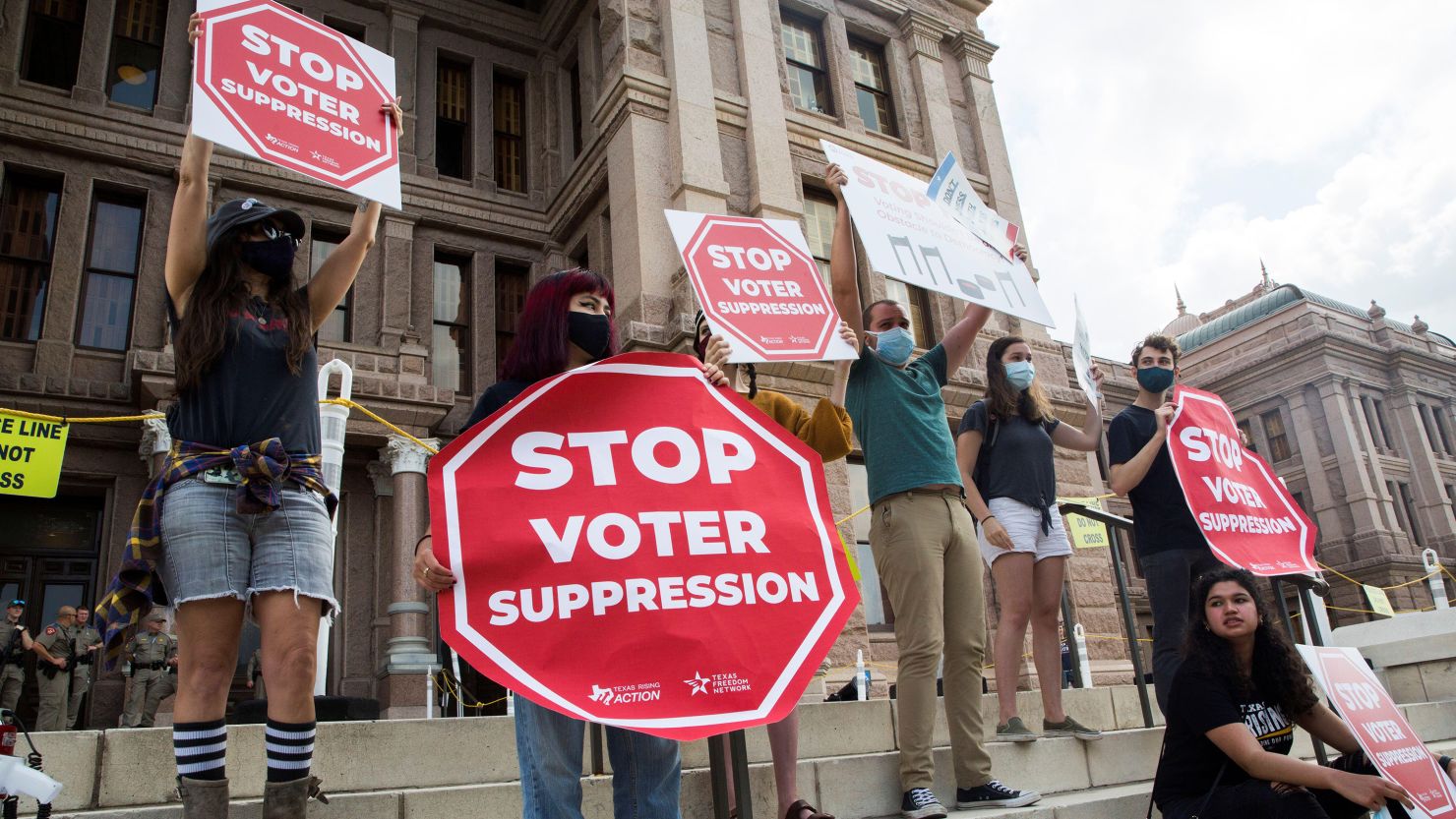
The prevailing narrative surrounding the Supreme Court’s recalibration of the Voting Rights Act (VRA) is an exercise in hysterical mourning. Pundits and partisan hacks have spent a decade treating Section 5—the preclearance requirement—like a holy relic that, once smashed, signaled the permanent decline of democratic integrity. They scream about voter suppression. They wail about disenfranchisement. They ignore reality.
The obsession with federal preclearance is not just misplaced; it is a tactical blunder of historic proportions.
The Myth of Federal Protection
The lazy consensus holds that without Washington holding a leash on state legislators, democracy evaporates. This is a fairy tale. I have spent twenty years watching how state-level power dynamics actually function. When you force every minor change in voting procedure through a bureaucratic bottleneck in D.C., you create a performative theater of compliance. You get lawyers arguing over font sizes on ballots instead of fighting for accessible polling hours or robust early voting infrastructure.
The legal reality is that the Court did not kill the VRA. They killed an outdated mechanism that relied on 1960s-era data to dictate 21st-century behavior.
Imagine a scenario where a tech company insists on using a DOS-based operating system to manage a cloud-based server. When the system crashes, the IT department blames the new hardware instead of admitting their software is a fossil. That is the VRA "activist" playbook. They are protecting an infrastructure that was designed to combat mid-century Jim Crow, not the digital-age political machinery we face today.
The Real Battleground is Localized
While the intelligentsia in Washington writes op-eds lamenting the loss of federal oversight, state legislatures are playing a different game. They aren't trying to bring back literacy tests. They are engaged in sophisticated gerrymandering, administrative tightening, and selective resource allocation.
The defense against this is not waiting for a Supreme Court reversal or a federal intervention. The defense is winning state-level elections. It is winning school board seats. It is about seizing the machinery of election administration at the county level where the rubber meets the road.
If you want to protect the franchise, stop petitioning the gods in the high court and start looking at your local board of elections. Most people complaining about voting rights couldn't name the person responsible for staffing their local polling stations. That is your actual target.
Structural Decay and the False Hope of Legislation
Legislation is the blunt instrument of politics. It is slow, prone to compromise, and almost always obsolete by the time it reaches the President’s desk. The belief that a single piece of federal legislation will "fix" voting rights is the ultimate intellectual crutch.
The core issue isn't that federal laws are missing; it's that the incentive structure for politicians is skewed. Legislators prioritize base mobilization over broad-spectrum access. If you can guarantee a win by suppressing turnout in a specific district, why would you ever choose the harder path of expanding access?
We have to admit the downside to this reality: decentralization is messy. It means a voter in Georgia faces a different landscape than a voter in Oregon. The uniformity that people crave is a delusion. We are a federation of states, and the sooner organizers stop trying to impose a top-down federal solution, the faster they will actually solve the friction points that prevent participation.
The Mechanics of Marginalization
Let's dissect the actual mechanism of modern exclusion. It isn't poll taxes. It is the tactical reduction of polling locations in specific zip codes and the manipulation of voter rolls through database purging. These are administrative decisions made by appointed officials or local boards.
When you demand federal preclearance, you are asking for a safety net that never actually caught these specific, granular threats. Federal oversight was designed for broad, systemic bans on participation. It is largely toothless against the "death by a thousand cuts" style of modern administrative obstruction.
To counter this, you need data-driven litigation. You need organizations that monitor county-level budget allocations for election hardware. You need people showing up to board meetings to challenge the placement of ballot boxes. This is boring, tedious, and exhausting work. It is much easier to write a furious tweet about the Supreme Court. That is exactly why the opposition is winning.
Stop Petitioning, Start Auditing
The demand for federal action has become a displacement activity. It allows activists to feel righteous while achieving zero tangible results.
If you are serious about this, audit the process. Demand transparency on how voter rolls are cleaned. Force the public release of the criteria for closing or moving polling places. If an election official claims a budget shortfall, prove them wrong with their own public records.
Transparency is the only disinfectant that works. Federal mandates are just paper shields.
I have seen political campaigns blow through millions on national branding and mass advertising, ignoring the fact that their local ballot access strategy was non-existent. They lose by narrow margins in precincts where they simply failed to track basic administrative compliance. They look for a scapegoat—usually the Supreme Court or a "voter suppression" bogeyman—rather than staring in the mirror at their own failure to organize.
The game is rigged, yes. But it is rigged by people who understand the minutiae of state law, not by people who rely on federal court rulings to do the heavy lifting. Stop waiting for a savior in robes. You want to save the vote? Get inside the system, understand the levers, and pull them harder than the other side.
The era of relying on federal protection is finished. Adapt or become irrelevant.