For decades, the playbook for ultra-high-net-worth families in the Gulf Cooperation Council (GCC) was entirely predictable. You made your fortune in oil, logistics, or real estate, and then you sent your money and your kids straight to London or New York. The West got the real estate investments, the elite bank accounts, and the tuition payments for Ivy League or Oxbridge degrees.
That old playbook is dying. For a closer look into this area, we recommend: this related article.
A massive behavioral shift is happening across Riyadh, Dubai, and Abu Dhabi. Wealthy Gulf families are packing up their capital, their business strategies, and even their children, and heading east toward Beijing, Shanghai, and Hangzhou. This isn't just about sovereign wealth funds signing massive state contracts. It's deeply personal. Private family offices and multi-generational business dynasties have realized that the economic center of gravity has moved. If you want your family fortune to survive the next fifty years, you need to understand China.
The New Educational Migration
Look at the curriculum changes in Gulf schools and you'll see where the future is being built. In the UAE, the "Hundred Schools Project" has quietly expanded Chinese language education to over 170 public schools, teaching Mandarin to more than 70,000 students. Saudi Arabia has gone a step further, integrating Mandarin directly as a third language across its entire school system. For further information on this development, extensive coverage can also be found on MarketWatch.
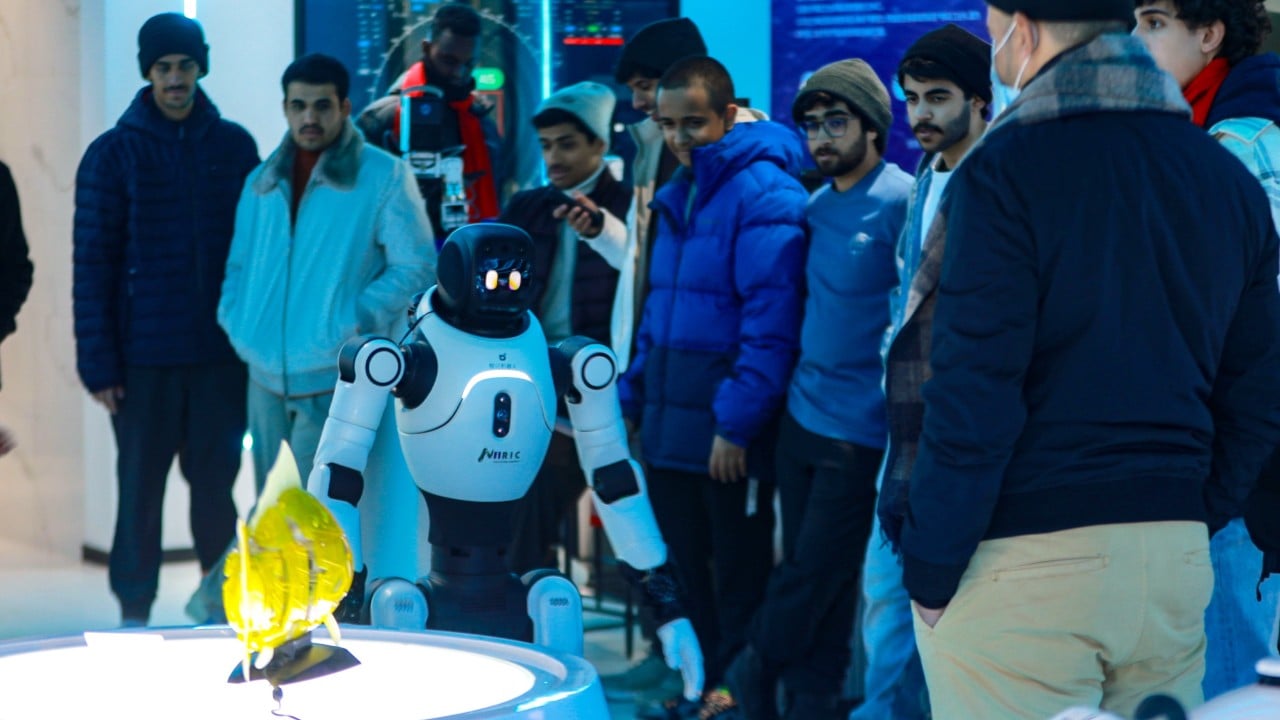
The wealthy aren't waiting for public school rollouts, though. Elite families are hiring live-in Mandarin tutors and booking high-end educational tours to Chinese universities. Earlier this year, bespoke travel agencies in Shanghai reported handling customized, six-figure itineraries for prominent Emirati and Saudi families. These aren't regular holidaymakers. They are parents touring elite campuses like Tsinghua University, Peking University, and NYU Shanghai, specifically scouting where to send their teenagers for undergraduate and master's programs.
Historically, Western universities offered prestige and a gateway to global high society. But prestige doesn't pay the bills when the global economy fragments. Gulf business owners are choosing institutions like the Hong Kong University of Science and Technology (HKUST) because they offer something the West can't: direct, unvarnished access to Asian supply chains and corporate networks. If your family business relies on manufacturing, electronics, or renewable energy, a degree from Boston won't help you nearly as much as an alumni network in Shenzhen.
Chasing Direct Commercial Ties Instead of Western Real Estate
The investment philosophy of the Gulf's private elite has fundamentally changed. For years, the goal was capital preservation—buying up expensive townhouses in Mayfair or commercial towers in Manhattan. It was safe, quiet, and yielded predictable returns.
Today, Gulf wealth wants growth, and it wants tech transfer.
Private family offices are actively hunting for mid-market Chinese companies that want to expand into the Middle East. It's a highly strategic quid pro quo. The Gulf families provide the capital and the local regulatory protection to help a Chinese tech firm or manufacturer scale across the Middle East, North Africa, and South Asia. In return, the Gulf families get equity in world-class tech and a front-row seat to industrial operations.
We see this playing out across several key sectors:
- Electric Vehicles and Mobility: While Western EV adoption hits political speedbumps, Gulf capital is pouring into Chinese automotive tech. Saudi Arabia's multi-billion-dollar deals with premium EV brands like Human Horizons show that the region wants to manufacture these vehicles locally, not just import them.
- Green Energy Supply Chains: Gulf states know oil won't last forever. They want to become solar and hydrogen superpowers. China controls the global solar supply chain, making partnership a necessity rather than a choice.
- Logistics and FinTech: Private family conglomerates are investing heavily in Chinese e-commerce infrastructure and digital payment systems to modernize their own domestic retail networks.
The Push Factors Fueling the Western Exodus
It's a mistake to look at this trend purely as China pulling the Gulf in. The West is actively pushing this wealth away.
Geopolitical instability and aggressive Western regulatory shifts have spooked the Gulf's ultra-wealthy. The sudden freezing of Russian foreign reserves and private assets by Western governments in recent years sent a chilling message through every royal and private family office in the Middle East. It proved that capital stored in Western banks isn't entirely safe if political winds shift.
Add to that Washington's increasing scrutiny of Gulf sovereign wealth funds and private equity vehicles. The US government has repeatedly raised eyebrows over Middle Eastern investments that have ties to Chinese technology, forcing family offices to choose sides.
The Gulf's answer? They're choosing both, but leaning heavily toward the East for asset protection. China has rolled out visa-free travel trials for Saudi Arabia, Oman, Kuwait, and Bahrain, mirroring existing reciprocal deals with the UAE and Qatar. Effectively, the entire GCC can now travel to China without visa friction. Try getting an appointment at a Western embassy in Riyadh or Dubai right now—you'll face months of bureaucratic delays just to get a business visa.
Actionable Steps for Navigating the Shift
If you manage private wealth or run a family enterprise looking to mirror this migration, you can't just open a bank account in Beijing and hope for the best. The regulatory and cultural environment requires a deliberate playbook.
1. Diversify Liquidity into RMB Infrastructure
Don't wait for total de-dollarization; it's not happening tomorrow. Instead, utilize Qualified Foreign Institutional Investor (QFII) channels to build direct exposure to Chinese equities. Work with regional hubs like Hong Kong or Dubai, which have established robust renminbi clearing facilities.
2. Pivot from Passive Real Estate to Joint Ventures
Stop buying passive real estate assets in slowing Western economies. Look for Chinese companies in the renewable energy, robotics, or logistics space that need an entry point into the GCC. Structure your deals as joint ventures that require the Chinese partner to set up local operations, assembly plants, or regional headquarters in your home market.
3. Change Your Next-Generation Education Strategy
If your children are still young, integrate Mandarin into their private tutoring immediately. If they are approaching university age, look closely at dual-degree programs offered by institutions like Tsinghua, Peking University, or Singaporean alternatives. The goal is to give them a peer group that includes the future CEOs of Asian tech conglomerates, not just Western heirs.