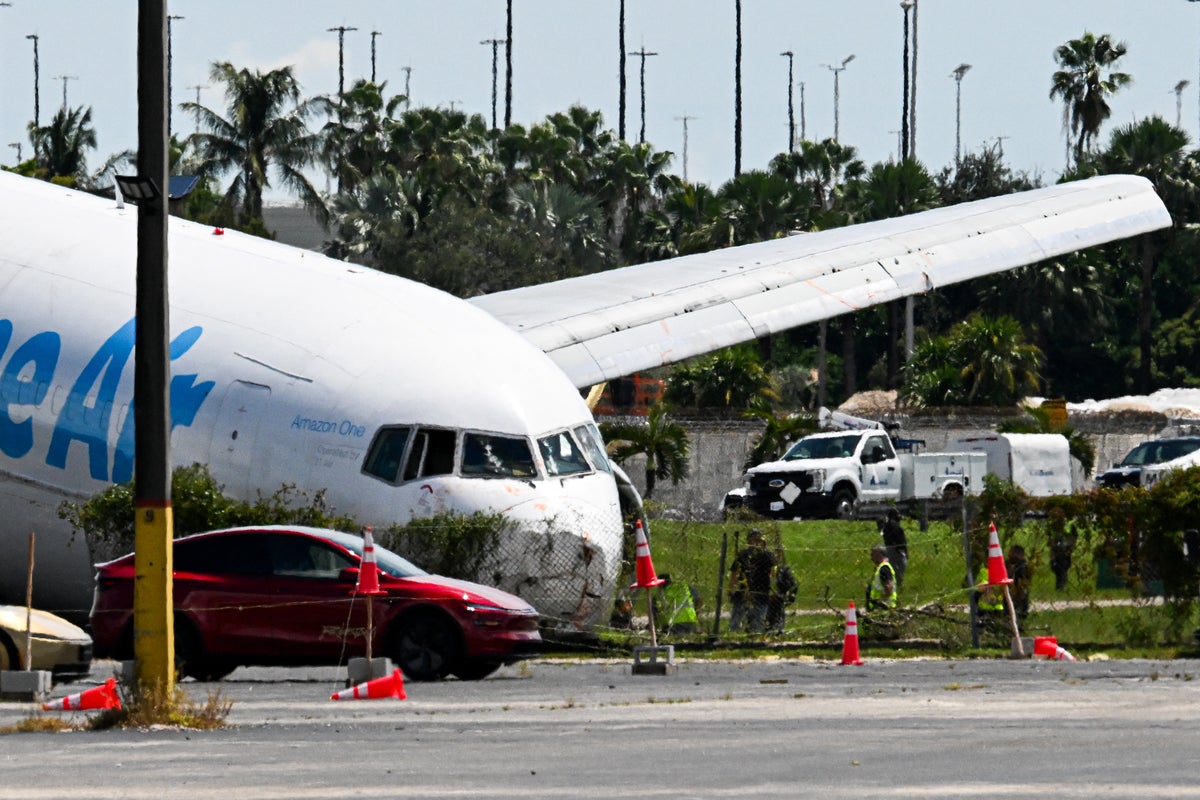
Five people went to work at Miami International Airport and never came home. When an Amazon Air cargo jet failed to stop on Sunday afternoon, it didn't just slide onto the grass—it plowed straight through a perimeter fence and obliterated a service van carrying an airplane cleaning crew.
The incident left an immediate trail of destruction. It also forced aviation authorities to answer hard questions about runway safety buffers, severe weather approaches, and why fatal ground collisions keep happening.
Identifying the Victims of Flight 7598
The Miami-Dade Sheriff’s Office released the names of the five individuals who lost their lives inside the 2012 white Ford Econoline van owned by Professional Ocean Service Corporation. They were:
- Rolando Aleman Leon, 55
- Yoel Rodríguez Naranjo, 53
- Julio C. Pineda, 75
- Carlos Acosta Fajardo, 53
- Javierkys Reyes Quevedo, 47
Friends, landlords, and coworkers have spent the days following the tragedy remembering them as dedicated people caught in the wrong place at the worst possible second. Seven workers were packed into that cleaning contractor vehicle when the Boeing 767 struck. Five died, while others suffered severe injuries.
The flight itself, Amazon Air Flight 7598 operated by 21 Air, had just completed a routine two-hour hop from San Juan, Puerto Rico. The pilots—identified as Joseph Carroll, 55, and Jaime Felipe Silva Molina, 37—survived the impact and were treated and released from a local hospital.
How the Runway Excursion Unfolded
Flight data and initial National Transportation Safety Board (NTSB) briefings paint a picture of a chaotic final approach. As the Boeing 767 lined up for Runway 30 at Miami International Airport around 2 p.m., pop-up thunderstorms were rolling through the area.
Flight tracking shows the jet hovering high over the normal glide path before dipping down to correct its position. Witnesses and aviation analysts reviewing footage point to an unstable approach. Worse, shifting winds created a sudden tailwind. Instead of slowing down when the wheels met the pavement, the plane picked up ground speed.
It never executed a standard flare maneuver. The nose stayed down, the wheels didn't bite into the tarmac early enough, and the heavy freighter barreled roughly 1,300 feet past the end of the usable runway. It smashed through navigational aids, obliterated the service vehicle, clipped a Toyota SUV outside the airport fence, and erupted into flames.
Over 60 fire-rescue units and roughly 200 firefighters rushed to the scene. They faced a nightmare of leaking jet fuel, scattered wreckage, and heavy black smoke.
The Scrutiny Facing Airport Safety Standards
NTSB Chair Jennifer Homendy didn't mince words during her initial press briefings, describing the scene as utter devastation. Investigators have already recovered the flight data recorder and cockpit voice recorder.
A major focus of the probe involves the lack of an Engineered Materials Arrestor System (EMAS) at the end of the Miami runway. EMAS beds use crushable lightweight concrete blocks designed to swallow the wheels of an overspeeding aircraft and bring it safely to a halt. While Miami's layout complies with federal rules because it features a standard 1,000-foot safety buffer, it lacks these specialized arresting beds. The NTSB has long pushed for wider adoption of the technology at airports nationwide, noting it has saved hundreds of lives elsewhere.
Investigators are also questioning why the flight crew chose not to abort the landing. When an approach gets unstable in severe weather, standard procedure allows for a go-around. Why that choice wasn't made remains a central mystery.
Check local emergency funds if you want to support the families affected by the loss of the airport cleaning crew, and keep an eye on official NTSB docket updates as the formal investigation moves forward.



