The air in Tehran during a state funeral does not move. It hangs heavy, thick with the scent of rosewater, exhaust fumes, and an unspoken, suffocating tension. On the surface, the state machinery choreographs a spectacle of absolute grief. Black banners drape across concrete flyovers. Loudspeakers broadcast rhythmic, mourning chants that bounce off the Alborz mountains. Millions are told to watch, to grieve, to embody the continuation of an era.
But step away from the organized crowds. Walk down a side alley in the middle-class neighborhood of Sadeghiyeh. There, inside a cramped kitchen, a mother named Farideh stares at a boiling kettle. She isn't watching the state television broadcast of Ayatollah Ali Khamenei’s final rites. She is looking at her phone, calculating the price of milk, wondering if the internet will be shut down by evening.
For Farideh, and millions like her, the passing of a Supreme Leader isn't just a historical milestone. It is a terrifying blank page.
Geopolitics often treats nations like monoliths. We speak of "Iran" doing this or "Washington" saying that, as if entire countries are single chess pieces moved by solitary hands. They aren't. While the world's cameras focus on the elite power struggle in the wake of an unprecedented leadership vacuum, a different kind of reality is unfolding on the ground. It is a reality defined by currency depreciation, quiet defiance, and the sudden, booming voice of an old adversary across the Atlantic.
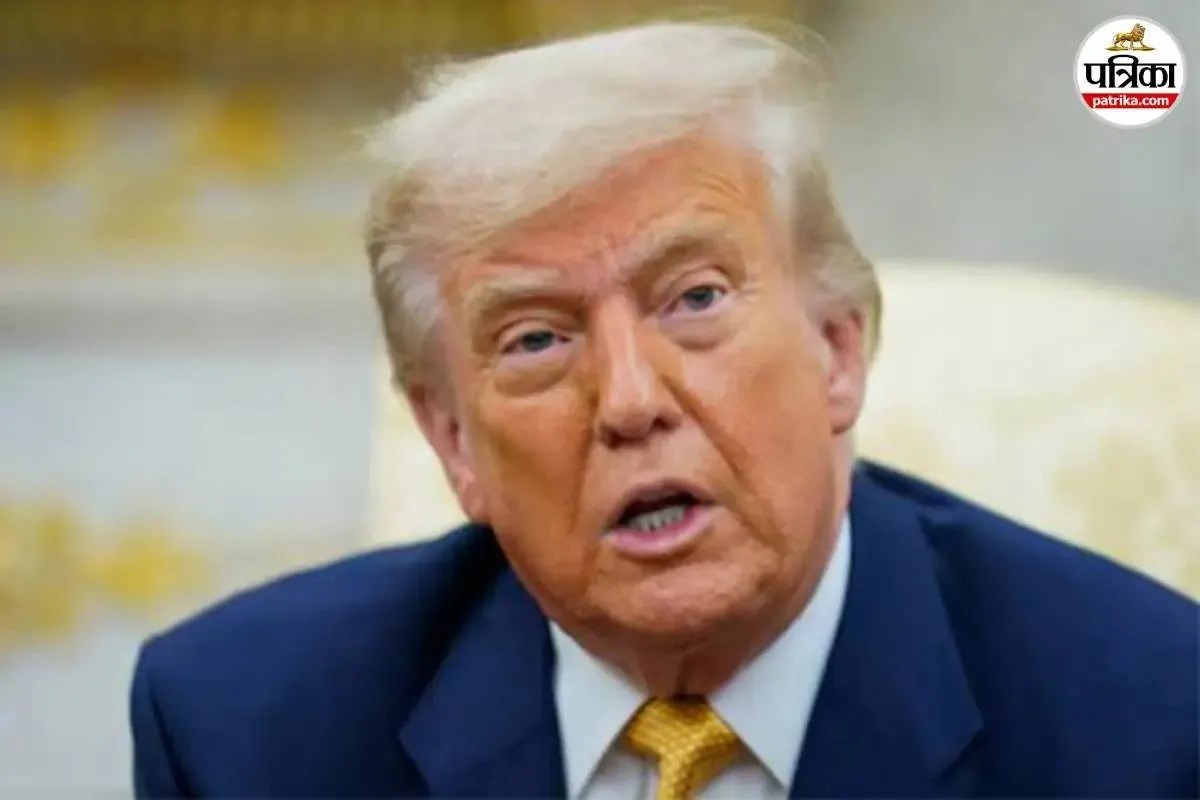
Donald Trump chose this exact moment of fragile transition to shatter the solemnity.
Speaking with the blunt force that has become his trademark, Trump made a massive claim that rippled instantly through the encrypted messaging apps of ordinary Iranians. He declared that Iran is "dying to make a deal." He painted a picture of a regime brought to its knees, desperate for sanctions relief, waiting for the funeral smoke to clear just to throw its hands up in surrender.
It is a narrative of total victory through economic strangulation. But like all grand political statements, it mistakes the desperation of a system for the capitulation of a people.
To understand the weight of this moment, consider the architecture of the Iranian state. For over three decades, Khamenei was the ultimate arbiter, the anchor of the Islamic Republic's conservative core. His word was law, his vision absolute. When the center of gravity shifts so drastically, the immediate reaction of any authoritarian structure is not to look outward for a deal. It is to look inward to survive.
Imagine a house where the main structural pillar suddenly cracks. The occupants do not immediately run outside to negotiate a new mortgage with the bank. They scramble to prop up the ceiling. They lock the doors. They watch each other with deep suspicion.
The Iranian establishment is currently engaged in that exact internal stabilization. The Islamic Revolutionary Guard Corps (IRGC), the clerics, the hardline factions—they are all maneuvering in the shadows, securing their assets, ensuring that the transition of power does not spark a domestic uprising. A wounded, transition-phase government rarely signs sweeping international treaties. It builds fortresses.
Yet, Trump’s claim isn't entirely detached from a brutal economic reality.
The sanctions have eaten away at the fabric of daily life like acid. Let us look at the numbers through the eyes of someone trying to survive them. The Iranian Rial has suffered staggering blows over the years, turning life savings into pocket change. When a currency collapses, it doesn't just change the numbers on a bank statement. It changes human behavior. It means young couples postpone weddings indefinitely because a refrigerator costs a year's salary. It means retirees take night shifts as rideshare drivers just to afford blood pressure medication.
So, when Trump says Iran is dying for a deal, he is tapping into a profound truth: the people are exhausted. They are dying for relief. They want an end to the isolation.
But the tragedy of modern diplomacy is the chasm between what a population needs and what its rulers are willing to concede. The leadership in Tehran has long viewed compromise not as a diplomatic tool, but as a existential threat. In their worldview, giving in to American pressure under duress is the first step toward total collapse. They look at Libya's Muammar Gaddafi, who gave up his nuclear program only to meet a violent end, and they draw a dark conclusion.
Instead, the regime has mastered the art of the "resistance economy." It is a grueling strategy that shifts the entire burden of international sanctions onto the shoulders of the public while the elite maintain their grip through parallel markets and smuggling networks.
This brings us back to Farideh’s kitchen.
The Western world debates whether maximum pressure will force Iran back to the negotiating table for a grand bargain. The state media promises that the path of the late Supreme Leader will be followed without a single millimeter of deviation. Both sides speak with absolute certainty. Both sides ignore the quiet variable that actually dictates the future: the limits of human endurance.
The real danger of this transition period is not a sudden, dramatic policy shift, but unpredictability.
When a system loses its long-term anchor, the decision-making process becomes fractured. Paranoia spikes. A government gripped by internal anxiety is far more likely to miscalculate, to lash out regionally to project strength, or to clamp down with unprecedented force on its own citizens to prevent any sign of weakness.
The funeral procession eventually winds down. The high-ranking dignitaries will retreat behind heavily guarded walls to debate the succession, trading loyalty tokens and measuring their rivals. The state television will switch back to regular programming, asserting that order has been maintained and the revolution lives on.
But outside, the sun sets over a city that is holding its breath. The shops are closing early. People are walking faster, speaking in lower tones, glancing over their shoulders. They are caught between the iron will of their own rulers and the crushing weight of global pressure, waiting to see if the cracked pillar will hold, or if the ceiling is about to come crashing down.