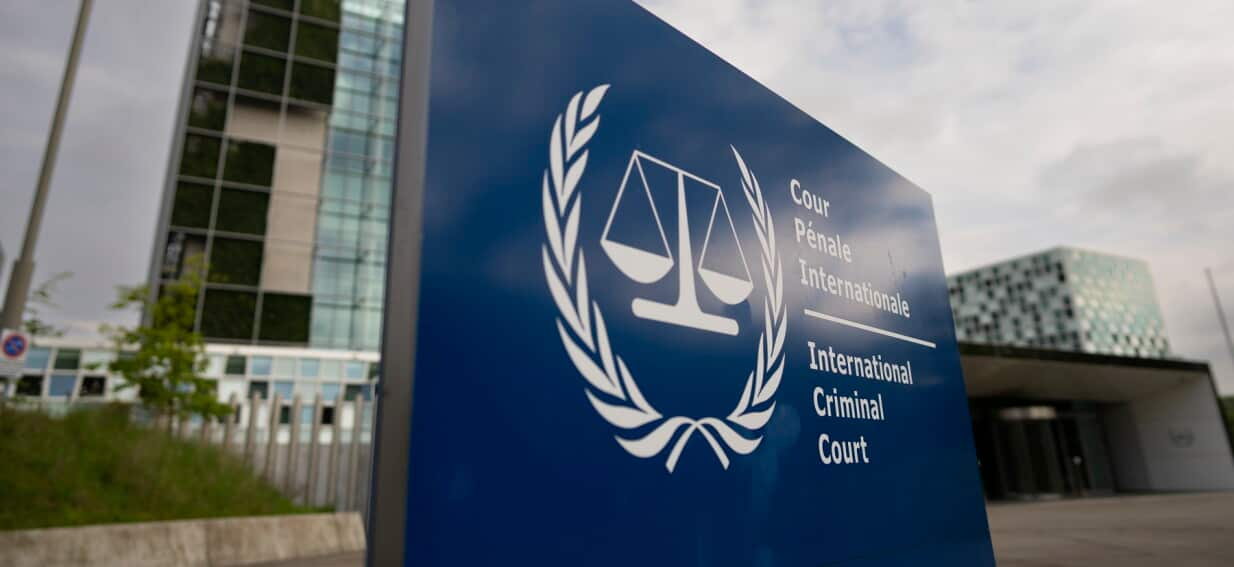
Washington’s deployment of financial penalties and visa bans against the International Criminal Court marks a direct assault on the architecture of global accountability. For Canberra, a middle power that has long preached the gospel of the rules-based international order, the White House directive is not some distant diplomatic theater. It is an acute stress test of national sovereignty and foreign policy alignment.
When the executive order landed, it weaponized the machinery of American financial dominance against international jurists. The move was precipitated by the Court’s pursuit of arrest warrants for high-ranking Israeli officials and its broader assertion of jurisdiction over non-member states. By designating the court's operations as a national security threat, the administration in Washington effectively criminalized cooperation with the primary global arbiter of war crimes.
Middle powers like Australia face an immediate structural dilemma. Canberra is bound to Washington by deep security pacts and intelligence-sharing architectures, yet it is simultaneously a state party to the Rome Statute. Ignoring the assault on the court signals complicity in the dismantling of international law. Condemning it outright risks friction with an unpredictable security ally.
The Mechanics of Coercion
The administrative measures deployed against The Hague rely on the International Emergency Economic Powers Act. This statute allows the United States to freeze assets and block transactions of any individual or entity deemed to be assisting the court’s investigations into American personnel or allied nations.
Consider a hypothetical scenario involving an Australian legal scholar or human rights investigator. If that professional provides expert witness testimony or documentary evidence to an ICC prosecutor regarding atrocities in an active conflict zone, they could theoretically find themselves exposed to secondary financial blockades if their work intersects with US-based financial clearing houses or digital infrastructure.
The chilling effect is immediate and intentional. Financial institutions, technology providers, and academic bodies dependent on American networks steer clear of any association with the tribunal. The court’s operational capacity slows to a crawl not because its legal arguments lack merit, but because its administrative plumbing is choked by compliance fears.
The Canberra Silence
Australian diplomats have historically positioned the country as a champion of multilateralism. Yet, the official response to the White House directive has been characterized by diplomatic tiptoeing. Canberra finds itself paralyzed by the weight of its primary security alliance.
Critics within domestic legal circles point out the contradiction. A nation that claims to champion universal human rights cannot selectively endorse international justice only when it is convenient for dominant superpowers. The refusal to issue a robust, unequivocal condemnation of the measures exposes the limits of middle-power autonomy in an era of transactional superpower politics.
Senior jurists and international law experts have noted that middle powers possess collective leverage that they are failing to utilize. If nations like Australia, Canada, and European Union member states pooled their diplomatic and legal protections for court officials, the impact of unilateral American penalties would be significantly blunted. Instead, the response has largely defaulted to quiet backroom representations while public postures remain muted.
The Long-Term Cost to Global Norms
The erosion of the International Criminal Court carries consequences that extend far beyond any single geopolitical dispute. When the mechanisms designed to hold perpetrators of mass atrocities accountable are successfully hobbled by economic intimidation, the deterrent value of international humanitarian law evaporates.
Authoritarian regimes across the globe are watching closely. If Washington can dismantle the architecture of international justice through executive fiat, other powerful states will feel emboldened to ignore legal constraints during conflicts. The international system drifts closer to a pure realization of realpolitik, where might dictates legality.
Australia’s strategic calculus assumes that sheltering under a powerful security umbrella requires swallowing fundamental contradictions in its foreign policy. But appeasing an assault on global accountability storehouses carries its own heavy price. It corrodes moral authority and leaves middle powers defenseless when the rules of the international road are rewritten by the strongest actors.
Canberra cannot indefinitely straddle the line between alliance loyalty and institutional integrity. As the legal machinery in The Hague fights for survival against financial strangulation, the silence from allied capitals becomes an active choice. History rarely forgives states that watched the architecture of peace dismantled out of tactical convenience.
Australia joins several nations in supporting ICC amid US sanctions
This video provides context on how Australia and other international partners are navigating diplomatic channels to support the court staff amidst ongoing pressure.


