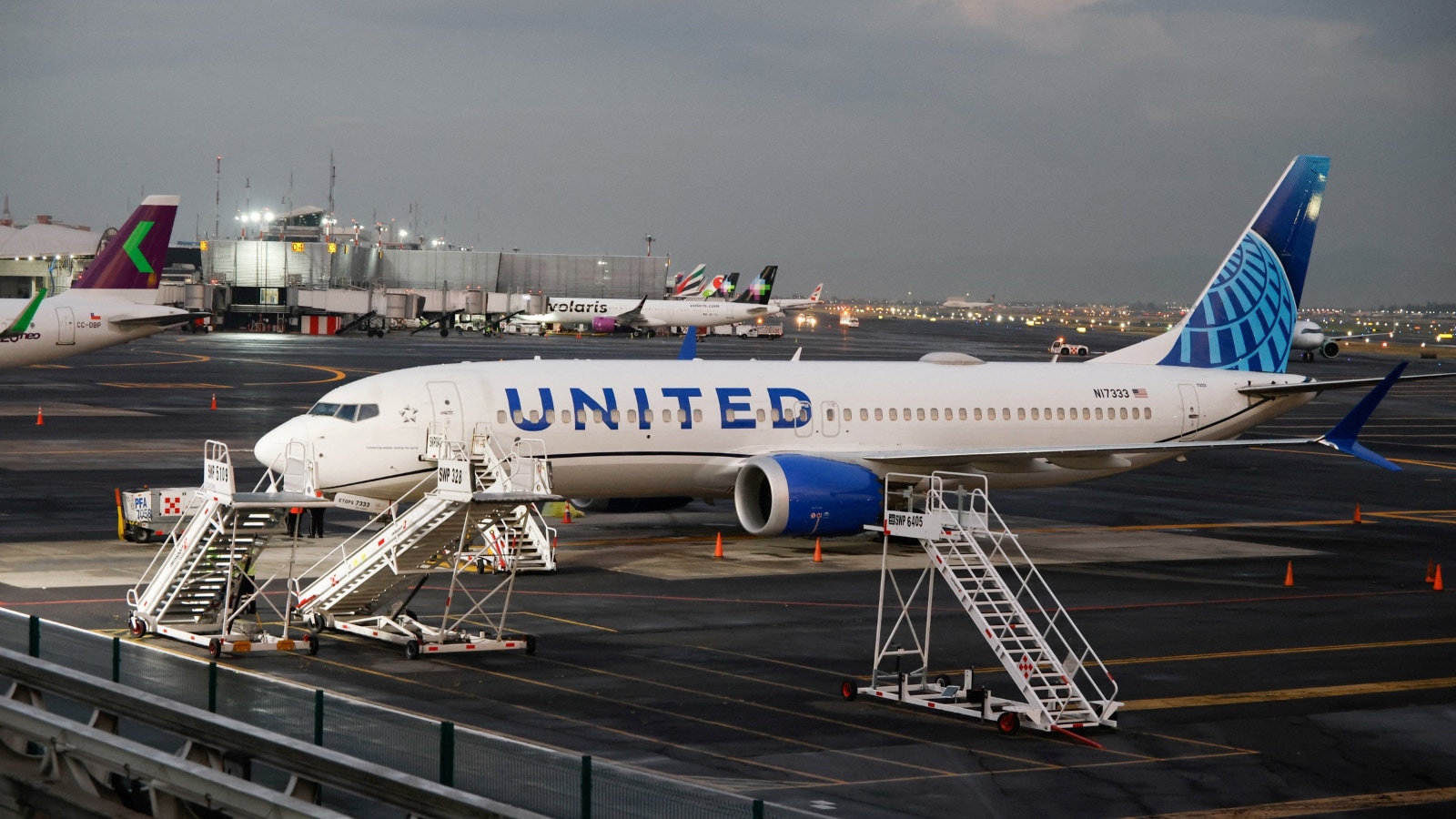
Two commercial aircraft collided on a taxiway at Miami International Airport when the wingtip of one jet clipped the tail section of another during ground movement, forcing emergency inspections, passenger deplaning, and an immediate federal investigation. No injuries were reported among passengers or crew, yet the incident exposes a growing operational strain on the tarmac of one of the busiest international gateways in the United States. While headlines treat ground collisions as isolated anomalies, aviation safety data tells a much more uncomfortable story about congestion, aging asphalt geometry, and the razor-thin margins separating routine taxiing from structural damage.
Ground collisions do not happen in a vacuum. They are the predictable byproduct of high-density flight schedules colliding with physical infrastructure designed for a smaller era of commercial aviation.
The Anatomy of a Tarmac Crunch
To understand how two multi-million-dollar machines managed by trained professionals can scrape metal at walking speed, you have to strip away the glamour of flight and look at the reality of airport surface operations. Once a plane touches down or pushes back from the gate, the cockpit transforms from a high-altitude automated command center into a cramped observation deck with massive blind spots.
Pilots cannot see their own wingtips. On modern widebody and stretched narrowbody jets, the wings sweep backward far behind the cockpit windows. Crews rely entirely on painted yellow centerlines, spatial memory, ground marshals, and air traffic control clearances to guarantee clearance. If a nose wheel stays precisely on the yellow line, the wings are mathematically guaranteed to clear adjacent obstacles—provided every other aircraft on the ramp is also parked or moving within its designated envelope.
That guarantee breaks down fast when reality intervenes. A pushback tug stops ten feet short of its mark because a baggage cart drifted into the alley. A crew takes a wrong turn at a complex taxiway intersection during a tropical downpour. An air traffic controller juggling forty simultaneous ground movements issues a conditional clearance that gets misheard over a congested radio frequency.
Consider a hypothetical scenario that plays out daily across major hubs. Imagine a Boeing 737 holding short of a congested taxiway while waiting for a gate to open. Its tail overhangs the clearance line by just six feet because the crew stopped early to avoid blocking a service road. Moments later, an Airbus A321 is cleared to taxi past behind it. Both crews are following standard procedures, and visibility is clear, yet that six-foot overhang turns a routine pass into a shearing impact between a winglet and a horizontal stabilizer.
When metal meets metal on the ramp, the financial and operational fallout is immediate. Even a low-speed tap requires taking both airframes out of service for structural engineering assessments. Composite materials used in modern winglets and tail cones do not simply dent like aluminum; they delaminate internally, requiring ultrasonic testing and specialized repairs that can sideline an aircraft for weeks.
Why Miami International Airport Operates on a Knife Edge
Miami International Airport is uniquely vulnerable to ground friction. Unlike newer mega-hubs built on vast tracts of flat prairie—such as Denver or Dallas-Fort Worth—MIA is landlocked by urban sprawl, highways, and municipal boundaries. You cannot simply pour a few thousand acres of new concrete to relieve pressure.
The airport serves as the primary bridge between North America and Latin America, creating massive, synchronized banks of arrivals and departures. During peak afternoon and evening waves, dozens of widebody and narrowbody jets converge on the ramps simultaneously. International flights require longer turnaround times for customs processing, catering, and heavy cargo loading, which means aircraft spend more time occupying gates and blocking adjacent taxiways.
Add South Florida weather to the equation, and the margin for error shrinks further. Sudden convective storms frequently force ground stops. When lightning strikes within a five-mile radius, ramp crews are legally required to seek shelter indoors. Pushbacks halt. Arriving planes stack up on parallel taxiways like commuters trapped on a flooded interstate. The moment the lightning clears, ground controllers face the daunting task of untangling a massive knot of delayed jets while keeping inbound traffic moving off active runways.
The Hidden Role of Ramp Congestion
Most passengers assume air traffic control manages every inch of an airport. That assumption is wrong.
At major airports, surface jurisdiction is split between the FAA control tower and airline-operated ramp control towers. FAA controllers manage the active runways and main taxiways. Once an aircraft crosses a specific painted boundary line into the terminal alleyways, control hands off to ramp coordinators employed by the airlines or airport authority.
This bifurcated system creates transition zones where situational awareness can fracture. A pilot switching radio frequencies while navigating a tight turn must simultaneously monitor wingtip clearance, watch for ground vehicles, and verify gate assignments. In these congested non-movement areas, ground radar coverage is often limited or non-existent, leaving controllers reliant on visual confirmation and pilot position reports.
The Systemic Spike in Ground Incursions
The Miami collision fits into a broader, troubling pattern across American aviation. Over the past several years, the Federal Aviation Administration and the National Transportation Safety Board have sounded repeated alarms over surface safety. While fatal commercial airline crashes in the United States have dropped to near zero, close calls and low-speed collisions on the ground have stubbornly persisted.
Several industry-wide pressures are driving this trend:
- Fleet Up-gauging: Airlines have systematically replaced smaller 50-seat regional jets with larger narrowbody aircraft like the Airbus A321neo and Boeing 737 MAX 9. These planes have wider wingspans and longer fuselages, eating up buffer zones on taxiways built decades ago.
- Controller Staffing Shortages: Many FAA towers and approach facilities remain chronically understaffed, forcing experienced controllers into mandatory overtime and increasing cognitive fatigue during peak traffic pushes.
- Cockpit Workload Compression: Faster turnaround schedules leave flight crews rushing through checklists during taxi-out, compressing the time available to double-check taxi diagrams and verify complex routing instructions.
- Ground Crew Turnover: High attrition among ramp agents and tug operators means fewer seasoned veterans are guiding multi-million-dollar aircraft through tight spaces.
None of these factors alone causes a crash. Together, they stack the deck toward inevitable friction.
Why Technology Has Not Solved the Tarmac Problem
Modern commercial cockpits can land an aircraft in zero-visibility fog using satellite-augmented precision guidance. Yet once that same aircraft turns off the runway, the crew is largely navigating with eyeballs and paper-style digital maps on an iPad.
Surface safety technology lags decades behind airborne collision avoidance systems. While systems like ASDE-X (Airport Surface Detection Equipment, Model X) exist at major hubs like Miami to help tower controllers track surface targets, the data does not automatically pipe into the cockpit to warn pilots of an impending wingtip strike.
Cockpit moving-map displays show where an aircraft is relative to taxiways, and some newer systems provide audio alerts if a crew approaches a runway without clearance. However, real-time wingtip proximity sensors—basic technology available on mid-range passenger cars for over a decade—are virtually absent from commercial airliners.
Retrofitting legacy fleets with wingtip cameras or ultrasonic proximity sensors requires agonizingly slow certification processes through the FAA, massive engineering costs, and weight penalties that airlines resist. Furthermore, false alarms on a busy ramp could easily distract pilots during critical phases of taxiing, creating new hazards while trying to solve old ones.
What Happens After Two Jets Touch
When a collision occurs on the taxiway, the regulatory machinery grinds into motion immediately. Regardless of how minor the scrape appears from the terminal window, aviation rules treat any unintended contact between aircraft as a reportable event.
First comes the emergency response. Airport rescue and firefighting units roll to verify there are no fuel leaks, hydraulic ruptures, or electrical hazards. Even a minor impact near a wingtip can compromise fuel vent systems or navigation lighting circuits.
Next, both flight crews are relieved of duty and subjected to mandatory post-incident drug and alcohol testing—a standard federal requirement whenever an incident meets specific damage thresholds. Flight data recorders and cockpit voice recorders are pulled or preserved so investigators can reconstruct exact ground speeds, throttle inputs, and radio transmissions leading up to the impact.
For passengers, the immediate consequence is an agonizing delay. Deplaning on a taxiway via mobile stairs requires buses, security escorts, and rebooking hundreds of travelers onto already full flights. For the airlines, the ripple effects cascade through their entire network, causing downstream cancellations as aircraft and crews fall out of position.
Accountability and the Illusion of Routine
Aviation safety culture prides itself on learning from every mistake without defaulting to blame. Investigators will examine the paint transfer on the wingtip, measure the exact distance of both aircraft from the yellow centerlines, review tower audio, and interview the ground marshals on duty.
If a pilot misjudged a turn, training protocols will be scrutinized. If a ground marshal signaled a clear path into an occupied zone, ramp supervision procedures will face an overhaul. If faded paint or confusing signage at a Miami taxiway intersection contributed to the confusion, the airport authority will be forced to repaint and redesign.
Yet incremental fixes only go so far when the underlying infrastructure is pushed to physical saturation. Airports like Miami are caught in a relentless tug-of-war between economic growth and physical geometry. Airlines want more slots, cities want more international tourism, and travelers want lower fares—all of which require cramming more metal onto the same finite footprint of asphalt.
Until airports invest heavily in automated ground guidance lighting, mandatory surface awareness displays inside the cockpit, and realistic scheduling caps during peak weather windows, the yellow lines painted on the tarmac will remain the only thing standing between a routine arrival and another grounded fleet.