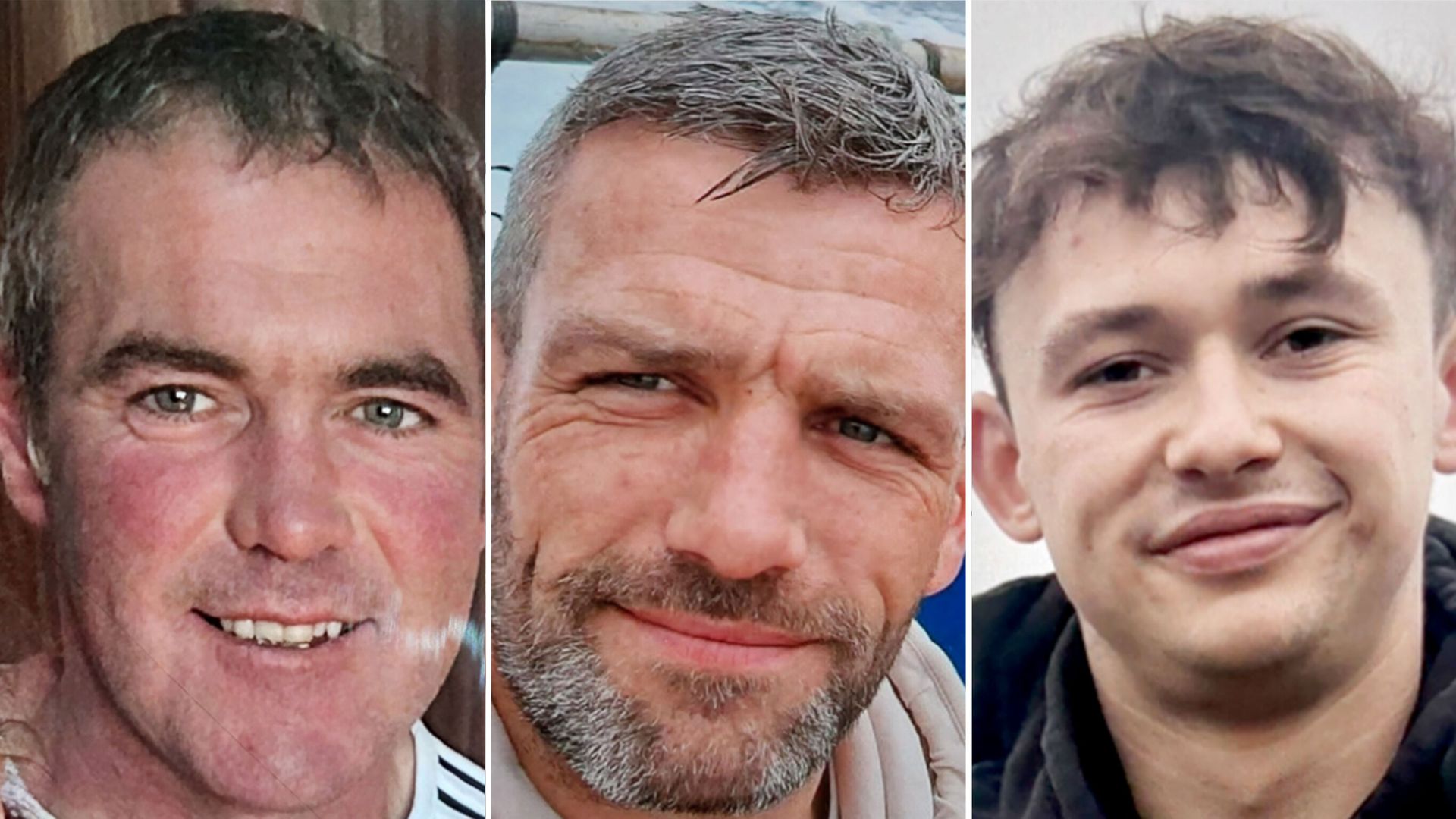
When a vessel disappears in the Pentland Firth, the sea rarely gives up its secrets easily. You're dealing with some of the fastest, most violent tidal currents on the planet, where the Atlantic Ocean collides with the North Sea through a narrow channel separating mainland Scotland from the Orkney Islands. So when news broke that a sunken boat had been located off Orkney in the exact area where a fishing vessel carrying three men vanished, the entire maritime community stopped and paid attention.
Finding a hull on the seabed isn't the end of the story. It's the beginning of a grueling, painstaking verification process. Also making news in this space: Why Helen Zille’s Johannesburg Mayoral Bid Collapsed Before It Began.
Right now, investigators and families are waiting on definitive confirmation. Let's look at what actually happens when a wreck is discovered in these waters, why identifying a sunken fishing boat takes so long, and what this specific discovery off Orkney really tells us about maritime safety in northern Scotland.
Why the Waters Off Orkney Are So Unforgiving
Anyone who has worked commercial boats out of Scrabster, Stromness, or Wick knows the Pentland Firth doesn't forgive mistakes. Tidal streams here regularly exceed 10 knots. In extreme spring tides, they push past 16 knots, creating standing waves, whirlpools, and overfalls that can swamp a small-to-medium creel boat or trawler in seconds. More information regarding the matter are covered by USA Today.
When a fishing boat carrying three men vanishes in this stretch of water, the search-and-rescue window shrinks dramatically. Cold water shock sets in within minutes. Even with modern immersion suits and Personal Locator Beacons (PLBs), the sheer velocity of the water scatters debris over dozens of square miles within a single tidal cycle.
That's why the initial search—usually led by HM Coastguard, RNLI lifeboats from Thurso and Longhope, and local fishing fleets—often comes up empty on the surface. Boats don't just drift away in the Pentland Firth. They get pulled straight down by the sheer hydrodynamics of the channel, resting on a rocky, uneven seabed swept clean by relentless currents.
How Investigators Confirm a Wreck's Identity
You might think finding a boat on sonar means you immediately know which vessel it is. You don't.
The seabed around Orkney is littered with centuries of maritime history. Beyond the famous scuttled German High Seas Fleet in Scapa Flow, there are hundreds of unmarked wrecks from World War I, World War II, and decades of commercial shipping and fishing accidents. A sonar contact is just an anomaly on a screen—a shape, a shadow, a change in acoustic backscatter.
To confirm that a newly discovered wreck is the specific fishing boat carrying the three missing men, teams have to follow a strict chain of evidence:
- Multibeam echosounder mapping builds a 3D acoustic picture of the hull's dimensions, wheelhouse placement, and deck gear.
- Remotely Operated Vehicles (ROVs) are deployed down into the gloom, battling fierce bottom currents to capture high-definition video of the vessel's registration numbers (the Port Letters and Numbers painted on the bow and wheelhouse).
- Structural comparison matches specific modifications—like custom-welded creel haulers, net drums, or hull repairs—against recent photographs provided by the boat's owners and crew families.
Until an ROV puts eyes on those registration letters or a unique piece of deck equipment, authorities won't officially declare a match. Giving families false hope—or premature grief—is something the Marine Accident Investigation Branch (MAIB) and Police Scotland refuse to do.
What Happens When the MAIB Steps In
Once a wreck is positively identified, the operation shifts from a search-and-recovery effort to a forensic maritime investigation. In the UK, that falls under the jurisdiction of the Marine Accident Investigation Branch.
The MAIB isn't there to prosecute anyone. Their sole mandate is to figure out why the boat went down so it doesn't happen to another crew. And honestly, investigating a sunken fishing vessel in Orkney waters is one of the hardest jobs in marine forensics.
Divers rarely go down on these wrecks unless the depth is shallow and the slack-water window is predictable. Even then, slack tide in parts of Orkney lasts barely twenty minutes before the current rips back in the opposite direction. Most of the heavy lifting falls to specialized survey vessels equipped with work-class ROVs.
Investigators look at specific failure points on the hull:
- Watertight integrity. Were deck hatches dogged down properly, or were freeing ports blocked by fishing gear, trapping water on deck and destroying the vessel's stability?
- Gear snagging. In creel and trawl fishing, snagging gear on the rocky seabed while hauling in a heavy tide can pull a stern down below the waterline in seconds—a catastrophic event known as "girting" or "tripping."
- Hull damage. Did the boat strike a submerged reef, or did a structural failure occur in the aging timber or steel plating?
- Emergency equipment. Are the life raft canister and the Emergency Position Indicating Radio Beacon (EPIRB) still attached to their hydrostatic release units on the wheelhouse roof?
That fourth point is crucial. If the EPIRB is still locked in its cradle on the sunken wreck, it tells investigators the vessel went down so fast—or the hydrostatic release failed—that no distress signal ever reached the satellites.
The Reality of Commercial Fishing Risks in Northern Scotland
Commercial fishing remains the most dangerous peacetime occupation in the UK. According to long-term MAIB safety data, small fishing vessels (under 15 meters) account for the vast majority of fatalities, often through capsizing or foundering rather than collisions.
People sitting in offices tend to assume modern GPS, radar, and AIS (Automatic Identification System) make disappearing at sea impossible. That's a massive misconception.
AIS transponders aren't legally required on all smaller UK fishing vessels, though regulations have tightened significantly in recent years. Even when a boat carries full tracking, a sudden loss of power—caused by an engine room flood or an electrical fire—cuts the signal instantly. One ping you're steaming steadily off the Orkney coast; the next ping simply never arrives.
Furthermore, economic pressure plays a silent role that rarely makes the initial news reports. Fuel costs, quota restrictions, and narrow weather windows push skippers to work in marginal sea states. Nobody goes out wanting to take reckless risks, especially in tight-knit island communities where everyone knows everyone's family. Yet when you have three livelihoods tied to a single boat, turning back from a productive fishing ground is never a simple decision.
What Families and Maritime Communities Need Next
When a wreck is located off Orkney, the emotional weight on the local harbor towns is immense. Fishing communities in Scotland carry a quiet, heavy resilience, but uncertainty is worse than bad news. Not knowing where your husband, son, or brother is leaves a wound that can't close.
Locating the hull changes that equation. Even if recovering the vessel from the seabed proves technically impossible due to depth and tidal currents, knowing the exact resting place gives families a physical point on the map. It allows authorities to assess whether remains can be safely recovered by specialist dive teams or ROVs, and it lets the MAIB gather the physical evidence needed to prevent a repeat tragedy.
If you follow maritime safety or work on the water yourself, this discovery is a stark reminder to check the basics before your next trip out:
- Test your hydrostatic release units (HRUs) on both your life raft and EPIRB, and verify their expiry dates physically rather than relying on paperwork.
- Wear a personal locator beacon (PLB) attached to your lifejacket at all times on deck—a beacon mounted to the wheelhouse does you zero good if you're washed overboard or the boat capsizes instantaneously.
- Keep freeing ports clear and never lash them shut to stop gear from sliding out, as trapped deck water is the fastest way to lose stability in a following sea.
Watch for the official identification updates from Police Scotland and the MAIB over the coming days, as ROV survey footage will provide the final confirmation of the vessel's identity and the circumstances behind its loss.