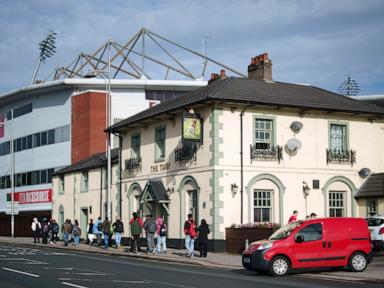
Rob McElhenney and Ryan Reynolds did not just buy a football club when they took over Wrexham AFC in 2020. They bought a neighborhood, an identity, and a piece of cultural architecture that television cameras could never fully capture on a Saturday afternoon. When the Hollywood duo added The Turf—the historic watering hole situated directly adjacent to the Racecourse Ground—to their portfolio, casual observers viewed it as a clever marketing stunt for their docuseries. That interpretation misses the economic strategy entirely. This was a masterclass in modern sports asset consolidation.
For over a century, The Turf served as the emotional epicenter for Wrexham supporters. Win or lose, pints were poured beneath its low ceilings, grievances were aired against previous boards, and generations of working-class fans forged a collective resilience. When clubs rise through the football pyramid, they often outgrow their local character. Corporate sponsors arrive, hospitality suites replace terracing, and the gritty romance of matchday gets sanitized into a VIP experience for tourists. By bringing The Turf under the same operational umbrella as the club, the ownership group pulled off a rare trick. They commercialized an authentic experience without destroying its soul. You might also find this similar story useful: The Economics of Attention and Attrition in Elite Athletics.
The mechanics of lower league football economics are brutal. Traditional clubs outside the English Premier League or the upper echelons of the Championship operate on razor-thin margins, relying heavily on gate receipts, player trading, and whatever merchandise revenue they can squeeze from a loyal fan base. Television money in the National League was virtually non-existent before the global spotlight arrived. Operating a football club as a standalone business is essentially an exercise in bleeding cash efficiently. McElhenney and Reynolds understood that sustainability required vertical integration. If fans were going to spend money before and after a match, every single pound needed to cycle back into the ecosystem of the club.
Owning the stadium is standard operating procedure for ambitious clubs, but owning the adjacent social infrastructure is an entirely different tier of asset management. Matchday tourism has exploded since the arrival of the documentary series. Visitors from North America, Asia, and across Europe descend upon North Wales not merely to watch a fifth-tier or fourth-tier fixture, but to participate in a living television set. The Turf became a mandatory pilgrimage site. Leaving the pub out of the commercial fold would have meant leaving millions of pounds in ancillary spending on the table, surrendered entirely to third-party landlords. As reported in recent coverage by ESPN, the implications are worth noting.
There is also the matter of community equity. Sports ownership in towns with industrial histories is a delicate social contract. Outsiders coming in with millions of dollars and Hollywood glamour naturally trigger skepticism among locals who have seen industries collapse and towns neglected. By securing The Turf, the owners signaled that the social spaces belonging to the fans were safe from predatory commercial redevelopment. Wayne Jones, the long-time landlord of the establishment, became a central figure in the narrative not just because he is charismatic on screen, but because his presence guarantees continuity. The beer tastes the same. The walls still display decades of memorabilia. The transition felt protective rather than predatory.
Critics often point out that the financial firepower behind Wrexham creates an uneven playing field. That argument holds merit within the context of sporting competition. No other club in the National League could absorb losses or invest in infrastructure with the backing of global media conglomerates. Yet, looking strictly at the business model, Wrexham has provided a blueprint for how clubs in depressed post-industrial regions can monetize global attention without alienating their core demographic. Traditional football administrators spent decades lamenting the decline of matchday revenue while ignoring the lifestyle ecosystem surrounding their stadiums.
The acquisition of The Turf forces a re-evaluation of how sports franchises should view real estate. A football match lasts ninety minutes. A fan's engagement spans an entire weekend. By capturing the pre-match nerves and the post-match celebrations under corporate control, the organization maximizes lifetime customer value while simultaneously deepening emotional resonance. It is ruthless capitalism disguised as a love letter to a working-class town.
As Wrexham continues its ascent through the professional leagues, the pressures on these local touchstones will intensify. Success brings expansion, higher ticket prices, and a different caliber of consumer. Yet, the physical anchor of The Turf remains bolted to the corner of the Racecourse Ground, a reminder that the magic of the sport still lives where the supporters gather to argue about tactics over a pint long after the final whistle has blown.