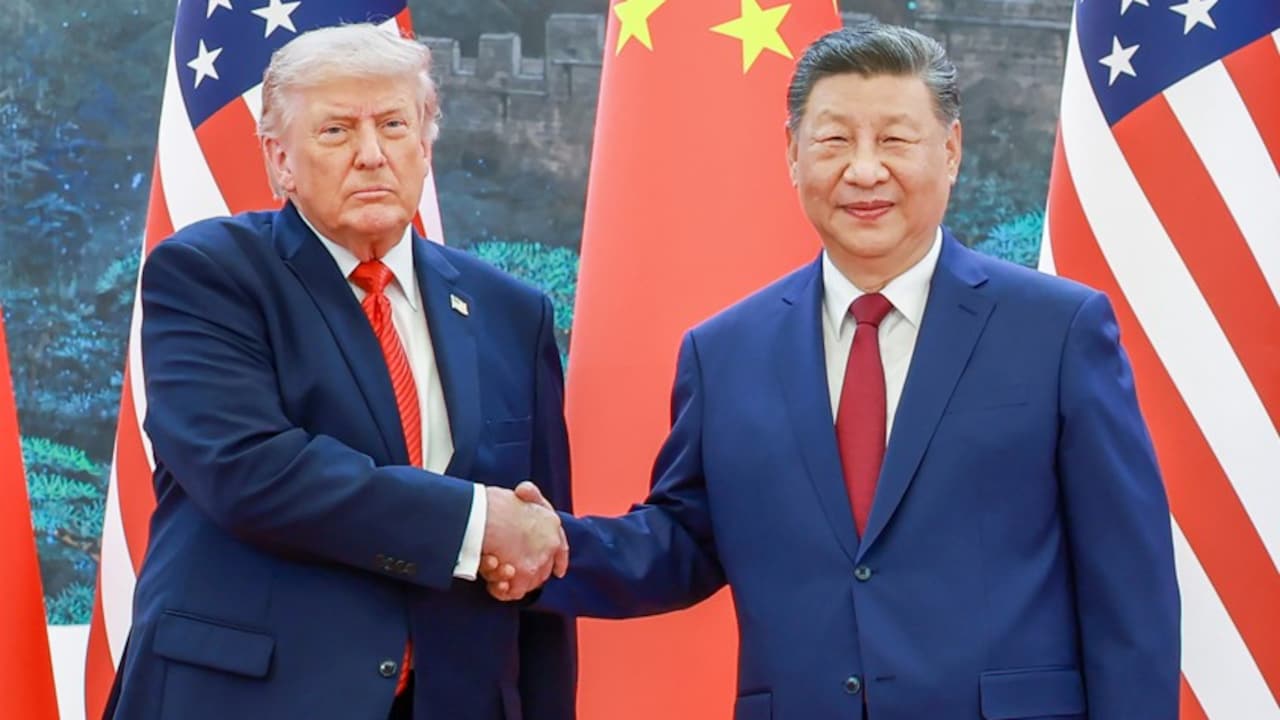
When Donald Trump sits down for high-stakes geopolitical negotiations, he likes to pack the room with corporate heavyweights. American capitalism becomes part of the delegation. Elon Musk, Tim Cook, and Jensen Huang frequently find themselves pulled into the orbit of presidential statecraft, doubling as commercial wingmen. But when the diplomatic tables turn and Beijing faces Washington, the guest list tells a very different story.
Xi Jinping didn't bring a mirror-image delegation of Chinese executives to Washington. That asymmetry isn't an accident. It reveals a widening chasm in how the world's two largest superpowers view economic statecraft, national security, and trade.
The Corporate Contrast at the Summit
During reciprocal visits, the visual discrepancy is striking. When American presidents travel, corporate leaders practically queue up for a seat on the plane. They want market access, supply chain concessions, and protection for their intellectual property. They treat presidential summits as rare opportunities to lobby directly for the bottom line.
Beijing approaches these encounters through a rigid lens of state control. While Chinese tech founders and manufacturing titans routinely join domestic state visits, bringing them into a hostile Washington environment serves little tactical purpose for Xi. Tensions surrounding tech restrictions, intellectual property theft investigations, and national security crackdowns mean that putting commercial leaders in the line of fire creates unnecessary friction.
Why Beijing Pulled Back
You have to look at the underlying policy deadlocks to understand why Chinese executives stayed home. Washington continues to tighten export controls on advanced semiconductors and artificial intelligence hardware. At the same time, American officials demand reciprocal market access that Beijing views as a threat to domestic industrial self-reliance.
If Chinese CEOs had flown to Washington as part of a formal trade entourage, they would have walked into an atmosphere heavily guarded by national security hawks. The message from the White House often prioritizes restrictive containment over open commerce. Bringing commercial chiefs under those conditions would signal weakness or false optimism. Instead, Beijing opted for a stripped-down diplomatic presence, prioritizing political dignity over speculative corporate deals.
The Transactional Trap
Donald Trump treats international relations like a commercial real estate negotiation. If you put enough billionaires in a room, the logic goes, you can hammer out a transaction involving aircraft orders, agricultural purchases, or tech licenses.
That strategy works fine when both sides share a fundamental desire to expand market capitalism. But China operates under a state-directed economic model where national security supersedes quarterly revenue. Xi doesn't measure success by how many commercial memoranda of understanding get signed in front of the cameras. He measures success by long-term industrial independence. When corporate leaders are left out of the summit equation, it proves that geopolitical survival now outweighs corporate deal-making.
The next time you hear about a major presidential summit promising historic trade breakthroughs, look past the political theatre. If the corporate suites on one side of the table are completely empty, the real negotiations aren't happening at all.
Trump's invite of top CEOs a 'posturing' from the U.S. on making a China deal
This video provides additional context on how the U.S. administration utilizes high-profile business leaders to project leverage during diplomatic engagements with China.