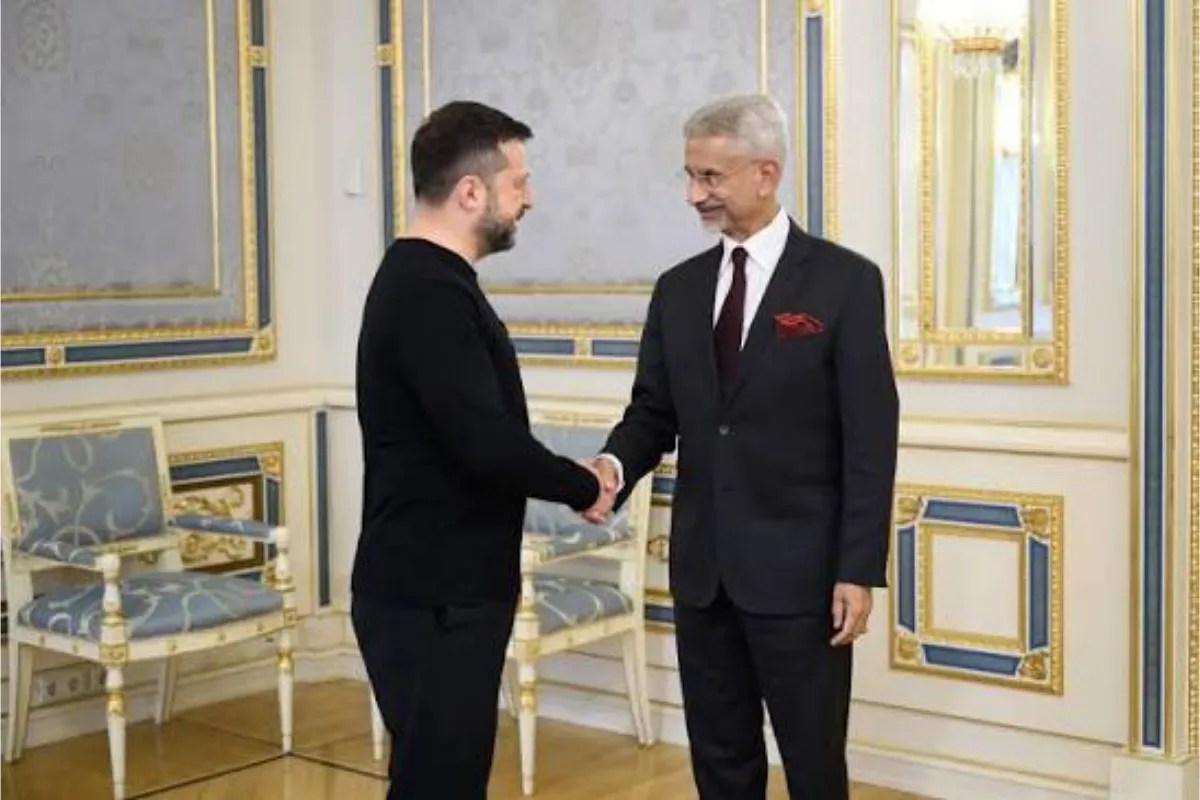
Every diplomatic correspondent in the international press corps just lost their mind over a handshake that deserves a collective shrug. When Ukrainian President Volodymyr Zelenskyy sat down with Indian External Affairs Minister S. Jaishankar, the headline-chasers screamed about a diplomatic breakthrough. They wrote breathless columns about New Delhi shifting its stance, bridging the Global South divide, and acting as a surprise peace broker.
They are selling you a fairy tale because reality is too boring to generate clicks. Also making headlines recently: The Geopolitics of Nomenclature: Why Unilateral Cartography Fails Against Structural Reality.
I have watched foreign policy writers obsess over optics for over a decade, mistaking routine handshakes for seismic shifts in global alignment. Let us strip away the diplomatic theater and look at the brutal, unvarnished mechanics of international relations. New Delhi is not switching sides. Kyiv is not abandoning its Western backers. This meeting was not a pivot. It was an exercise in mutual utility, plain and simple, dressed up in sharp suits and polite press statements.
The Lazy Consensus is Dead Further details into this topic are covered by Associated Press.
The standard narrative goes like this: India maintains a historic, unbreakable defense and energy relationship with Moscow, yet by meeting with Zelenskyy, New Delhi is finally listening to Western pleas to isolate the Kremlin. Proponents of this view claim India is walking a tightrope, carefully balancing its democratic values against its economic necessities.
It is a comforting narrative for Washington and Brussels. It lets them pretend that every country on Earth ultimately agrees on who the bad guy is, provided you apply enough diplomatic pressure.
It is also complete nonsense.
India is not balancing anything. New Delhi is executing a cold, rational policy of unhyphenated national interest. When Jaishankar shakes hands with Zelenskyy, he is not winking at the West. He is protecting fertilizer supply chains, ensuring maritime security in the Indian Ocean, and keeping doors open in every capital that matters. To read moral alignment into a transaction-driven photo-op is to misunderstand how non-aligned powers operate in the twenty-first century.
The Economic Reality Nobody Wants to Print
Let us look at the numbers that the mainstream commentary conveniently omits. India’s trade with Russia has skyrocketed since the invasion of Ukraine began, driven almost entirely by discounted crude oil. New Delhi saved billions of dollars on energy imports, shielding its massive domestic consumer base from catastrophic fuel inflation while keeping its economy humming at a time of global stagnation.
Ask yourself a simple question: Does a government that has staked its short-term industrial stability on cheap Russian hydrocarbons suddenly care about a photo opportunity with the Ukrainian leadership? Of course not.
India's foreign policy doctrine, rooted in strategic autonomy, views international conflicts through the lens of domestic impact. If buying discounted oil from Moscow keeps Indian factories powered, New Delhi will buy it. If exporting humanitarian aid, pharmaceuticals, and diplomatic goodwill to Kyiv maintains access to Western markets and international forums, New Delhi will do that too. It is not hypocrisy. It is hyper-pragmatism.
Why Kyiv is Playing a Losing Hand in Asia
From the Ukrainian perspective, courting India looks desperate because, frankly, it is. Kyiv spent the first two years of the conflict ignoring the Global South, assuming that moral outrage alone would compel developing nations to sanction Moscow. That strategy failed spectacularly. Countries across Asia, Africa, and Latin America looked at a European war and saw a localized security crisis that pale in comparison to their own immediate domestic challenges.
Now, Kyiv is realizing it needs New Delhi to prevent the upcoming peace summits from looking like an exclusive club of Western nations. Zelenskyy needs India’s imprimatur to claim global consensus.
India knows this. That is why Jaishankar can afford to sit across the table, offer polite platitudes about dialogue and diplomacy, and walk away without committing to a single substantive change in India’s UN voting pattern or economic ties with Russia. India does not need Ukraine’s grain or its tech sector nearly as much as Ukraine needs India’s geopolitical weight.
The Myth of the Global South Mediator
Another favorite fantasy of the pundit class is that India is uniquely positioned to act as a peace mediator between Moscow and Kyiv. We are told that because Prime Minister Narendra Modi can pick up the phone and speak directly to Vladimir Putin, he can negotiate a ceasefire that eluded the entire European Union.
This betrays a fundamental ignorance of how great-power conflicts end.
Mediation only works when both belligerents have reached a mutually hurting stalemate and are actively looking for an exit ramp. Neither Moscow nor Kyiv is at that point. Russia believes time and attrition are on its side. Ukraine believes its survival depends on total territorial restoration backed by NATO hardware.
In this environment, an outside mediator does not broker peace; they get used as a prop. If India tried to table a serious peace plan right now, both sides would pocket the parts they liked, reject the rest, and leave New Delhi holding the bag. Indian diplomats are far too sophisticated to fall into that trap. Jaishankar’s diplomacy is designed to avoid entanglements, not create them.
What Actually Happened Behind Closed Doors
While the public statements focused on humanitarian assistance and the UN Charter, the real conversation was transactional.
Ukraine wants heavy artillery shells, electrical grid equipment, and medical supplies. India has manufacturing capacity and logistical networks. But India is not about to hand over military hardware to a conflict zone when its own northern border with China requires every domestic weapon it can produce.
Conversely, India wanted assurances regarding Indian students and nationals still navigating European transit corridors, alongside guarantees on agricultural trade logistics. They exchanged pleasantries, checked the boxes for international optics, and went back to pursuing their respective, completely divergent national goals.
The Danger of Mistaking Optics for Strategy
When analysts hyperventilate over every diplomatic encounter, they distract the public from the structural realities of a multipolar world. The old world order, where Washington dictated the terms of engagement and the rest of the world fell in line, is dead. We are living in a transactional era where middle powers like India extract maximum value from every major player without pledging permanent allegiance to any.
The Zelenskyy-Jaishankar meeting was not a turning point. It was a Tuesday.
Stop looking for hidden messages in handshakes. Stop pretending that developing nations are secretly waiting for permission from the West to run their foreign policies. India will continue buying Russian oil, selling pharmaceuticals to the world, courting American investment, and entertaining Ukrainian delegations, all at the exact same time.
The next time a headline tells you a routine diplomatic meeting has "changed everything," check your wallet and look at who benefits from you believing the illusion.