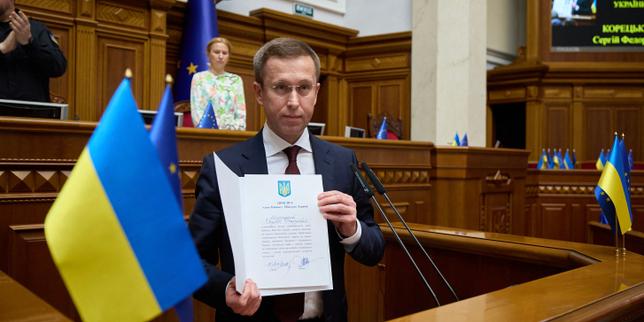
Volodymyr Zelensky wants you to believe that shuffling his high-level political cabinet is the key to surviving the freezing months ahead.
When the Ukrainian president defended his sudden, sweeping government reshuffle—framing the appointment of new leadership as a tactical move to "prepare for winter"—the mainstream press bought the narrative hook, line, and sinker. They published solemn columns about administrative agility, wartime efficiency, and strategic readiness.
It is a comforting story. It is also entirely wrong.
Changing the nameplates on office doors in Kyiv does not repair a shattered autotransformer. It does not block a Russian cruise missile. And it certainly does not generate a single megawatt of electricity.
The media’s willingness to accept this administrative theater obscures a much harsher reality. This cabinet shakeup is not a winter survival plan. It is a political survival plan. It is an exercise in scapegoating, donor management, and centralization of power, wrapped in the urgent language of national security.
The Physics of the Grid Do Not Care About Cabinet Meetings
To understand why the "winter preparation" narrative is a fantasy, we have to look at the physical reality of Ukraine's energy sector.
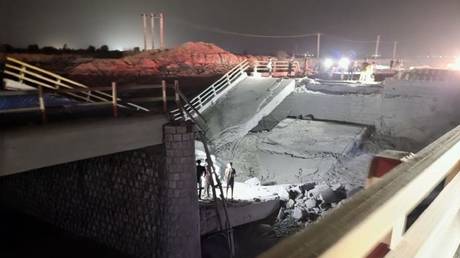
Before the war, Ukraine’s grid relied on massive, centralized coal, gas, and nuclear power plants. Russia's targeting strategy has been brutal and highly calculated. They did not just hit generation plants; they targeted the transmission substations. They destroyed the massive 750kV and 330kV autotransformers that step down high-voltage electricity so it can actually run to your home.
These are not off-the-shelf items. A single high-voltage transformer weighs up to 250 tons, costs millions of dollars, and takes up to a year to manufacture, test, and ship.
- The Lead-Time Reality: If you do not order a transformer in January, you do not have it by December.
- The Construction Bottleneck: Building reinforced concrete domes to protect these substations—the so-called "third-level protection"—is a massive civil engineering project requiring thousands of tons of steel and concrete.
- The Personnel Shortage: The engineers who know how to patch this grid together are not sitting in administrative offices in Kyiv. They are in the mud, working 18-hour shifts under constant threat of drone strikes.
Replacing a Prime Minister or an Infrastructure Minister in the autumn and claiming it is to "prepare for winter" is like changing the captain of the Titanic five minutes after hitting the iceberg and claiming the new guy is better at ice-spotting. The structural damage is already done. The physical limits of what can be rebuilt before the snow falls were locked in months ago.
I have watched international aid organizations try to navigate this bureaucracy for two years. Shifting leadership at this stage does not speed up the supply chain. It paralyzes it. Every time a new minister takes office, they bring a new team. Contracts are paused. Audits are ordered. Decisions are delayed. The administrative friction of a cabinet reshuffle actually slows down the very winterization efforts Zelensky claims to be accelerating.
The True Audience is in Washington and Brussels
If the reshuffle does not help the physical grid, why do it?
The answer lies not in the freezing apartments of Kharkiv, but in the corridors of power in Washington, Brussels, and Berlin.
Ukraine is entirely dependent on Western financial lifelines to keep its state apparatus running. As the war drags on, a creeping fatigue has settled over Western capitals. Taxpayers are asking hard questions about where their billions are going. Stories of wartime corruption, real or exaggerated, are toxic to continued funding.
[Western Aid Flow] ──> [Kyiv Central Government] ──> [Systemic Corruption Bottlenecks] ──> [Grid Failure]
                                                               │
                                                 (The Reshuffle Solution: Replace the Face)
A cabinet shakeup is the ultimate political reset button. It allows Zelensky to present a clean slate to international donors. By removing familiar faces and installing new, supposedly unblemished technocrats, the administration can say: “Look, we are taking accountability seriously. We are reforming.”
It is a performance designed to unlock the next tranche of aid. The new ministers are not chosen because they have a secret formula to fix thermal power plants. They are chosen because they look good on a Zoom call with the IMF and the European Commission. They speak fluent English, understand the buzzwords of international development, and do not carry the baggage of past procurement scandals.
But this strategy has a dark side. By constantly rotating officials to satisfy Western optics, Ukraine is sacrificing institutional memory. The people who actually understood the Byzantine pathways of Ukrainian energy procurement are being replaced by clean-shinned bureaucrats who will spend their first three months on the job just trying to find the bathrooms.
The Myth of Decentralized Power Generation in Ninety Days
One of the loudest arguments championed by the new administrative team is the rapid deployment of decentralized power generation. The plan sounds great on paper: instead of big, vulnerable power plants, Ukraine will build hundreds of small, mobile gas turbine units across the country. Russia cannot hit them all.
It is an elegant theory. It is also logistically impossible to achieve on a scale that matters before this winter.
Let us look at the math.
To offset the loss of gigawatts of generation capacity, Ukraine needs thousands of these small units.
- Procurement: These turbines are in high demand globally. You cannot simply buy them on Amazon.
- Infrastructure: Each turbine requires a stable connection to a high-pressure gas pipeline and the electrical grid.
- Fuel: You need gas. While Ukraine has significant domestic gas reserves, the infrastructure to route that gas to hundreds of new, ad-hoc generation points does not exist.
To claim that a new cabinet can force this massive infrastructural transition to happen in a matter of weeks is a dangerous delusion. It misleads the Ukrainian public into believing that a tech-savvy government can code its way out of a physical energy deficit.
The honest truth—the truth no politician in Kyiv wants to speak out loud—is that this winter will be a battle of attrition. It will be survived through diesel generators, wood-burning stoves, and sheer human endurance, not through a sudden miracle of decentralized high-tech energy.
The Scapegoat Strategy: Passing the Buck Before the Lights Go Out
Politicians are, above all, survivalists.
When the temperature drops to minus fifteen degrees Celsius, when the water pipes in high-rise apartments freeze and burst, and when cities are plunged into darkness for 16 hours a day, the population will be angry. They will want someone to blame.
If Zelensky kept the same cabinet in place, that anger would flow directly up the chain of command to his office.
By executing a massive reshuffle now, he creates a buffer. The previous ministers can be quietly blamed for the lack of preparation. The new ministers can plead that they inherited a disaster and did not have enough time to fix it.
It is a classic political maneuver:
- Step 1: Identify a looming disaster that is physically impossible to avoid.
- Step 2: Fire the people currently in charge of that sector, framing their removal as a punishment for slow progress.
- Step 3: Appoint new faces, buying three to six months of "grace period" from the public and the press.
- Step 4: When the disaster hits, blame the "legacy issues" left behind by the previous team.
This is not leadership. It is preemptive damage control.
Stop Looking at the Names; Look at the Structure
We must stop analyzing Ukrainian politics as if it were a normal European democracy operating in peacetime. It is a highly centralized wartime state.
The real power in Ukraine does not reside in the cabinet of ministers anyway. It resides in the Office of the President, directed by a tight circle of advisers. The ministers are largely executors of decisions made elsewhere.
When we focus on whether the new Prime Minister or the new Energy Minister is "the right person for the job," we are falling for the distraction. The structural realities remain unchanged:
- The Russian Air Force still has the missiles.
- The Ukrainian grid is still physically compromised.
- The Western supply chains are still painfully slow.
- The power remains entirely centralized in a few hands in Kyiv.
No amount of political rebranding can change these four facts.
Stop buying the narrative of the strategic winter cabinet. It is a shell game played with suits while the country prepares to fight for its life in the cold. The Ukrainians will survive this winter, but it will be because of the resilience of their utility workers and the stubbornness of their citizens—not because of a bureaucratic deck-shuffling in Kyiv.