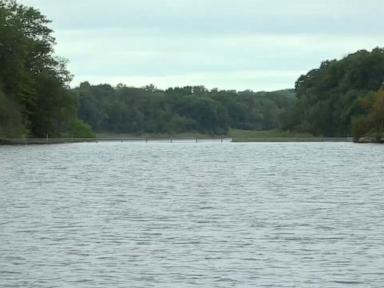
Another headline breaks. A 5th-grade teacher and a student dead during a routine field trip to an Iowa nature reserve. The nation stops, gasps, and immediately retreats into its favorite comfort zone: ritualistic mourning followed by institutional cowardice. School boards rush to draft emergency moratoriums on outdoor excursions. Lawyers circle like vultures over liability clauses. Parents clutch their pearls and swear off public education entirely.
Everyone agrees on the lazy consensus. Field trips are dangerous distractions. They expose children to wild elements beyond human control. The solution whispered in every administrative hallway across America is simple, cowardly, and catastrophic: lock the doors, stay inside, and sanitize every inch of childhood until risk is reduced to absolute zero. You might also find this similar story interesting: The Price of a Glowing Screen.
Except zero risk is a lie. And chasing it is killing our kids faster than any nature reserve ever could.
I have spent two decades advising risk management firms and educational institutions on operational safety. I have watched boards of education throw millions of dollars at compliance checklists that protect lawyers while abandoning human competence. Every time a tragedy strikes in the wild, the public demands a head and a ban. They refuse to look at the systemic rot underneath: our total systematic erasure of competence in favor of liability theater. As highlighted in latest articles by Reuters, the effects are worth noting.
Let us dismantle the narrative right now.
The Iowa tragedy is framed as an unpredictable freak accident or proof that children do not belong in untamed spaces. That framing is dangerous intellectual dishonesty. Nature does not care about your permission slip. Weather turns. Waters rise. Temperatures drop. When you treat a field trip like a Disney World outing where supervision is just a headcount on a clipboard, you set everyone up for catastrophe.
Modern schools treat risk like a moral failing. If a kid scrapes a knee, someone gets sued. If a bus gets delayed by a flash flood, superintendents sweat bullets. This hyper-litigious paranoia has conditioned an entire generation of educators to view the natural world as a hostile courtroom rather than an ecosystem governed by physical laws. Teachers are not trained outdoor leaders; they are exhausted babysitters with lesson plans and panic buttons.
When you strip educators of the autonomy, training, and cultural permission to manage real-world variables, you create a vacuum. In that vacuum, minor inconveniences turn into fatal emergencies because nobody on the ground knows how to read the sky, assess cold stress, or make a split-second tactical pivot away from rising water.
Let us look at how the safety bureaucracy actually operates.
A standard school district policy manual for outdoor excursions reads like a corporate liability waiver written by accountants who have never slept under canvas. It demands triple-redundant sign-offs, rigid itineraries, and emergency protocols that work brilliantly on paper and fail spectacularly in reality. When a flash storm hits an Iowa nature reserve, rigid itineraries become death traps. You cannot schedule a flash flood. You cannot vote on a committee response while hypothermia sets in.
The insurance industrial complex profits immensely from this panic. Every time a district restricts field trips, insurance underwriters adjust their risk models, and liability premiums stay artificially inflated. It is a closed loop of self-fulfilling prophecy. Schools prove they cannot handle risk by hiding from it, which justifies higher insurance costs, which reinforces the mandate to stay inside.
The victim is not just the traditional outdoor field trip. The victim is human resilience.
When children are raised in padded environments where the scariest thing they encounter is a Wi-Fi outage, their cognitive architecture adapts to fragility. They lose situational awareness. They lose the instinct to test boundaries, evaluate physical feedback, and respect forces greater than themselves. A child who has never felt shivering cold or navigated uneven terrain cannot recognize the subtle, creeping onset of environmental danger.
When educators are reduced to terrified wardens, they cannot teach the most critical survival skill of all: how to think clearly when things go sideways.
Let us address the comfortable lie that staying inside is safer. Statistically, children are exposed to far higher rates of psychological trauma, chronic sedentary illnesses, and developmental decay sitting behind fluorescent-lit desks for twelve years than they ever are exploring a state park. But society accepts slow-motion harm because it is quiet, quantifiable, and legally uncontroversial. A child developing severe anxiety disorders from zero physical autonomy does not make the evening news. A sudden tragedy in a nature reserve does.
So what happens next? The predictable cycle unfolds. School boards issue temporary bans. Politicians issue empty statements about keeping our children safe. Administrators add twenty more pages of compliance paperwork that nobody reads until a lawyer tells them to.
None of this prevents the next tragedy. In fact, it guarantees it.
When you ban authentic outdoor education, you starve the pipeline of teachers and youth leaders who actually possess wilderness competence. You ensure that the adults in charge of future generations are even less equipped to handle the unexpected than the ones before them. You create a feedback loop of institutional incompetence disguised as caution.
If we actually cared about honoring the lives lost in Iowa, we would stop the performative mourning and do the hard, uncomfortable work of reform.
First, we must decouple public education from the predatory grip of liability lawyers. We need sovereign immunity or sensible tort reform specifically for public school educational excursions, provided baseline safety standards are met. If a school district operates in terror of astronomical lawsuits every time a bus leaves the parking lot, education will never leave the four-walled prison of the classroom.
Second, we must professionalize outdoor education. Stop treating field trips as casual end-of-year perks handed over to exhausted math teachers who would rather be grading papers. Every excursion involving natural topography should require certified wilderness first responders or trained outdoor professionals on the ground. If districts can spend millions on bloated administrative salaries and redundant software licenses, they can afford qualified safety leads for student excursions.
Third, we need to teach risk literacy to students and parents alike. Stop selling the illusion that the world is a soft, frictionless playground. Life involves hazard. Growth requires exposure. When parents sign permission slips, they should be signing up for real education, not a sanitized illusion of absolute safety.
The contrarian truth is simple and brutal. The danger of the nature reserve was never the trees, the water, or the weather. The danger was our collective refusal to respect reality, train for it, and accept that living means confronting risk with competence rather than retreating from it in terror.
Until we dismantle the culture of liability theater, we will keep sacrificing our children on the altar of administrative cowardice, pretending that locking the doors is the same thing as keeping them safe.