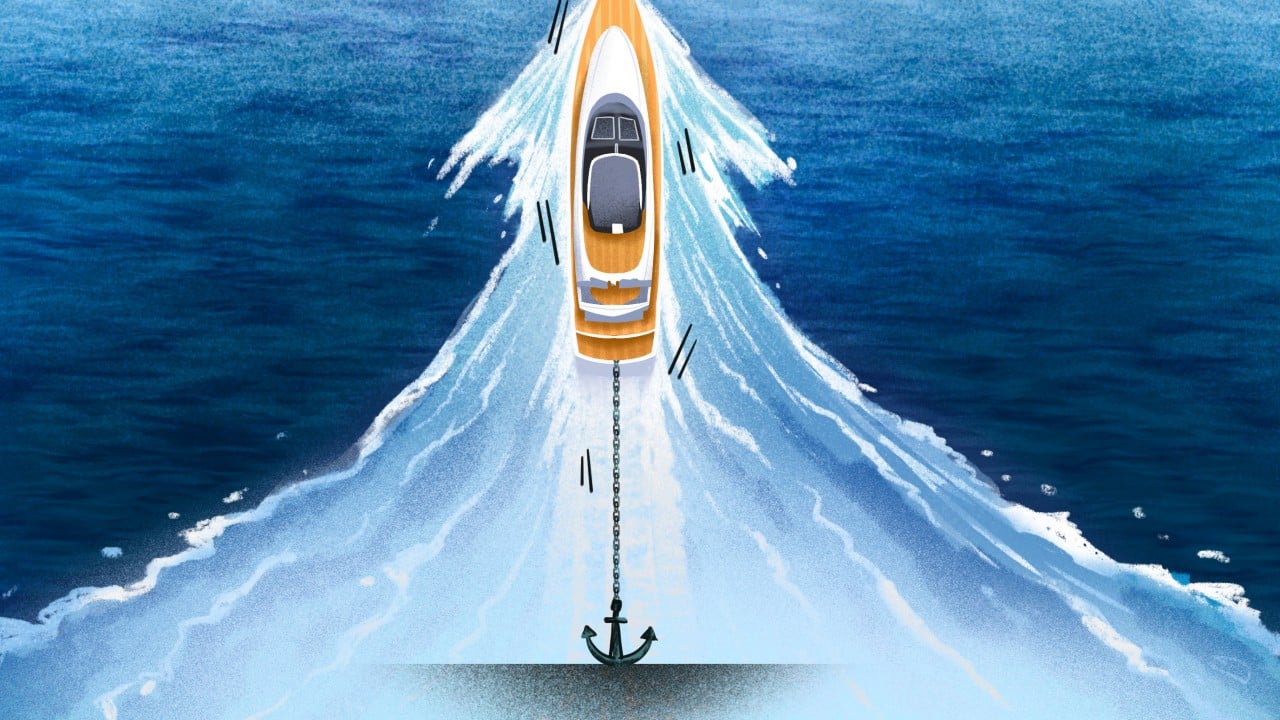
Salt crusts on the windshield of a forty-meter hull, leaving white streaks that look like dried tears. Out here, four miles past the junk boats rattling their way toward Po Toi, the water turns a deep, bruised indigo. It is a quiet kind of wealth. Not the neon-lit, frenetic trading floor kind of wealth that keeps Central pulsing until midnight, but the kind that moves silently on twin diesel engines, chasing the horizon because it can.
I stood on a teak deck last autumn, watching the jagged granite teeth of Hong Kong’s eastern coast slip past. Beside me, the captain—a man whose face had been baked leather-brown by thirty years of South China Sea spray—pointed toward a secluded cove near Sai Kung.
"Look at that water," he said, shaking his head. "Crystal clear. Sheltered. Beautiful. Do you know how many superyachts dropped anchor there this month?"
I guessed three. Maybe five.
"Zero," he replied. "Do you know why?"
The answer isn't about the water. The water is magnificent. The problem is everything that happens after the anchor hits the seabed.
Across the global maritime map, a quiet scramble is underway. Governments from Singapore to Monaco are tripping over themselves to court the ultra-high-net-worth traveler, launching new yacht travel schemes, streamlining customs, and dangling luxury berths like golden carrots. These aren't just boats. They are floating economic engines. A single superyacht staying in a port for a week burns through cash like a small village: provisioning gourmet kitchens with fresh truffles and Wagyu beef, hiring local private guides, fueling up with thousands of liters of marine diesel, paying for specialized engineering maintenance, and filling luxury hotel suites for security details or overflow guests.
Yet, as new regional travel schemes attempt to link Asian ports into a seamless cruising circuit, Hong Kong sits stranded in its own magnificent harbor.
Why?
To understand, you have to look past the postcard skyline of Victoria Harbour and walk down to the concrete apron of a local typhoon shelter. The reality of Hong Kong’s marine economy is choked by red tape, an acute shortage of deep-water berths, and a regulatory framework that treats a multi-million-dollar vessel like a suspicious cargo ship rather than a welcome guest.
Consider the contrast. Sail down to Hainan or across to regional competitors, and you find purpose-built marinas with concierge customs clearance, high-speed bunkering, and immediate access to shore-side luxury. Try pulling a 50-meter yacht into Hong Kong waters without a local skipper who knows every bureaucratic landmine, and you are immediately trapped in a maze of maritime paperwork. Customs clearances that take minutes elsewhere can take days here. Berthing space for vessels of that scale is so scarce that owners often treat Hong Kong as a quick stop to drop off VIPs before speeding away to anchor in calmer, more accommodating waters across the border.
We are standing on top of a gold mine while complaining about the dust.
Hong Kong was built on the sea. The very name of the territory whispers of incense and junks, of deep-water ports that made empires trade and dynasties rise. Our DNA is salt water. But somewhere along the way, we turned our back on the blue frontier. We built the world's most efficient container terminals for cargo, forgetting that luxury tourism requires a completely different kind of hospitality. Cargo containers don't drink vintage champagne. They don't hire private helicopters. They don't spend a month exploring hidden island trails or dining in Michelin-starred harbor-view restaurants.
The new yacht schemes sweeping through Asian waters are designed to capture this high-yield demographic. Wealth is shifting. The next generation of global capital is spending less on static real estate and more on mobile, experiential luxury. They want to island-hop from cosmopolitan hubs to secluded wildernesses without breaking stride.
Hong Kong has both. The cosmopolitan hub is legendary. Within an hour's sail lie geological wonders, pristine green islands, and quiet fishing villages that feel a thousand miles away from the stock ticker.
So what is missing?
Will. And imagination.
For decades, the official mindset regarding our waters has been purely defensive or utilitarian. Water is for commercial shipping lanes, container barges, and the occasional cross-harbor ferry. If it isn't moving cargo or commuters, it is viewed as an administrative headache. Environmental protections, while crucial, are often administered through a lens of prohibition rather than managed integration. You cannot build a thriving marine economy if every new marina proposal is treated like an ecological assault rather than an economic lifeline.
We need to talk about the invisible stakes here.
When a superyacht bypasses Hong Kong for Phuket or Singapore, we aren't just losing berthing fees. We are losing the ecosystem that surrounds them. We are losing the bespoke shipwrights, the interior designers, the provisioning contracts for local organic farms, the luxury retail spend, and the high-end hospitality jobs that lift entire communities. We are telling the world's most mobile wealth that they are an inconvenience.
Change requires discomfort. It requires rethinking how we zone our coastal waters. It demands that our marine departments stop acting solely as gatekeepers and start acting as hosts. Imagine a Hong Kong where high-end international cruising permits are granted digitally before the vessel even enters the South China Sea. Imagine dedicated superyacht hubs in places like Aberdeen or Tuen Mun, equipped with shore power, waste management, and seamless customs integration.
It is entirely possible. The geography is already here. The deep water hasn't gone anywhere.
The captain turned the wheel slightly, guiding our hull through a swell as the afternoon sun began to dip behind the peaks of Lantau Island, painting the sky in strokes of bruised gold and lavender. Behind us, the towering glass monoliths of Central began to flicker on, one by one, like distant stars waking up.
The city looked invincible from out here. Unstoppable. Brilliant.
Yet, as the diesel engines hummed a steady, powerful rhythm beneath our feet, I couldn't shake the image of all those empty horizons—and the wealth sailing quietly past our shores, looking for a place to drop anchor, and finding only a closed door.