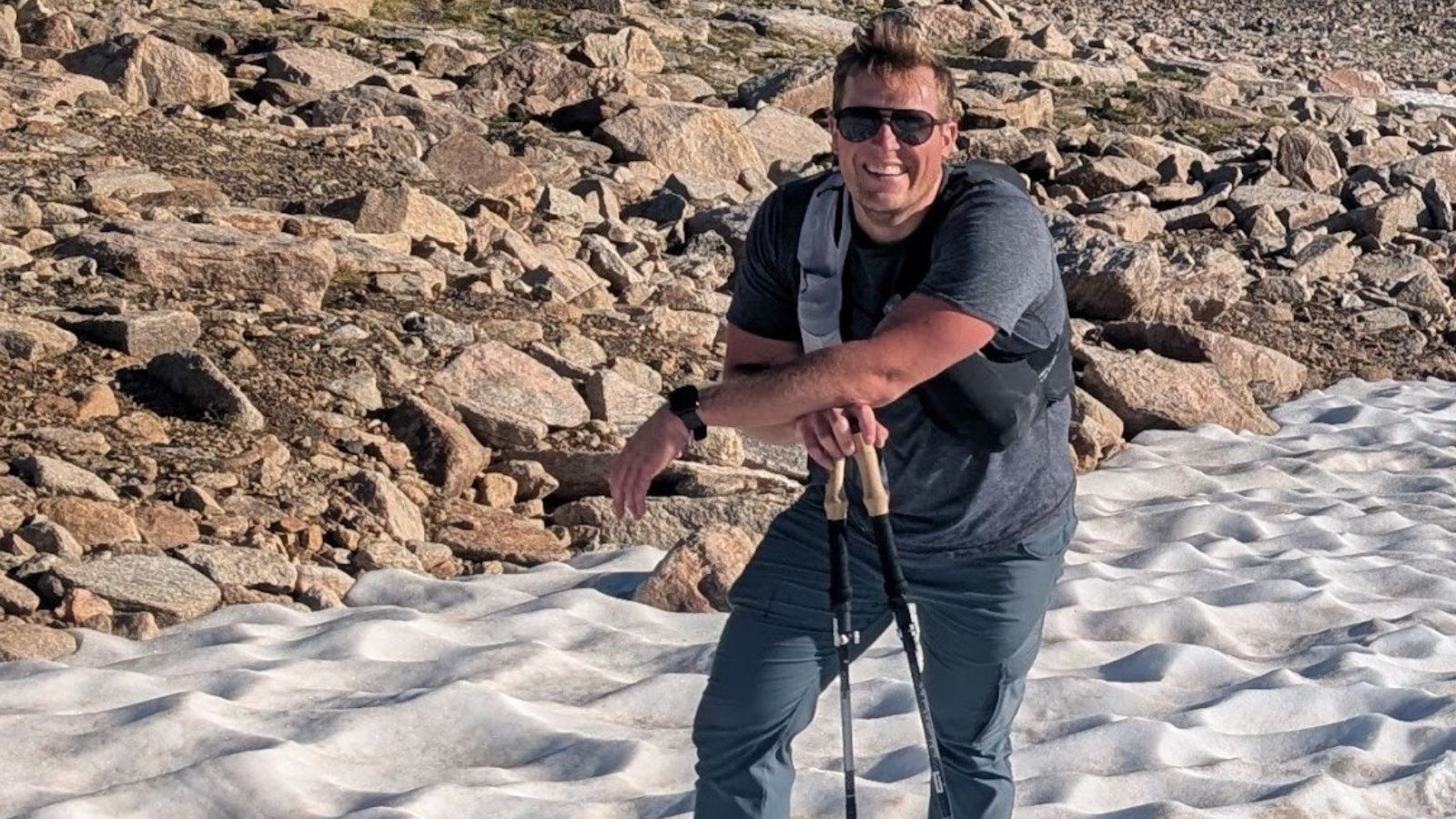
An American hiker walked ten miles through rugged terrain with a carbon-fiber trekking pole impaling his chest. This survival story sounds like a Hollywood script drafted by a writer who has never spent a night below freezing or tied a square knot. It happened. The physical mechanics of surviving a thoracic puncture wound while walking off a mountain expose harsh truths about wilderness safety, gear physics, and the terrifying limits of human resilience.
When a piece of ultralight gear becomes a surgical instrument, the narrative shifts instantly from an adventure blog post to a visceral study in trauma medicine and structural failure. Most outdoor reporting focuses on the triumphant rescue at the end. That approach ignores the brutal math of what happens during those hours of motion. Every step forces internal tissue against unyielding synthetic material. Every breath strains a punctured chest wall.
Understanding this incident requires looking past the shock value. We need to examine why modern gear fails, how the body handles catastrophic trauma in isolation, and the critical decisions that prevent a remote trail from becoming a permanent grave.
The Anatomy of a Structural Catastrophe
Trekking poles are designed to bear axial loads. They are engineering marvels of aluminum or carbon composite, built to save your knees on descents and provide stability on shifting scree. They are not designed to double as spears.
When a hiker falls, the instinct is to throw the hands out to break the impact. If a pole is planted and the body rotates over it, or if the hiker lands directly on the grip or tip, the physics change violently. Carbon fiber does not bend the way wood does. Under extreme stress, it splinters into microscopic, razor-sharp shards while retaining enough structural integrity to act as a rigid rod.
In this specific case, the pole pierced the thoracic cavity. The chest wall is a delicate cage of bone, cartilage, and intercostal muscle wrapped around vital organs. Breaking through that barrier requires significant force. Once breached, the foreign object enters a low-pressure environment where every inhalation risks pulling air into the chest cavity, leading to a tension pneumothorax.
Emergency medicine teaches a fundamental rule for impalement injuries. You never remove the object in the field. The object often acts as a makeshift plug, tamponading bleeding from major blood vessels. Pulling it out can trigger catastrophic hemorrhaging before the patient reaches a sterile environment.
The hiker did not pull it out. He walked. That single decision likely saved his life, but it came with an excruciating physical toll.
The Physiology of Forced Marches Under Trauma
Walking sixteen kilometers sounds impossible with a puncture wound. Adrenaline is the obvious culprit, but adrenaline has an expiration date. It surges, masks pain, spikes heart rate, and eventually crashes.
Sustaining forward momentum through ten miles of wilderness requires more than a hormone spike. It demands a brutal psychological compartmentalization. Pain is no longer a warning signal to stop; it becomes background noise that must be ignored to avoid freezing or bleeding out in the dark.
Physiologically, the body enters a state of compensated shock. Blood is shunted away from the extremities and non-essential organs to protect the brain and heart. The hiker's heart rate would have been elevated not just from physical exertion, but from the body struggling to maintain oxygenation with compromised lung capacity.
Why Extraction Fails When You Need It Most
We live in an era of satellite messengers and instant rescue alerts. Press a button, and a helicopter appears overhead. Except when it does not.
Weather windows close in the mountains with terrifying speed. High winds, dense fog, or approaching nightfall can ground air ambulances. Terrain can make hoisting impossible. In these scenarios, waiting for rescue is a death sentence.
The decision to self-evacuate is always a gamble. If the injury involves a compromised airway or massive internal bleeding, movement accelerates the internal damage. If the injury is stable enough to tolerate motion, staying put means succumbing to hypothermia or shock while waiting for ground teams to navigate difficult terrain.
The hiker chose motion. He bet that his own two legs could get him to a definitive care facility faster than a rescue team could coordinate an extraction in difficult country. It is a terrifying calculus. You are wagering your life on your ability to ignore agony and outrun your own failing biology.
The Myth of Ultralight Safety
The outdoor industry is obsessed with weight. Grams are shaved off packs, stoves, and shelter systems to make travel faster and less fatiguing. This obsession has trickled down to safety gear and accessories, including trekking poles.
Ultra-thin carbon fiber shafts weigh next to nothing. They feel weightless in the hand. But weight reduction comes with trade-offs in durability and failure modes.
Traditional aluminum poles tend to bend when overloaded. They deform, absorb energy, and sometimes snap cleanly, leaving a blunt or slightly jagged edge. Modern high-modulus carbon fiber shatters under lateral stress. It creates a jagged lance.
Gear Selection as a Life Safety Issue
When consumers buy gear, they look at weight ratings, pack sizes, and price points. Rarely do they evaluate how a piece of equipment will fail when subjected to catastrophic misuse.
- Material properties: Aluminum bends; carbon splinters. Both have utility, but their failure profiles are fundamentally different.
- Locking mechanisms: Twist-locks and lever-locks can slip under sudden loads, changing the length of the pole mid-stride and causing unexpected trips or falls.
- Strap design: Wrist straps can trap hands during a fall, preventing the hiker from releasing the pole and turning the shaft into a rigid extension of the arm.
Manufacturers market these tools as pure efficiency enhancers. They rarely discuss them as potential hazards. When a hiker falls onto a pole, the very stiffness that makes it efficient on an uphill climb becomes the weapon that turns against them.
The Reality of Remote Medical Care
Reaching a trailhead after a sixteen-kilometer walk is not the end of the ordeal. It is merely the transition from wilderness survival to emergency trauma care.
Rural hospitals are not equipped for major cardiothoracic surgery. A hiker walking out to a remote parking lot or a small-town clinic still faces a secondary transport hurdle. Local paramedics must stabilize an impaled patient, manage pain without crashing blood pressure, and arrange for a transfer to a regional trauma center.
The margin for error is razor-thin. Every transfer point introduces delay. Every movement risks shifting the impaling object further into the pleural space, threatening the heart or descending aorta.
This is the unglamorous side of outdoor adventure. Movies wrap up neatly when the protagonist reaches civilization. Real life involves hours of CT scans, surgical exploration under general anesthesia, and long recovery periods where the threat of infection from trail grit and debris looms large.
The Psychology of the Long Walk
We must examine the mental state required to complete a sixteen-kilometer trek with severe internal trauma.
Desperation is a powerful motivator, but focus keeps you alive. When you are alone or with a partner who is equally incapacitated, panic is an immediate death sentence. Panic increases oxygen consumption, clouds judgment, and leads to erratic movement that worsens injuries.
The hiker had to break the distance down. Sixteen kilometers is an abstract number when your chest is on fire. It becomes manageable only when reduced to smaller increments. One hundred steps. To the next switchback. Across that stream.
This mental micro-dosing of distance is a known psychological coping mechanism in survival literature. It prevents the brain from being overwhelmed by the totality of the crisis. You do not think about the hospital. You think about the next step.
The Dangerous Line Between Resilience and Recklessness
Stories like this circulate wildly on social media because they feed our appetite for superhuman resilience. We want to believe that human will can conquer any physical limitation.
That mindset is dangerous.
For every survivor who walks sixteen kilometers out of the backcountry with a pole through their chest, there are uncounted others who tried to move, shifted an internal organ, and bled out three miles from the trailhead. Resilience is admirable, but survivorship bias skews our perception of risk.
Encouraging people to push through catastrophic injuries creates a culture of reckless bravado. The right choice in a medical emergency is context-dependent. Sometimes staying put and signaling for help is the only rational path. Sometimes walking is the gamble that pays off.
The difference between a triumphant news headline and a body recovery is often pure, blind luck. The carbon fiber shaft missed major arteries by millimeters. The lung collapsed partially, not totally. The weather held just enough.
The Final Calculation of Wilderness Risk
Every step off the paved road is an implicit contract with uncertainty. We carry gear to mitigate that uncertainty, trusting that carbon poles, Gore-Tex membranes, and satellite communicators will protect us from our own missteps.
When that gear turns against us, it forces a reckoning with how fragile we actually are. No amount of titanium cookware or lightweight apparel changes the fundamental reality of human anatomy. We are soft tissue wrapped around a fragile frame, operating in environments entirely indifferent to our survival.
The hiker walked sixteen kilometers because he had to. He survived because the physics of his fall spared his vital organs, and his mind refused to surrender to the pain. But the takeaway should not be an admiration for his toughness. It should be a healthy respect for the tools we carry into the wild, and a clear-eyed recognition of how quickly a morning hike can turn into a desperate struggle for breath on an empty trail.
The trail does not care about your gear list. It does not reward your optimism. It simply waits to see if you respect the math.