The collapse of the latest round of nuclear negotiations between Washington and Tehran marks more than just a scheduling setback. It represents the formal exhaustion of a decade-long diplomatic strategy. As the delegations depart with nothing but vague promises of future contact, the geopolitical reality has shifted from managed tension to an unscripted high-stakes standoff. The primary hurdle is no longer just technical centrifuge counts or enrichment percentages; it is a profound, systemic collapse of trust that has rendered the original framework of the Joint Comprehensive Plan of Action (JCPOA) a relic of a different era.
For months, the narrative suggested that a deal was within reach, contingent only on minor technicalities. That was an illusion. The fundamental "why" behind this failure is rooted in a massive divergence of strategic goals. The United States seeks a return to a status quo that limits Iran’s regional influence and nuclear breakout capacity, while Tehran views its nuclear program as the only remaining lever to force the removal of an economic blockade that has crippled its middle class. When two sides view the very act of compromise as a form of surrender, the table isn't set for a deal. It is set for a collision.
The enrichment ceiling and the logic of escalation
Nuclear physics does not care about diplomatic nuance. Currently, the technical reality is that Iran has pushed its enrichment levels to a point where the "breakout time"—the period required to produce enough weapons-grade material for a single device—is measured in weeks, not months. This isn't a hypothetical threat. It is a calculated move designed to create "facts on the ground" that any future negotiator must accept.
The math of nuclear proliferation is cold and unforgiving. If a state possesses the knowledge and the feedstock, the final step is a matter of political will, not industrial capacity. By pushing enrichment toward the 90% threshold, Tehran is testing the "red lines" established by both Washington and Jerusalem. These lines are notoriously blurry. History shows that when red lines are crossed without consequence, the resulting vacuum is filled by more aggressive posturing.
The risk of war isn't just about a sudden, deliberate invasion. It is about the incidental spark. In a region crowded with proxies, drones, and sophisticated missile batteries, a miscalculation in the Strait of Hormuz or a cyberattack on critical infrastructure can trigger a kinetic response that neither side can easily de-escalate. We are currently operating in an environment where the safety buffers have been stripped away.
The shadow of the regional arms race
The failure to reach a deal has immediate, rippling effects across the Persian Gulf. For years, the argument was that a nuclear Iran would be contained by international oversight. Without that oversight, neighboring states are beginning to reassess their own security architectures.
- Saudi Arabia has signaled that it will not sit idly by if its rival achieves a nuclear capability.
- The UAE is rapidly modernizing its defense systems, shifting from traditional hardware to advanced electronic warfare and AI-integrated interception.
- Israel continues to maintain its "Begin Doctrine," which asserts that it will use any means necessary to prevent a hostile regional neighbor from acquiring weapons of mass destruction.
This isn't just a bilateral dispute between the U.S. and Iran. It is a multi-polar scramble for dominance where the absence of a treaty acts as an accelerant. When the "policeman" of the global order—the U.S.—cannot broker a peace, the local actors take matters into their own hands. That usually involves buying more missiles.
The failure of the sanctions mechanism
The central pillar of Western strategy has been "maximum pressure." The theory was simple: choke the Iranian economy until the pain becomes so great that the leadership has no choice but to fold. It didn't work. While the rial has plummeted and inflation has decimated the purchasing power of the average citizen, the political elite have proven remarkably resilient.
Sanctions are a blunt instrument. They are effective at causing misery, but they are often ineffective at changing the behavior of a revolutionary government that views its survival through a lens of ideological resistance. Furthermore, the global landscape has changed. The rise of a parallel global economy—led by China and supported by a network of "sanction-proof" trade routes—has provided Tehran with a critical lifeline.
China’s demand for discounted oil has created a "gray market" that functions entirely outside the SWIFT banking system. As long as there is a buyer willing to ignore U.S. treasury designations, the pressure will never be "maximum." This leak in the sanctions bucket has given Iran the confidence to walk away from the negotiating table, believing they can endure the current economic climate indefinitely.
The internal politics of the holdout
Inside Tehran, the hardline factions have used the failure of the 2015 deal to discredit the reformers. Their argument is potent: Why negotiate with a country that can revoke its signature after a single election cycle? The "reliability gap" is the invisible guest at every meeting. From the Iranian perspective, a deal is only as good as the next U.S. president.
This internal dynamic makes it politically suicidal for any Iranian negotiator to accept a deal that doesn't include ironclad, legally binding guarantees—something the U.S. executive branch simply cannot provide without a two-thirds majority in the Senate. We are witnessing a clash of two different political systems, neither of which is capable of meeting the other’s core requirements for long-term security.
The military reality of a no-deal world
If diplomacy is dead, what remains is the military option. But the "surgical strike" often discussed in think tanks is a fantasy. Iran's nuclear infrastructure is decentralized, deeply buried, and protected by sophisticated air defense systems. A military campaign would not be a single afternoon of precision bombing; it would be the start of a regional conflagration.
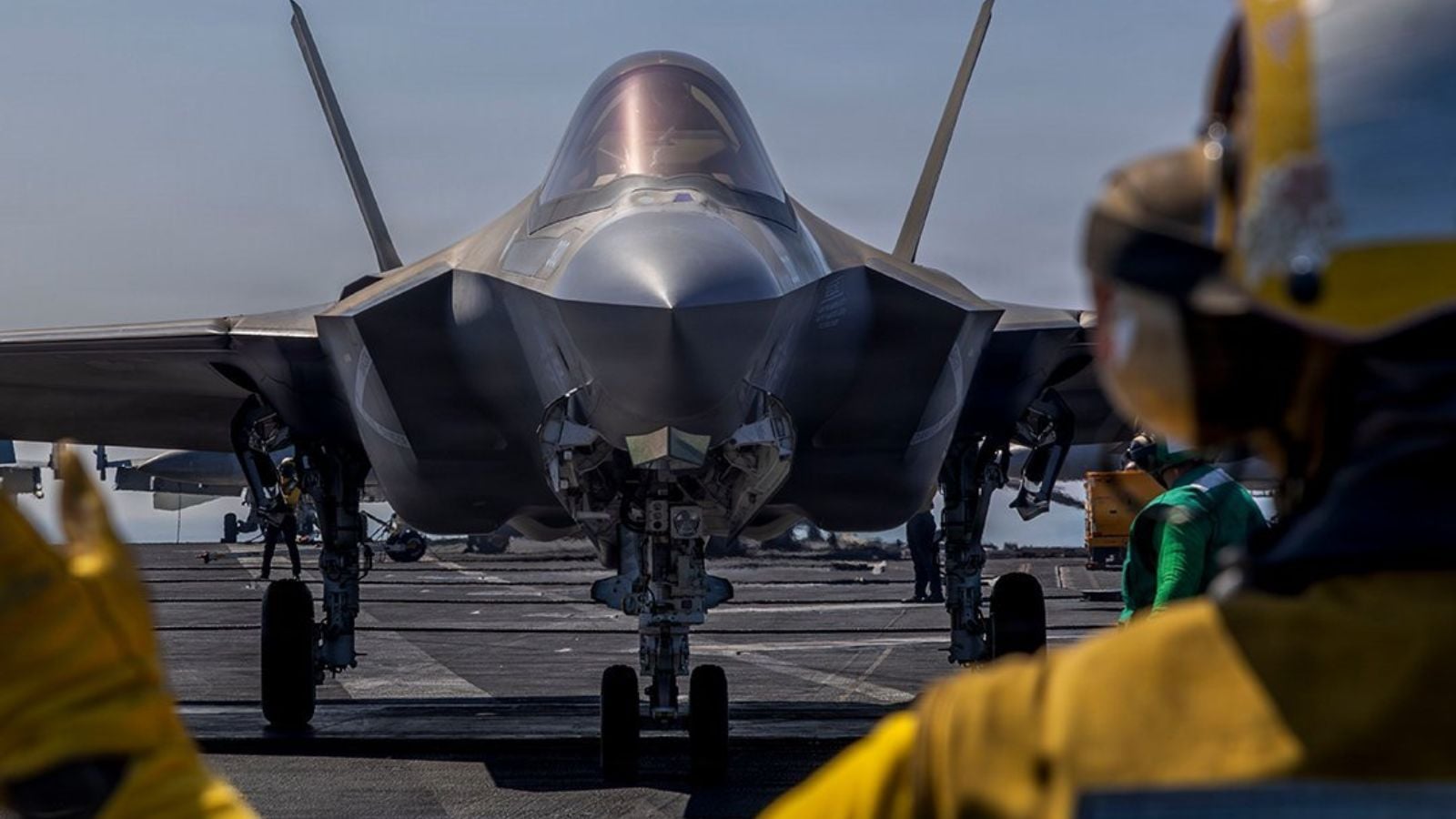
The logistics of an attack on sites like Fordow or Natanz are staggering. These facilities are built into mountains, requiring specialized "bunker-buster" munitions that only the U.S. possesses in significant quantities. Even then, you cannot bomb knowledge. You can destroy the centrifuges, but you cannot destroy the blueprints or the expertise of the scientists who built them.
Furthermore, Iran’s "asymmetric" response would be felt globally.
- Cyber Warfare: Iran has developed a world-class offensive cyber capability, capable of targeting Western financial institutions and power grids.
- Maritime Chokepoints: A closure of the Strait of Hormuz, even for a few days, would send global oil prices into a vertical climb, threatening a global recession.
- Proxy Networks: Groups across Lebanon, Iraq, and Yemen act as a forward-deployed deterrent. An attack on the Iranian heartland would almost certainly trigger a multi-front response from these groups.
The "risk of war" mentioned in the headlines isn't a distant possibility. It is the logical conclusion of the current trajectory. When the primary tool of statecraft—talk—is removed, only the tools of force remain.
The illusion of the military solution
War is often sold as a way to "solve" a problem, but in the Middle East, it usually just changes the shape of the problem. A strike on Iran might delay their nuclear program by three to five years. In exchange, it would likely radicalize the population, unify the leadership, and provide the ultimate justification for a dash toward a nuclear deterrent as a matter of national survival.
We have seen this cycle before. In 1981, Israel struck the Osirak reactor in Iraq. While it destroyed the physical plant, it drove Saddam Hussein’s program underground and accelerated his pursuit of a bomb throughout the late 80s. The lesson is clear: physical destruction is a temporary fix for a political and ideological challenge.
The current deadlock exists because both sides have convinced themselves that the "other guy" will blink first. Washington believes the Iranian economy will eventually collapse; Tehran believes the U.S. is too exhausted by the "forever wars" in the Middle East to engage in another major conflict. They might both be wrong.
The missed opportunities for a "Less for Less" deal
There was a middle ground that was barely explored: an interim agreement often called "less for less." In this scenario, Iran would freeze its highest-level enrichment in exchange for the release of specific frozen assets or limited oil waivers. It wouldn't "solve" the nuclear issue, but it would lower the temperature.
The reason this failed is purely political. For the Biden administration, anything less than a "longer and stronger" deal is seen as a weakness by domestic critics. For the Raisi government, anything less than total sanctions relief is seen as a betrayal of their sovereign rights. The search for the "perfect" deal has become the enemy of the "stable" deal.
Beyond the nuclear silo
We have made the mistake of treating the nuclear issue in a vacuum. You cannot separate Iran’s centrifuges from its ballistic missile program or its regional activities. This "siloed" approach to diplomacy is a major reason for the current impasse. The 2015 deal intentionally ignored regional issues to secure a nuclear win, but those ignored issues eventually came back to haunt the agreement.
A more realistic approach would require a regional security forum—one that includes the Gulf states and Israel directly in the conversation. Expecting the U.S. and Iran to solve 40 years of animosity in a hotel room in Vienna is a strategy rooted in 20th-century thinking. The reality of 2026 is a multipolar Middle East where the local powers have as much to say as the superpowers.
The lack of a deal isn't just a failure of the diplomats in the room. It is a failure to adapt to a world where U.S. hegemony is no longer absolute and where the targets of sanctions have learned how to build their own parallel realities.
The immediate next step is not another round of talks. It is a period of intense, quiet "de-confliction." This means establishing direct lines of communication between military commanders to ensure that a localized skirmish doesn't escalate into a full-scale war. If we cannot have a deal, we must at least have a way to manage the disagreement without setting the region on fire.
The path forward requires an honest admission: the JCPOA is dead, and the "maximum pressure" campaign has failed. We are in the "gray zone" now, a space where the rules are unwritten and the margin for error is non-existent. The only way out is to stop looking for a grand bargain and start looking for a way to live with a reality that satisfies no one but keeps the missiles in their silos.
Assess your own organization’s exposure to Middle Eastern energy volatility and supply chain disruptions, as the "no-deal" status quo is now the permanent operating environment for the foreseeable future.