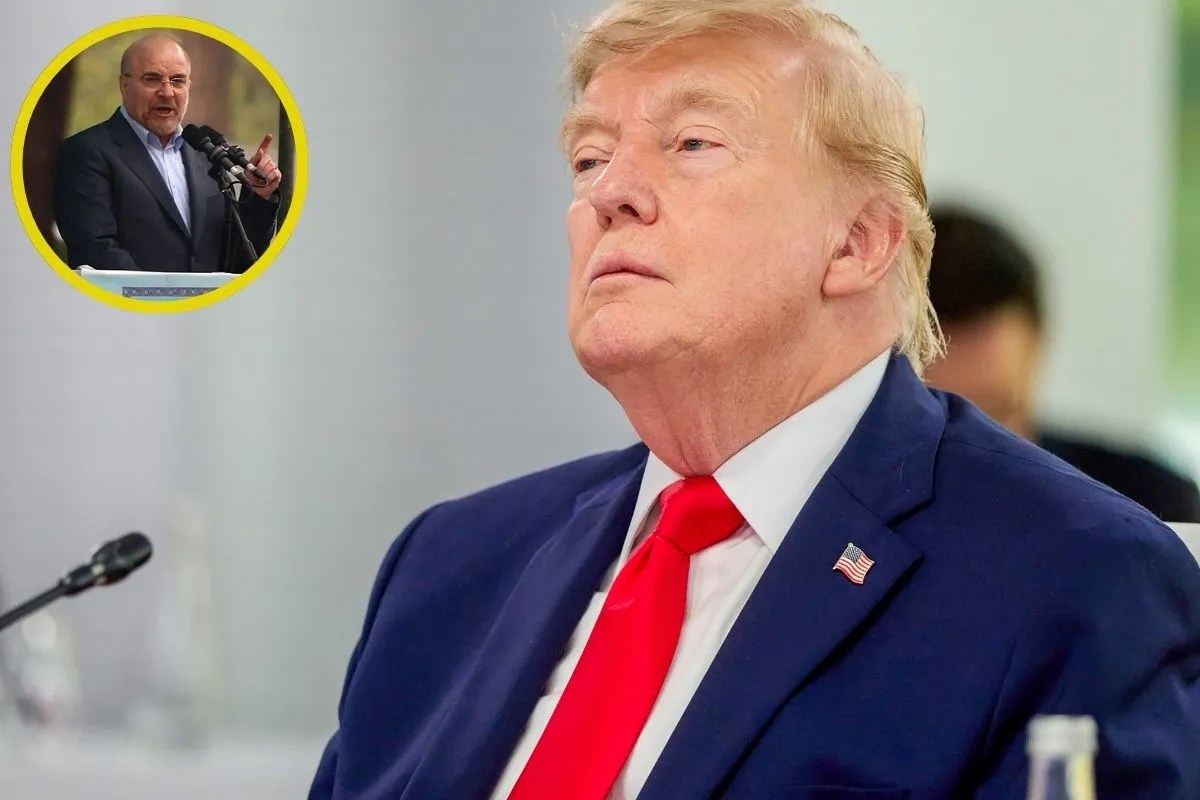
Iran has explicitly warned the United States to prepare for war if Washington fails to honor its past diplomatic commitments, rule out new sanctions, and respect Tehran's regional sovereignty. This aggressive posture, coupled with a flat refusal to engage in fresh bilateral talks with Donald Trump, serves as a preemptive geopolitical line in the sand. Tehran is attempting to dictate the terms of engagement before Washington can orchestrate a renewed "maximum pressure" campaign. Rather than an immediate declaration of hostilities, this ultimatum is a highly calculated diplomatic gambit designed to exploit Western political divisions and establish deterrence.
Understanding this sudden escalation requires looking past the fiery rhetoric broadcast by state media. The regime in Tehran is not acting out of blind aggression. It is reacting to a shifting global order where its traditional leverage points are under severe strain. By threatening conflict, Iran aims to signal that any attempt to force it back to the negotiating table through economic strangulation will carry an unacceptable military cost for the West.
The Strategy of Preemptive Deterrence
State-sanctioned warnings from Tehran often look like reckless brinkmanship to outside observers. They are not. This is a deliberate defense mechanism refined over four decades of economic isolation. By publicly drawing a hard line against Donald Trump, Iran's leadership is trying to eliminate Washington’s strategic predictability.
Diplomacy is a game of leverage. Iran knows its economic fundamentals are fragile, but it also recognizes that the American electorate has little appetite for another protracted conflict in the Middle East. By making the threat of war explicit, Tehran forces military planners in Washington and allied capitals to recalculate the risks of implementing secondary sanctions or enforcing strict oil embargoes.
Furthermore, this stance cements a domestic narrative. The regime must appear unyielding to its hardline base, particularly within the Islamic Revolutionary Guard Corps (IRGC). For these factions, any sign of eagerness to talk to a returning Trump administration would be viewed as a sign of weakness. Publicly slamming the door on negotiations allows Tehran to maintain internal cohesion while assessing what kind of back-channel diplomatic offers might actually be on the table.
Why the Ghost of the 2015 Nuclear Deal Still Dictates the Present
To comprehend why Iran refuses to engage in fresh talks, one must look at the structural collapse of the Joint Comprehensive Plan of Action (JCPOA). The 2015 nuclear agreement was the benchmark for modern Iranian diplomacy. When the first Trump administration unilaterally withdrew from the accord in 2018, it did more than just reimpose crippling sanctions. It shattered Iran's domestic consensus that diplomatic agreements with Washington could be trusted.
Iranian negotiators spent years hashing out that agreement. They traded physical centrifuges and enriched uranium stockpiles for promised sanctions relief. When that relief vanished with the stroke of an American pen, the pragmatic factions within Iran were thoroughly sidelined. The hardliners won the internal argument. Their thesis was simple: Washington will always break its word.
Consequently, Iran’s current demand for the U.S. to "comply with past agreements" is not a naive hope for a return to 2015. It is a rhetorical device used to justify their current enrichment activities. Tehran has advanced its nuclear program far beyond the limits of the original deal, utilizing advanced centrifuges and enriching uranium close to weapons-grade levels. They have built an entirely new reality on the ground. They will not dismantle this new leverage just to get back to a starting point they already occupied a decade ago.
The Limits of Maximum Pressure
The previous American strategy relied on the belief that economic pain would eventually force Tehran to accept a more restrictive, longer-lasting deal. This assumption underestimated the regime’s capacity for economic pain compliance. Iran adapted by developing a vast, illicit network of front companies and dark-market oil tankers, often referred to as the "Ghost Fleet."
- Sino-Iranian Economic Ties: China remains the primary buyer of discounted Iranian crude, providing a vital financial lifeline that keeps the Iranian economy from total collapse.
- The Asymmetric Network: Iran has decentralized its defense apparatus, embedding long-range drone and missile technologies across a network of regional proxies.
- The Russia Factor: Recent military and economic alignment with Moscow has provided Tehran with new diplomatic coverage at the UN Security Council, alongside potential transfers of advanced military hardware.
The Mirage of Total War
Despite the headlines, neither Washington nor Tehran desires a conventional, head-to-head military conflict. A full-scale war would devastate the global economy, choke the Strait of Hormuz—through which a fifth of the world's oil passes—and trigger a regional conflagration that would drag in multiple nations.
Instead, the true risk lies in miscalculation. When both sides operate on the absolute edge of brinkmanship, a localized incident can quickly spiral out of control. A drone strike on a specific outpost, an intercepted tanker in the Persian Gulf, or a cyberattack on critical infrastructure could inadvertently trigger the very war both sides claim they are trying to avoid.
Iran's military doctrine is explicitly built around asymmetric warfare. It does not intend to match the U.S. military ship-for-ship or plane-for-plane. Instead, it relies on swarming fast-attack craft, anti-ship ballistic missiles, and localized proxy forces to make the cost of American intervention prohibitively expensive. This reality makes the current war-of-words incredibly volatile. Tehran is betting that its willingness to absorb damage is higher than the West’s willingness to inflict it.
The Backchannel Reality
Public defiance rarely tells the whole story in international relations. While state media broadcasts uncompromising ultimatums, quiet diplomatic channels often remain active through intermediaries like Oman, Qatar, or Switzerland. These shadow diplomatic tracks exist precisely because the public rhetoric is so toxic.
These venues are where real boundaries are established. De-escalation mechanisms are quietly negotiated even as politicians deliver fiery speeches for home consumption. The true test of the current crisis will not be found in the open declarations of defiance, but in whether these quiet channels can successfully manage the friction points as a changing political dynamic takes hold in Washington.
The current posturing by Iran is less an invitation to war and more a brutal acknowledgment of the new geopolitical status quo. Tehran has spent years insulating itself from Western economic pressure while advancing its nuclear capabilities to the threshold of a breakout capacity. By issuing an ultimatum now, the regime is signaling that the era of one-sided concessions is over. Washington is being forced to choose between accepting a permanently altered regional landscape or risking a catastrophic conflict for which there is no viable exit strategy.