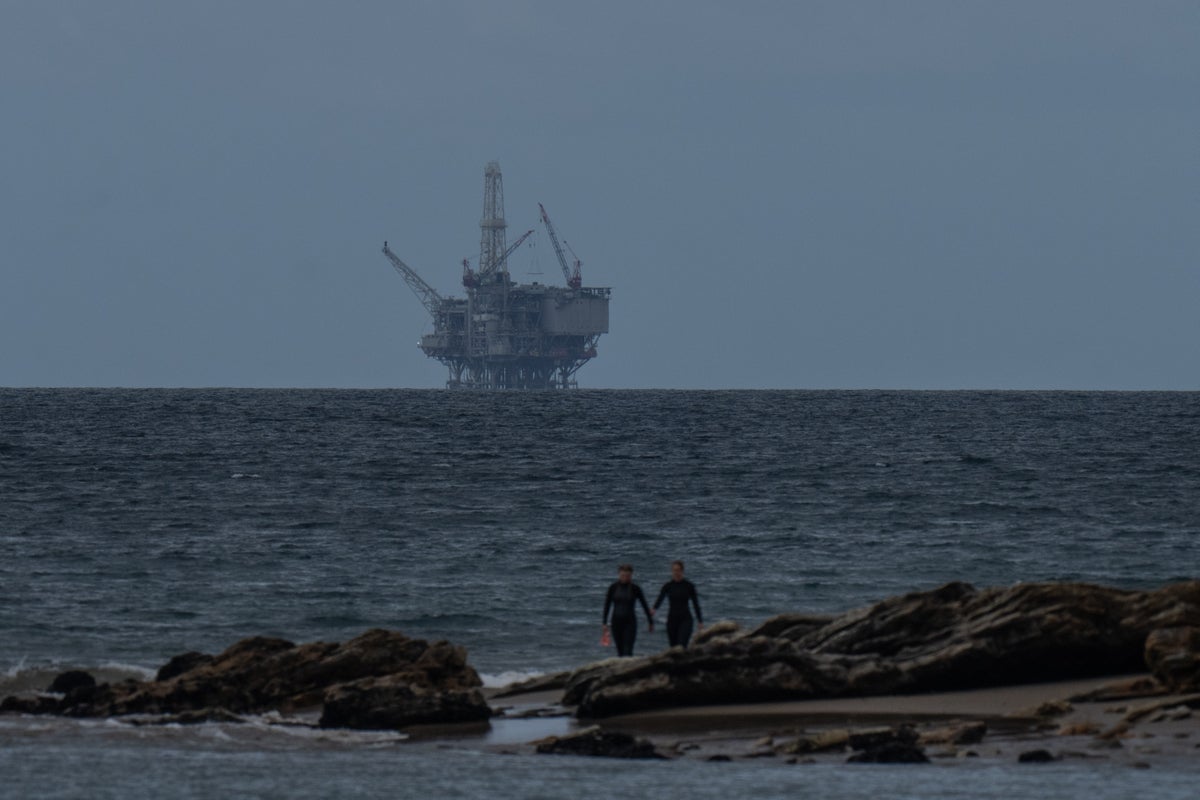
The media treats the ongoing brawls between Washington and Sacramento as a high-stakes ideological clash over climate versus crude. Headlines obsess over federal lawsuits targeting California's well setback limits, emergency pipeline restart orders, and offshore wind lease buyouts. It makes for great political theater. It is also entirely missing the point.
The lazy consensus claims that the Trump administration is forcing more oil to flow from California while the state desperately fights to keep its green transition alive. This framing assumes that federal decree can resurrect a declining petroleum basin or that local restrictions are the primary choke point on domestic supply. Both assumptions are mathematically and economically bankrupt.
I have watched companies waste hundreds of millions of dollars trying to bully aging, depleted California fields into high-volume production, ignoring the brutal laws of geology and basic economics. California is not a suppressed oil giant waiting for the shackles to come off; it is a mature, high-cost, structurally declining basin where the easy crude was pumped out decades ago. Pushing emergency orders to restart old offshore pipelines or fighting over buffer zones near schools will not alter the fundamental trajectory of West Coast energy production.
To understand why this entire fight is a sideshow, we need to dismantle the mechanics of what is actually happening beneath the surface.
The Geological Reality Nobody Wants To Print
Reserves dictate reality, and California’s reserves are exhausted. Peak oil production in the state happened in 1985 at over 900,000 barrels per day. Today, production sits at a fraction of that, squeezed by natural depletion rates that no amount of regulatory rollback can reverse.
When operators look at California fields like those in Kern County, they face heavy, viscous crude that requires expensive thermal recovery methods, massive amounts of water or steam, and steep capital outlays. Compare that to the Permian Basin, where high-pressure shale yields light, sweet crude with vastly superior margins. Pumping capital into California oil is an exercise in diminishing returns.
The federal lawsuits and executive actions trying to override state restrictions treat extraction as a simple toggle switch controlled by politicians. Turn the switch on, and oil flows. Turn it off, and production stops. Geology laughs at this administrative hubris. You cannot legislate a declining reservoir into a gusher.
The Regulatory Smoke Screen
On the other side of the ledger, Sacramento loves to blame federal intervention for undercutting its climate ambitions, pointing to offshore wind lease cancellations and backroom settlements. This serves a dual political purpose. It rallies the environmental base while masking the state’s own chronic infrastructure and grid bottlenecks.
California has set aggressive mandates for green energy while simultaneously failing to build the transmission capacity required to support them. Interconnection queues are bogged down for years. Refining capacity within the state is shrinking as major merchant refiners recalibrate for future demand drops, leaving consumers exposed to wild gasoline price spikes whenever regional supply hiccups occur.
The state's restrictions, such as SB 1137 mandating 3,200-foot setbacks from homes and schools, are framed by federal litigants as unconstitutional federal overreach. Yet, from an operational standpoint, these rules simply formalize the reality that urban encroachment has surrounded legacy extraction sites. Putting a new well pad in the middle of a densely populated Bakersfield suburb is a logistical and legal nightmare regardless of what Washington decrees.
The Real Question You Should Be Asking
Instead of asking whether the federal government can force California to drill more, the better question is why policymakers are obsessing over a marginal domestic basin while ignoring structural grid fragility.
The entire conflict is a lagging indicator of a dying paradigm. The administration wants a symbolic win over a blue state, and California wants a reliable foil to demonstrate its green credentials. Meanwhile, actual capital is fleeing high-cost legacy basins for regions with lower extraction costs and fewer legal battlegrounds.
Stop looking at the courthouse battles in San Francisco and Fresno as a war for the future of American energy. They are a rear-guard action over sunset assets. The market has already voted with its capital, and no executive order can repeal the laws of declining geology.