Colombia is sliding backward. The promise of a peaceful future is fracturing under the weight of old habits and stubborn ideologies. If you look closely at the rural corridors where the state has always struggled to assert control, the signs are unmistakable. The National Liberation Army, known as the ELN, is getting ready for a full-blown return to open conflict.
President Gustavo Petro came to office promising "total peace." It sounded noble. It sounded like an end to six decades of bloodshed. But reality has a way of crushing political slogans. Talks with the ELN stalled out after deadly escalations and broken ceasefires, leaving the country staring down the barrel of a renewed insurgency. Recently making news in this space: The Saudi Turkish and Pakistani Defense Pact and the Fracture of Middle Eastern Security.
The Anatomy of a Collapsing Truce
Why did the peace tables fail? It's simple. You can't negotiate a lasting settlement when both sides fundamentally disagree on what the country's economic and political structures should look like. The ELN looks at history and claims past deals yielded nothing for real change. They watched the FARC demobilize in 2016, only to see hundreds of former fighters and community leaders assassinated in the years that followed.
They decided they won't make the same mistake. Further information into this topic are explored by BBC News.
The breakdown wasn't sudden. It was a slow motion train wreck. Ceasefires were signed, violated, and abandoned. The government accused the guerrillas of relying on kidnapping and extortion to fund their operations. The guerrillas accused the state of bad faith and military opportunism. By the time fighting flared up heavily in regions like Catatumbo, the writing was on the wall.
Inside the Rebel Camps
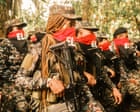
Life inside an active guerrilla unit hasn't changed much over the decades. Fighters still train in thick jungles, surviving on raw grit, ideological indoctrination, and geographic isolation. They see themselves as the last true defenders of a radical social shift.
They aren't interested in token political reforms. They want structural overhauls that an executive branch simply cannot deliver overnight.
"The Farc surrendered in exchange for nothing," a sentiment echoed by active commanders who point out that subsequent administrations failed to honor past commitments.
This deep-seated paranoia makes compromise nearly impossible. When trust is non-existent, every troop movement looks like an ambush. Every policy announcement looks like a trick.
What Happens When Total Peace Fails
The failure of the Petro administration's grand strategy leaves local populations caught in the crossfire. Rural communities bear the brunt of the violence. Extortion is rising. Child recruitment is climbing. The map of control is being redrawn by men with rifles, not politicians with pens.
The government is shifting toward localized peace efforts and targeted operations, moving away from grandiose national tables that yield headlines but zero results. But as national elections loom and a new administration prepares to take the reins, the ELN is positioning itself for a protracted military struggle.
Ignore the optimistic press releases coming out of urban centers. On the ground in the jungles and mountains, the drums of war are already beating again. Keep your eyes on the border regions and rural transit corridors. That is where the next chapter of Colombia's long war is actively being written.